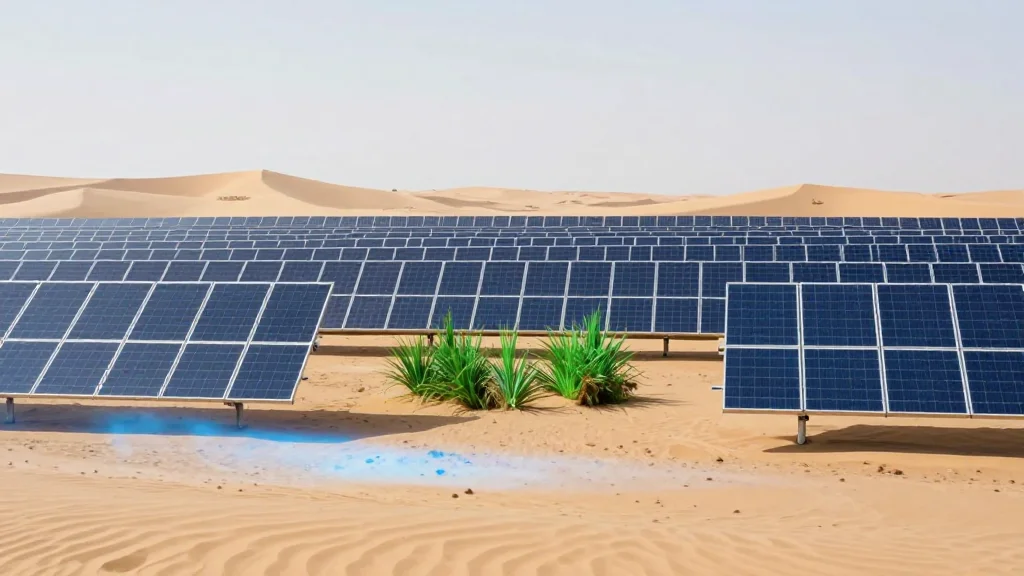
“Desert Greening:” China’s Massive Solar Farms Create Cool Refuges for Plants in Gobi Desert
Why It Matters
The cooling effect turns barren desert into a carbon‑sequestering refuge, enhancing the environmental benefits of renewable energy projects and supporting China’s climate‑mitigation goals.
Key Takeaways
- •Solar farms in Gobi cool land up to 3.1 °C.
- •Cooling creates micro‑climates that enable vegetation growth.
- •Effect radius spans 120‑540 m around panels.
- •Design shape and clustering boost cooling and greening.
- •China targets 455 GW desert solar by 2030.
Pulse Analysis
China’s push to blanket its arid interiors with photovoltaic arrays is reshaping more than the energy landscape. The Gobi’s stark terrain, once a relentless source of dust storms, is now dotted with sprawling solar farms that reflect and absorb sunlight differently than bare sand. By 2030, the nation aims to install 455 GW of desert‑based solar capacity, a cornerstone of its "war on sand" strategy that couples renewable power generation with large‑scale land restoration. This massive rollout reflects both geopolitical ambition to dominate clean‑energy markets and a pragmatic response to chronic desertification that threatens agriculture and public health.
The recent study published in *Ecological Indicators* reveals that these installations generate a measurable cool island effect, lowering surface temperatures by as much as 3.1 °C during peak daylight hours. Satellite‑derived land‑surface temperature data across eight farms in Xinjiang, Inner Mongolia, Gansu and Qinghai show cooling zones extending 120‑540 m from panel edges, with the strongest impact in summer. Crucially, the magnitude of cooling hinges on panel layout, tilt angle and the geometric complexity of the array. Regular, clustered configurations improve airflow and evaporation, fostering higher soil moisture and humidity that together create a micro‑climate conducive to sparse grasses and shrub establishment.
Beyond aesthetic greening, the phenomenon offers tangible climate benefits. Enhanced vegetation acts as a carbon sink, while reduced surface heat can mitigate local heat‑wave intensity, delivering ancillary public‑health gains. Policymakers can leverage these insights by favoring decentralized, shape‑optimized solar farms over monolithic plants, especially in fragile ecosystems. As other arid nations eye similar renewable expansions, China’s experience provides a blueprint for integrating energy infrastructure with ecological restoration, turning a traditionally hostile environment into a productive, low‑carbon landscape.
“Desert greening:” China’s massive solar farms create cool refuges for plants in Gobi desert
Comments
Want to join the conversation?
Loading comments...