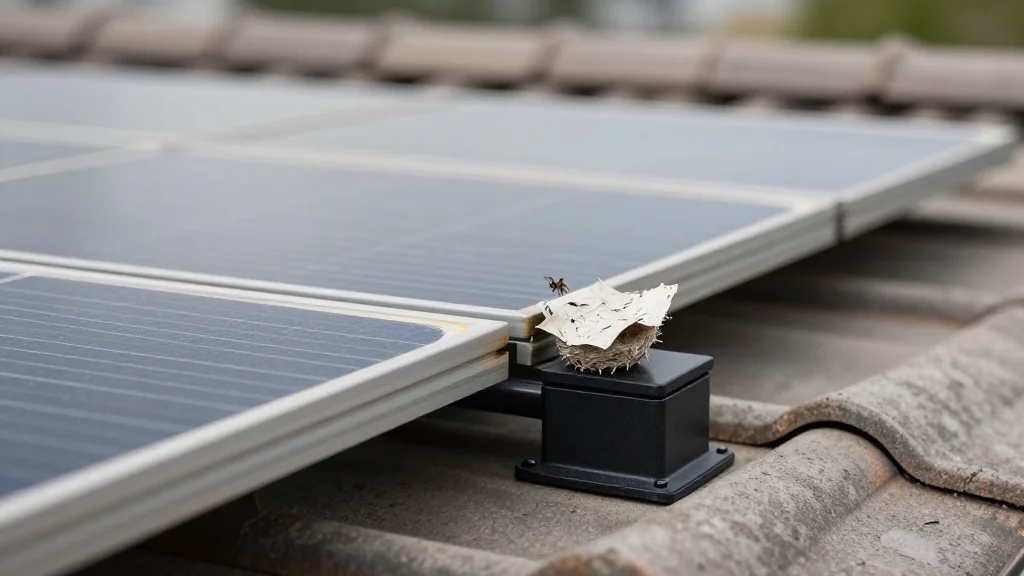
Dismantled 28-Year-Old PV System Reveals Wasps Nest in Junction Box
Why It Matters
The case reveals a rare failure mode that can degrade long‑life solar assets, emphasizing the value of robust sealing in contemporary module designs. It also alerts operators of aging installations to incorporate visual inspections of junction boxes into maintenance routines.
Key Takeaways
- •Wasps nested inside a 1998 PV module junction box.
- •Partial module still functioned via bypass diode despite copper corrosion.
- •Older Shell Solar modules showed 10‑20% power loss, yet remained robust.
- •Modern junction boxes are smaller, potting‑sealed, reducing insect intrusion risk.
- •Study underscores need for periodic inspection of aging PV systems.
Pulse Analysis
In the solar industry, long‑term reliability hinges on both material durability and protection against unexpected environmental factors. While degradation of encapsulants, backsheet discoloration, and moisture ingress are well‑documented, biological intrusion remains an under‑explored risk. The Austrian discovery of a wasp nest inside a decades‑old junction box illustrates how even sealed enclosures can become habitats for insects, potentially accelerating corrosion of copper ribbons and compromising electrical pathways.
The investigation, conducted by the Polymer Competence Center Leoben, leveraged rapid IV‑curve, electroluminescence and UV‑fluorescence imaging at 2nd Cycle’s automated test line. Findings showed one string of the 100‑W Shell Solar module still delivered power via its bypass diode, while the opposite string suffered complete loss due to copper ribbon corrosion and polymer film burn‑through. Despite a 10‑20% power decline across the sample set, the modules demonstrated a resilience that newer, thinner designs may lack. The researchers attribute the wasp intrusion to larger, less‑sealed junction boxes common in the late 1990s, which offered enough interior space and moisture pathways for nesting.
For today’s PV operators, the lesson is twofold: first, modern junction boxes, typically potting‑sealed and compact, substantially lower the likelihood of bio‑intrusion, reinforcing the industry’s shift toward tighter enclosure standards. Second, aging installations should incorporate periodic visual checks of junction boxes, especially in regions with high wasp activity, to preempt hidden failures. Ongoing material‑level analyses from this study will inform next‑generation design guidelines and may spur standards updates that explicitly address biological ingress as part of long‑term performance assurance.
Dismantled 28-year-old PV system reveals wasps nest in junction box
Comments
Want to join the conversation?
Loading comments...