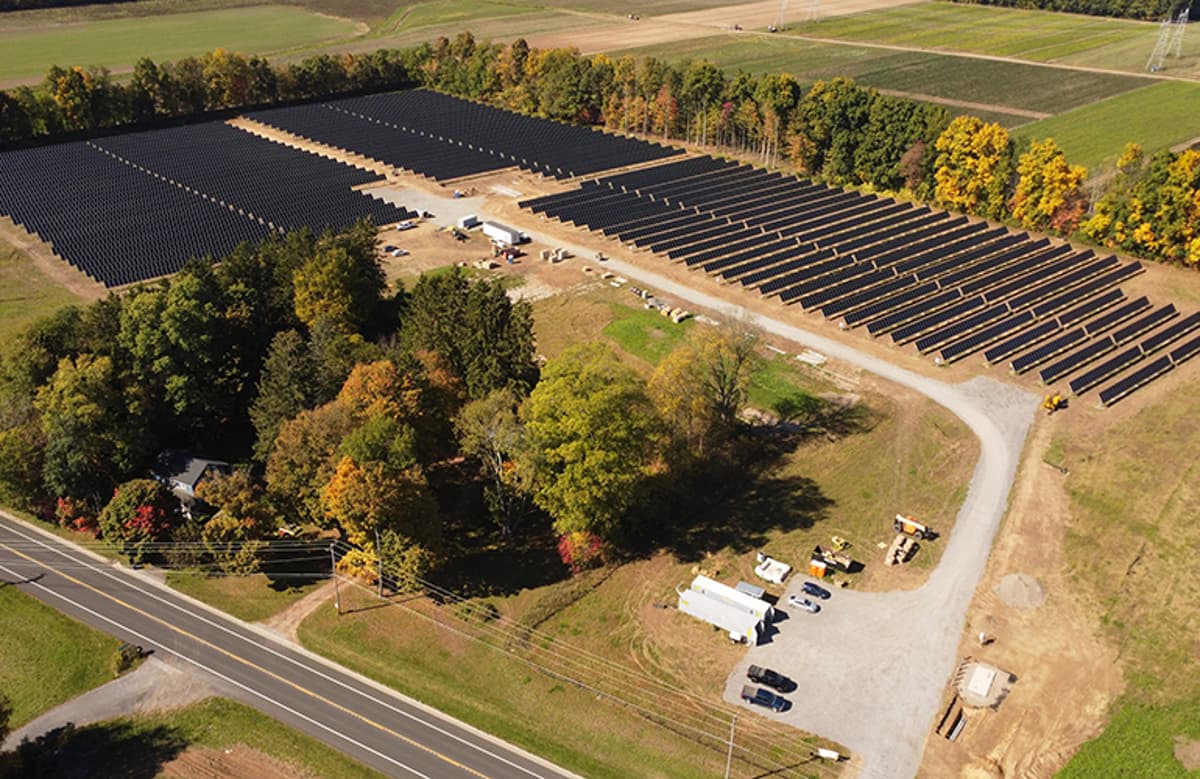
Distributed Energy Infrastructure Installs Community Solar Projects Through Heavy Snowfall
Why It Matters
The projects demonstrate that large‑scale solar can be built reliably in harsh climates, expanding clean‑energy capacity in a high‑demand region and supporting New York’s climate goals. They also showcase the financial and job‑creation benefits of partnership between EPC firms, investors, and local contractors.
Key Takeaways
- •DEI completed 2.9‑MW West Genesee and 5‑MW Cold Springs projects
- •Projects reached mechanical completion despite >100 inches snowfall
- •Bifacial modules and single‑axis trackers boost output 30‑40%
- •Interconnection to NYISO grid slated for Q2 2026
- •Generate Capital finances, creating local jobs in central New York
Pulse Analysis
The successful delivery of the West Genesee and Cold Springs solar farms underscores a growing confidence in the feasibility of utility‑scale renewables in traditionally challenging environments. While many developers postpone construction until milder seasons, DEI’s ability to maintain progress through a historic snowstorm illustrates advances in site preparation, crew safety protocols, and equipment resilience. This operational agility not only protects project timelines but also reduces financing costs, a critical factor for investors seeking predictable returns.
From a market perspective, the addition of roughly 8 MW of bifacial, single‑axis tracked capacity bolsters New York’s renewable portfolio at a time when the state is tightening its clean‑energy mandates. Bifacial panels capture reflected light from snow and ground surfaces, delivering the cited 30‑40% efficiency uplift, which translates into higher capacity factors during winter months—a period typically associated with lower solar output. As the NYISO grid integrates more distributed resources, these projects help flatten peak demand curves, especially during summer heat waves, enhancing grid reliability and reducing reliance on fossil‑fuel peaker plants.
Financially, Generate Capital’s involvement signals continued appetite for debt and equity structures that align investor returns with environmental outcomes. By leveraging local contractors such as IBEW Local 43 and regional construction firms, the projects generate immediate economic benefits, reinforcing community support for future renewable deployments. The Q2 2026 interconnection timeline positions the farms to contribute to New York’s 2030 renewable target, setting a precedent for other EPC firms to pursue aggressive schedules despite adverse weather, thereby accelerating the broader transition to clean energy.
Distributed Energy Infrastructure installs community solar projects through heavy snowfall
Comments
Want to join the conversation?
Loading comments...