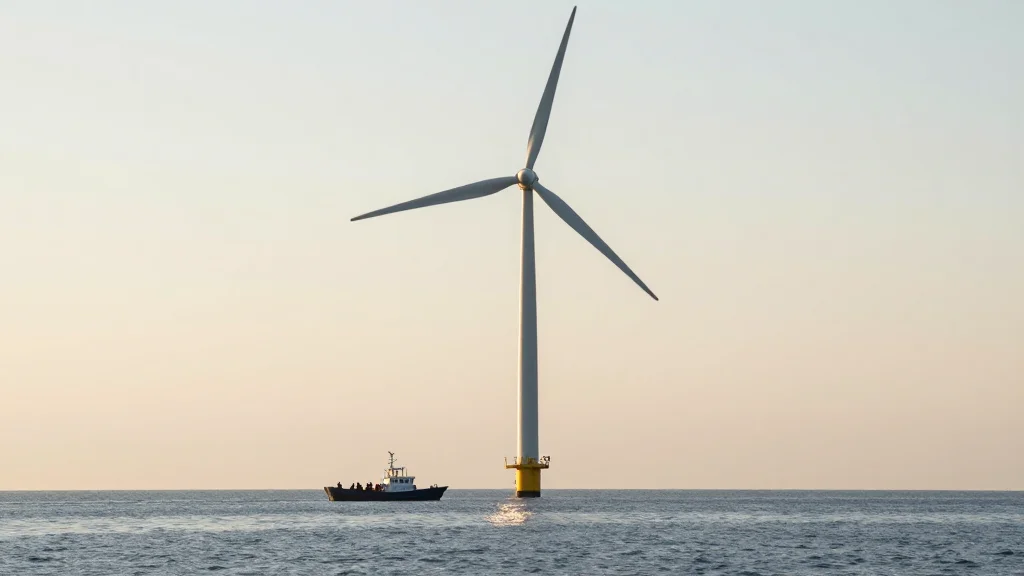
Dominion Upbeat on Offshore Wind as Cost Estimate Eases, Sales Rise
Why It Matters
The project demonstrates that large‑scale offshore wind can become cost‑competitive and deliver significant fuel‑cost reductions, reinforcing Dominion’s transition to cleaner power while supporting booming data‑center demand. It signals to the broader utility sector that offshore wind economics are improving despite past policy volatility.
Key Takeaways
- •CVOW 75% complete; 9 of 176 turbines installed.
- •Project cost $11.4 B, slightly lower than earlier estimate.
- •Expected LCOE $84/MWh, within targeted $80‑$90 range.
- •Dominion forecasts $5 B fuel savings for customers over first decade.
- •Data‑center demand drives 4% electricity sales growth, adds 2.5 GW capacity.
Pulse Analysis
Dominion Energy’s Coastal Virginia Offshore Wind (CVOW) project is emerging as a benchmark for U.S. offshore wind economics. After a brief policy shock from the former administration’s stop‑work order, the project’s capital budget trimmed to about $11.4 billion, and its levelized cost of electricity (LCOE) settled at $84 per megawatt‑hour—well within the $80‑$90 range outlined in its 2021 filing. This cost trajectory, coupled with a projected $5 billion in fuel‑cost savings for customers over the first ten years, underscores how offshore wind is moving from a niche, high‑cost venture to a mainstream, affordable generation source.
Financially, the wind farm dovetails with Dominion’s broader earnings outlook. The utility reported a 4% rise in electricity sales in Q1 2026, propelled largely by an 8.4% surge in commercial demand from data‑center customers, who now account for roughly 2.5 GW of contracted capacity. Dominion’s five‑year capital plan remains steady at $65 billion, with nearly half earmarked for transmission and distribution upgrades—critical infrastructure to integrate new renewable assets and support the expanding data‑center pipeline. The company also anticipates incremental regulated capital opportunities in the early 2030s, reinforcing a growth trajectory that balances clean‑energy investments with reliable grid enhancements.
The CVOW rollout reflects a broader industry shift toward resilient, low‑carbon power amid rising high‑density loads. Virginia’s new legislation mandating 20 GW of energy‑storage projects by 2040, up from 3 GW by 2035, signals regulatory momentum that will complement offshore wind’s intermittent output. As utilities like Dominion align offshore wind, transmission upgrades, and storage, they create a diversified portfolio capable of meeting both traditional utility customers and the data‑center sector’s low‑risk, high‑quality demand. This integrated approach positions Dominion as a leader in the transition to a decarbonized grid while delivering tangible cost benefits to its ratepayers.
Dominion upbeat on offshore wind as cost estimate eases, sales rise
Comments
Want to join the conversation?
Loading comments...