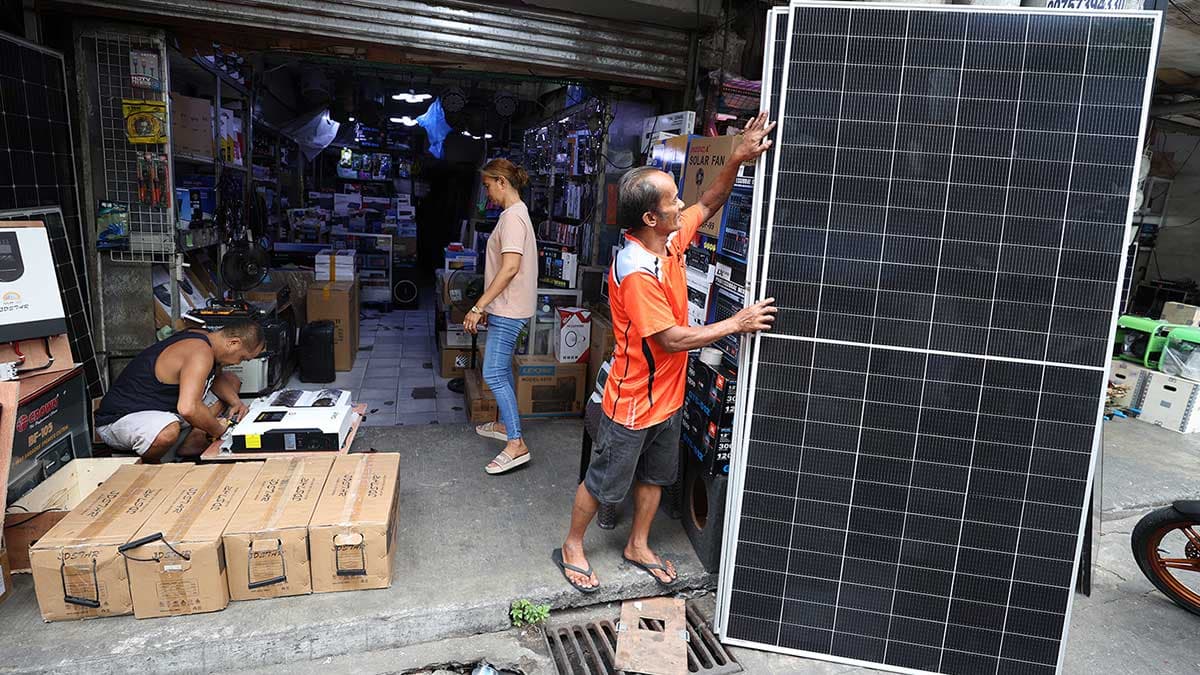
DTI Moves to Regulate Solar Panel Systems
Why It Matters
Mandatory certification raises product safety and performance, protecting consumers while creating a level playing field that encourages higher‑quality solar investments.
Key Takeaways
- •DTI proposes mandatory certification for all solar PV components.
- •Both locally made and imported products must obtain Philippine certification.
- •Non‑compliant items face seizure and sales bans after one‑year transition.
- •Public consultation set for May 26; comments accepted for 60 days.
Pulse Analysis
The Philippines has emerged as one of Southeast Asia’s fastest‑growing solar markets, driven by falling photovoltaic costs, supportive net‑metering policies, and an urgent need to diversify away from imported fossil fuels. In 2025, solar capacity added roughly 1.2 GW, pushing cumulative installed capacity past 5 GW and positioning the archipelago to meet its 2030 renewable‑energy target of 35 percent. Yet rapid expansion has exposed a fragmented supply chain, where low‑cost imports often bypass quality checks, raising safety concerns and undermining consumer confidence.
DTI’s draft order, prepared by the Bureau of Philippine Standards, seeks to close that gap by mandating certification for every solar component—from PV modules and inverters to battery‑energy‑storage systems and cabling. The rule mirrors certification frameworks already applied to air conditioners, refrigerators and EV chargers, and aligns with the Department of Energy’s installer accreditation scheme. Manufacturers and importers will have a one‑year transition after the public consultation on May 26, after which non‑certified products could be seized. The dual‑track system—Philippine Standard Quality Certification for local makers and Import Commodity Clearance for foreign suppliers—creates a clear compliance pathway.
By enforcing uniform standards, the Philippines aims to attract higher‑quality foreign investment while protecting domestic producers that meet the new benchmarks. Consistent product performance is expected to reduce warranty claims, lower insurance premiums, and accelerate financing for commercial solar projects. However, smaller importers may face added costs for testing and documentation, potentially tightening margins. If implemented smoothly, the certification regime could become a model for other emerging markets grappling with cheap, unverified solar hardware, ultimately strengthening the region’s transition to clean energy.
DTI moves to regulate solar panel systems
Comments
Want to join the conversation?
Loading comments...