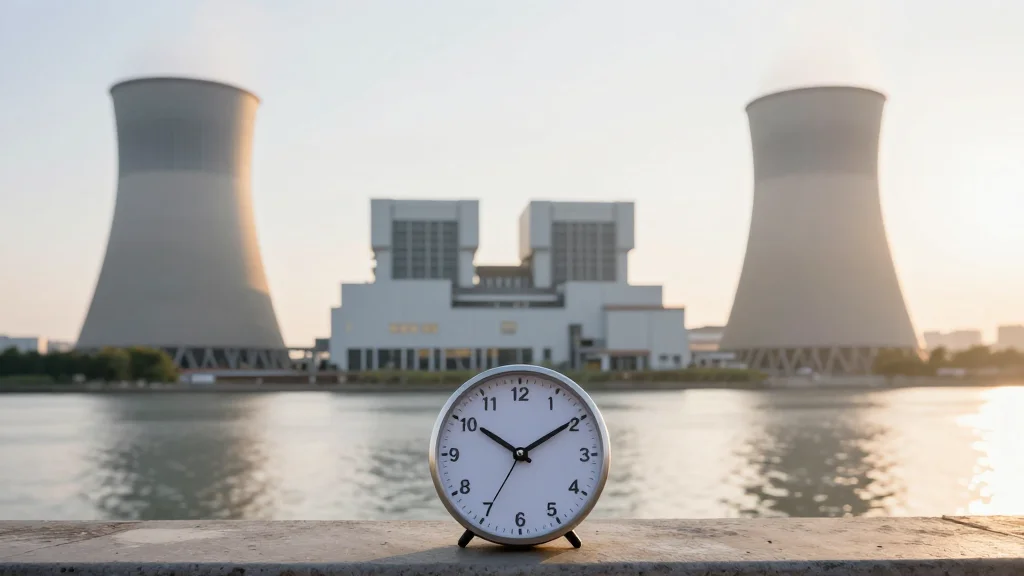
Duke Energy’s Robinson Nuclear Plant Gets NRC Approval to Operate Until 2050
Companies Mentioned
Why It Matters
Extending Robinson’s license secures reliable, low‑cost power and hundreds of jobs while supporting national goals to expand nuclear generation for grid decarbonization. It signals confidence in the safety and economic viability of aging reactors amid a broader push to meet rising electricity demand.
Key Takeaways
- •NRC granted Robinson a 20‑year license extension to 2050.
- •Plant supplies 759 MW, powering ~570,000 homes with carbon‑free electricity.
- •Extension secures ~500 local jobs and supports South Carolina’s energy reliability.
- •Duke aims to renew all 11 Carolinas reactors amid DOE’s UPRISE push.
Pulse Analysis
The NRC’s approval of a subsequent license renewal (SLR) for Robinson marks a pivotal moment for the U.S. nuclear sector. By extending the plant’s life to 2050, Duke Energy preserves a proven source of baseload power that delivers 759 MW of carbon‑free electricity. In a market where renewable intermittency remains a challenge, a reliable, always‑on asset like Robinson helps utilities meet reliability standards while keeping emissions low, reinforcing the role of legacy reactors in the clean‑energy transition.
Beyond the grid, the renewal carries significant economic weight for the Pee Dee region. The plant supports roughly 500 direct jobs and stimulates ancillary businesses in Darlington County. State leaders, including Gov. Henry McMaster, have highlighted the extension as essential for affordable power as South Carolina’s load grows. At the federal level, the decision dovetails with the Department of Energy’s UPRISE initiative, which aims to add several gigawatts of nuclear capacity by the end of the decade through uprates, restarts, and new construction. Duke’s broader strategy to secure 20‑year renewals for all its Carolinas reactors reflects confidence that existing assets can meet future demand more cost‑effectively than new builds.
Looking ahead, Robinson’s extended operation underscores a broader industry trend: leveraging aging reactors to bridge the gap toward a low‑carbon grid while newer technologies scale. With AI‑driven data centers and advanced manufacturing driving unprecedented electricity consumption, policymakers are betting on nuclear’s high capacity factor to stabilize supply. The SLR not only safeguards regional energy security but also serves as a case study for other utilities evaluating the financial and regulatory pathways to extend plant lifespans, a critical component of the United States’ ambition to quadruple nuclear output by 2050.
Duke Energy’s Robinson Nuclear Plant Gets NRC Approval to Operate Until 2050
Comments
Want to join the conversation?
Loading comments...