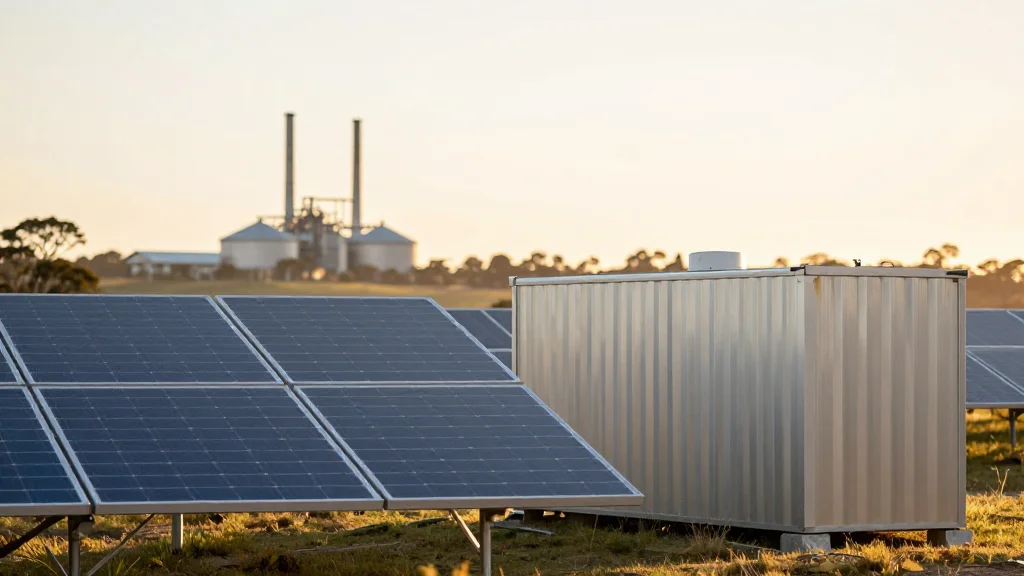
Edify Energy Secures $2.4 GWh Solar‑Plus‑Battery Deal for Rio Tinto in Queensland

Companies Mentioned
Why It Matters
The Edify Energy deal demonstrates how large‑scale industrial off‑take agreements can unlock financing for hybrid solar‑battery projects, a model that could be replicated across mining, steel and cement sectors seeking to decarbonise. By marrying a novel greenfield financing platform with government-backed revenue guarantees, the transaction reduces capital risk and accelerates deployment, addressing Australia’s need for dispatchable renewable capacity as coal plants retire. Moreover, the use of DC‑coupled hybrid systems and grid‑forming inverters showcases a technological shift that enhances grid resilience while lowering overall system costs. If successful, these configurations could become the default for future utility‑scale solar‑storage projects, delivering higher energy yields and smoother integration with existing networks.
Key Takeaways
- •Edify Energy reached financial close on 720 MWp solar + 2.4 GWh battery sites in Queensland.
- •Rio Tinto signed a 20‑year hybrid services agreement to purchase 90% of power for its Gladstone aluminium plant.
- •Financing was provided by La Caisse and a syndicate of 14 lenders under a first‑ever greenfield portfolio platform in Australia.
- •Projects are backed by the Australian government's Capacity Investment Scheme Tender 4, covering 6.6 GW of renewable generation and 11.4 GWh of storage.
- •Both sites will use DC‑coupled hybrid configurations with grid‑forming inverters to improve dispatchability and reduce clipping losses.
Pulse Analysis
Edify Energy’s financial close signals a turning point for how industrial consumers can catalyse renewable investment. Historically, Australian solar‑plus‑storage projects have relied on merchant models or simple power purchase agreements that left developers exposed to market volatility. By securing a long‑term, 20‑year off‑take from a high‑consumption miner, Edify effectively guarantees a revenue stream that satisfies lender risk appetites, unlocking a financing structure previously unseen in the market. This approach mirrors trends in Europe where corporate PPAs are paired with dedicated debt vehicles, but it is novel for the Australian context where project pipelines have been constrained by financing gaps.
The greenfield portfolio financing platform could become a template for bundling multiple hybrid assets, allowing developers to achieve economies of scale in both procurement and debt servicing. If the model proves successful, we may see a wave of similar structures targeting other heavy‑industry players—steelmakers, cement producers, and data‑centre operators—each seeking to meet net‑zero commitments. The integration of DC‑coupled technology further enhances the value proposition, delivering higher capacity factors and smoother grid interaction, which are critical as the nation phases out baseload coal.
Looking ahead, the real test will be operational performance and the ability to meet the stringent local‑content and First Nations commitments embedded in the CIS contracts. Successful delivery could cement Australia’s reputation as a hub for large‑scale, dispatchable renewables, attracting additional foreign capital and encouraging policy makers to expand the CIS framework. Conversely, any delays or cost overruns could dampen investor confidence in hybrid financing models, underscoring the high stakes of this pioneering project.
Edify Energy Secures $2.4 GWh Solar‑Plus‑Battery Deal for Rio Tinto in Queensland
Comments
Want to join the conversation?
Loading comments...