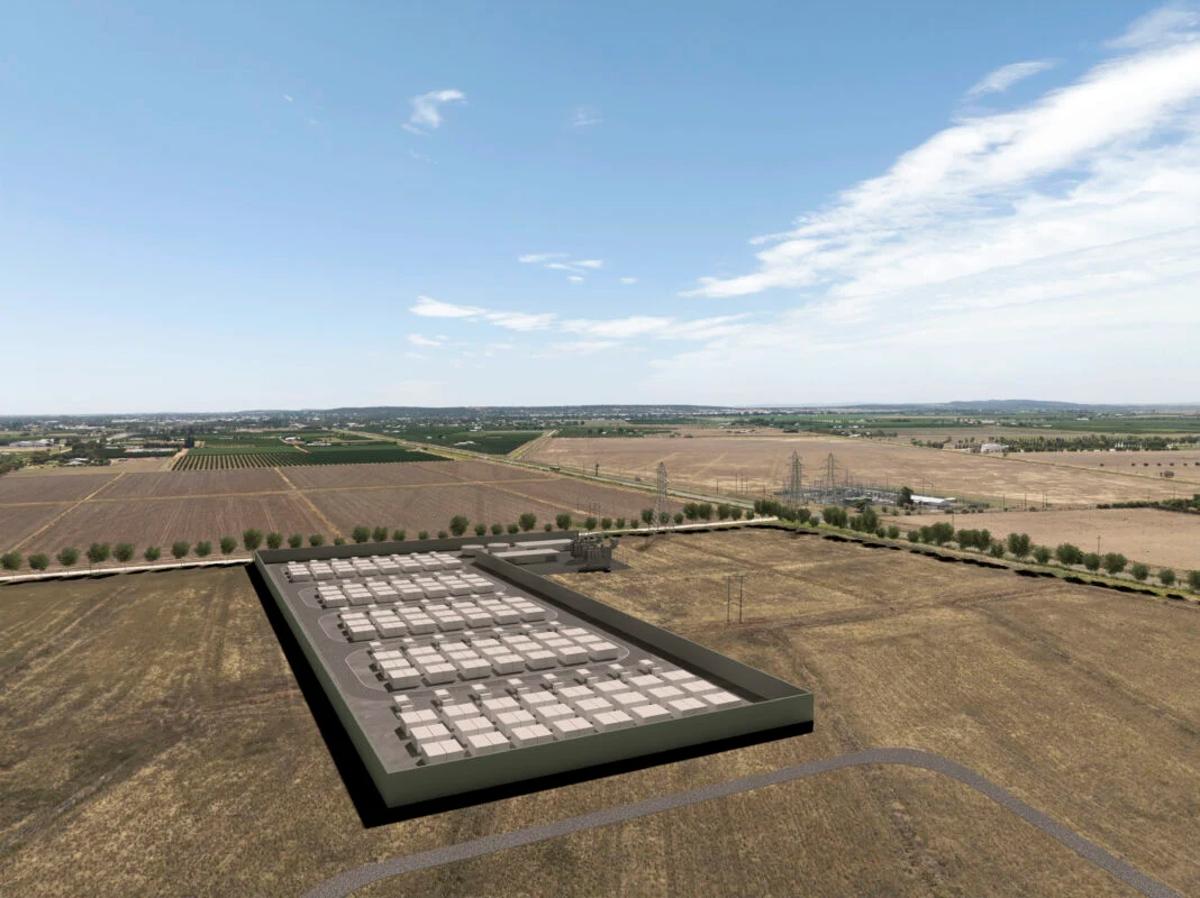
Eku Energy Submits 10-Hour Duration Griffith BESS to Australia’s EPBC Act
Companies Mentioned
Why It Matters
A 10‑hour storage asset provides critical evening‑peak capacity for a solar‑heavy region, helping the NEM meet reliability goals while supporting Australia’s long‑duration storage policy targets.
Key Takeaways
- •Griffith BESS now 1,000 MWh, 10‑hour duration.
- •Co‑located with 15 MW Yoogali solar, no extra land impact.
- •AEMO LTESA contract extends 14 years, targeting 2028 operation.
- •Project adds to Eku's goal of 9 GWh storage by 2028.
Pulse Analysis
Australia’s National Electricity Market is rapidly embracing long‑duration energy storage (LDES) to balance its growing solar and wind penetration. The Griffith battery, now sized at 1,000 MWh with a 10‑hour discharge window, offers a rare capability to shift excess daytime solar generation into the evening peak, a period traditionally underserved by short‑duration batteries. By tying into the existing 132 kV substation that serves nearby solar farms, the project minimizes new transmission work, reducing both cost and environmental footprint while delivering flexible ancillary services such as inertia and voltage support.
The regulatory pathway underscores the strategic importance of the EPBC Act referral. Eku Energy’s submission aligns with New South Wales’ long‑duration storage tender, which mandates a minimum eight‑hour duration, and mirrors South Australia’s FERM requirements. The 14‑year Long‑Term Energy Service Agreement from AEMO guarantees revenue certainty, yet the developer argues that market rules must evolve beyond arbitrage‑focused pricing to fully reward the grid‑stabilising benefits LDES provides. This push for policy reform reflects a broader industry consensus that traditional frequency‑control ancillary services are insufficient for deep‑renewable grids.
For Eku Energy, Griffith is a keystone in a broader pipeline that includes 1,600 MWh projects in Queensland and a 1,200 MWh venture in Victoria, all contributing to its ambition of 9 GWh of global storage capacity by 2028. Backed by Macquarie Asset Management and the British Columbia Investment Management Corporation, the company is positioning itself as a leading LDES developer in the Asia‑Pacific. Successful commissioning of Griffith in 2028 would not only validate Eku’s technical approach but also signal to investors that large‑scale, long‑duration batteries are commercially viable assets in Australia’s evolving energy landscape.
Eku Energy submits 10-hour duration Griffith BESS to Australia’s EPBC Act
Comments
Want to join the conversation?
Loading comments...