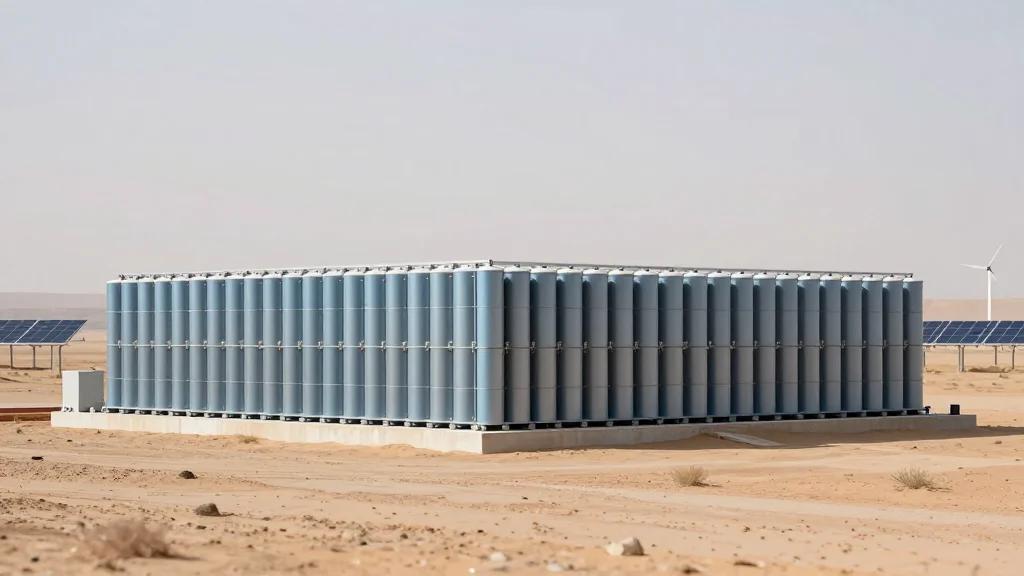
Energy Dome, Salt River Project to Build 19-MW CO2 Battery System
Companies Mentioned
Why It Matters
The battery provides SRP with a scalable, non‑lithium storage option that can smooth the transition from coal to gas and meet rising demand in the Phoenix metro area. Its success could accelerate adoption of CO₂‑based storage across U.S. grids.
Key Takeaways
- •19‑MW CO₂ battery will store 10 hours of power
- •Project co‑located with SRP’s Coronado plant conversion
- •Google backs Energy Dome via strategic investment and cost‑share
- •20‑year tolling agreement gives SRP dispatch control
- •System tests long‑duration storage performance in Arizona climate
Pulse Analysis
Energy Dome’s carbon‑dioxide battery represents a novel approach to long‑duration energy storage, leveraging compressed CO₂ as a mechanical medium rather than lithium chemistry. By compressing CO₂ during periods of excess generation and expanding it through a turbine when needed, the system can deliver multi‑hour discharge without the degradation concerns of batteries. Google’s strategic investment signals confidence in the technology’s scalability, and the cost‑sharing model with SRP reduces financial risk while providing a real‑world testbed in a desert climate that challenges thermal management.
For SRP, the 19‑MW installation aligns with its aggressive resource‑doubling plan by 2035 and the broader shift away from coal at the Coronado Generating Station. The battery’s 10‑hour duration can bridge the gap between intermittent renewables and baseload generation, enhancing grid reliability as the plant transitions to natural gas. By retaining dispatch authority, SRP can integrate the storage output into its market operations, smoothing peak loads and reducing reliance on fossil‑fuel peakers during hot summer months in the Phoenix region.
The project’s implications extend beyond Arizona. As utilities nationwide grapple with the need for multi‑hour storage to support higher renewable penetrations, CO₂‑based systems offer a potentially lower‑cost, longer‑lived alternative to lithium‑ion solutions. Google’s endorsement suggests the technology could move from pilot to commercial scale faster than other advanced storage concepts, prompting investors and regulators to monitor performance metrics closely. Successful deployment could spur additional public‑private partnerships, accelerating the diversification of the U.S. energy storage portfolio and reinforcing climate‑aligned grid modernization goals.
Energy Dome, Salt River Project to build 19-MW CO2 battery system
Comments
Want to join the conversation?
Loading comments...