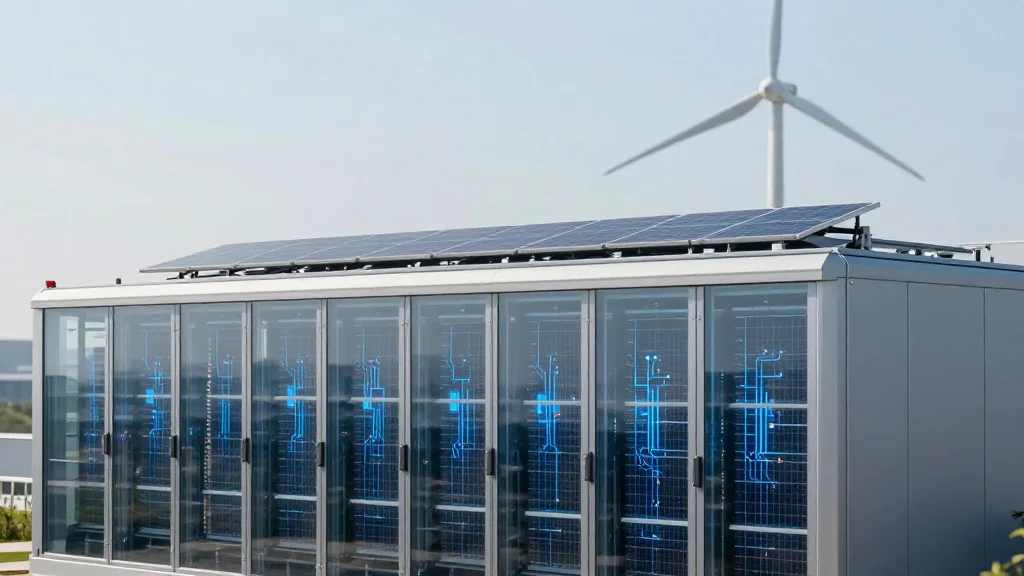
Energy Secretary Chris Wright Touts Cedar Rapids AI Data Center as Job and Rate Win

Companies Mentioned
Why It Matters
The Cedar Rapids AI data center illustrates a convergence of climate policy, economic development, and advanced computing. By demonstrating that AI workloads can be powered by renewable electricity without inflating consumer rates, the project offers a template for scaling high‑performance computing while meeting emissions reduction goals. Moreover, the federal endorsement signals to investors that climate‑aligned tech infrastructure can attract public support, potentially unlocking further capital for similar projects across the United States. If the facility meets its water‑use benchmarks, it could alleviate a common criticism of data centers—excessive cooling demands—thereby easing community concerns and smoothing the path for future expansions. The success of this initiative may also influence regulatory frameworks, encouraging more nuanced water‑use permitting processes that balance technological growth with resource stewardship.
Key Takeaways
- •U.S. Energy Secretary Chris Wright toured QTS’s AI data center in Cedar Rapids, Iowa.
- •The $1.2 billion project promises up to 500 construction jobs and 200 permanent positions.
- •Facility will draw power primarily from Iowa wind farms, aiming to keep electricity rates flat.
- •Advanced liquid‑cooling technology is designed to minimize water consumption.
- •Phase 1 slated for completion by Q4 2026, with full capacity expected by 2028.
Pulse Analysis
The Cedar Rapids data center marks a strategic inflection point for the ClimateTech sector, where high‑performance computing and clean energy intersect. Historically, data centers have been viewed as energy‑intensive liabilities, prompting regulatory scrutiny and public opposition. By anchoring AI workloads to a region rich in wind power and employing water‑efficient cooling, QTS is redefining the economics of scale for sustainable computing.
From a market perspective, the project could catalyze a wave of similar investments in the Midwest, leveraging the region’s low‑cost renewable grid to attract AI firms seeking both performance and cost predictability. This aligns with the Biden administration’s broader agenda to decarbonize the digital economy, potentially unlocking federal incentives for renewable‑powered data centers. Competitors such as Microsoft and Google have already announced plans for green data hubs, but QTS’s focus on a mid‑size, privately‑owned campus offers a more nimble model that could appeal to niche AI startups.
Looking ahead, the real test will be the facility’s ability to meet its water‑use promises while scaling AI workloads. Continuous monitoring and transparent reporting will be essential to maintain public trust and justify further policy support. If successful, Cedar Rapids could become a benchmark for policy‑driven, climate‑smart data infrastructure, shaping how the industry balances computational demand with environmental stewardship.
Energy Secretary Chris Wright touts Cedar Rapids AI data center as job and rate win
Comments
Want to join the conversation?
Loading comments...