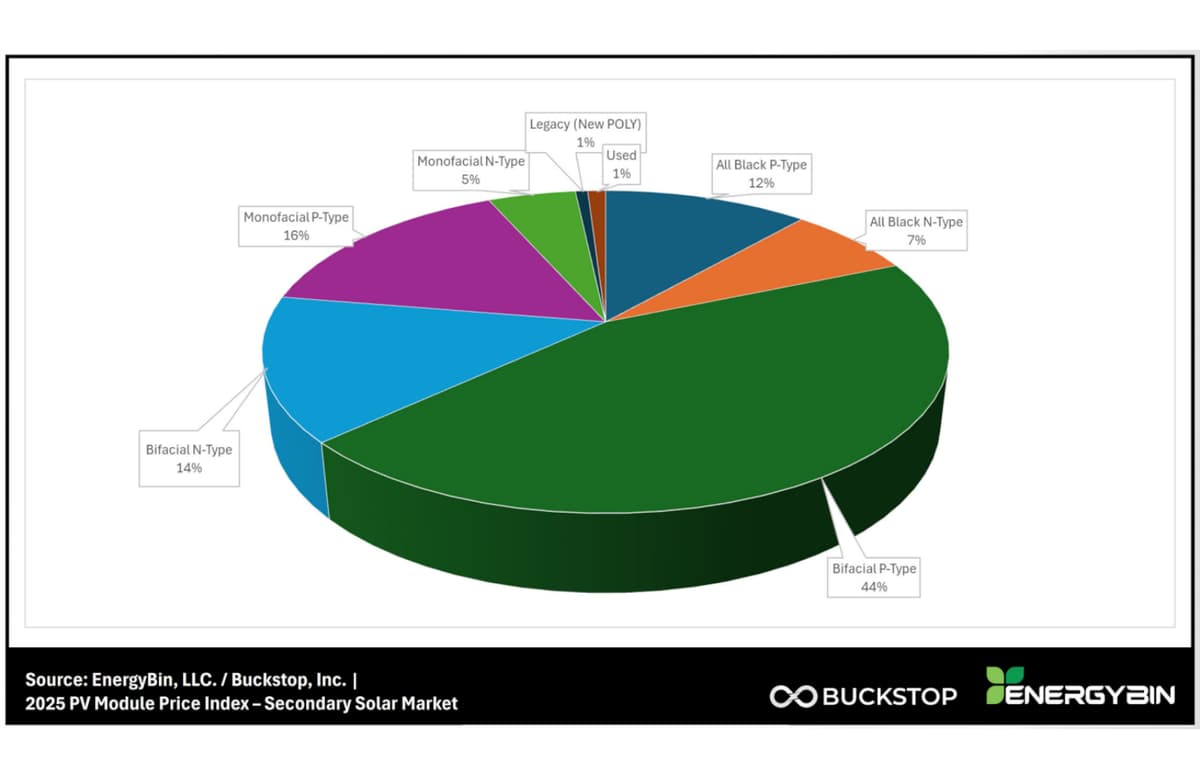
EnergyBin Report: Most Solar Panels on Secondary Market Are for Residential Market
•March 2, 2026
0
Why It Matters
The data confirms a robust, value‑preserving secondary market that can alleviate supply constraints, extend PV asset lifespans, and curb solar e‑waste, reshaping industry economics.
Key Takeaways
- •98% of secondary modules are 400‑525 W residential
- •Used module price fell 30% to $0.058/W
- •Exports of U.S. used modules reached 50 MW in 2025
- •Top-quality modules under 10 years degrade ≤1% annually
- •Secondary market supports asset recovery and reduces solar e‑waste
Pulse Analysis
The EnergyBin‑Buckstop report underscores how the secondary solar market has matured into a critical supply channel for residential‑grade PV modules. With over 8.7 million units listed across a six‑year span, the market now concentrates on high‑efficiency, 400‑525 W panels that meet the power density demands of modern rooftops. This concentration reflects a shift from project‑scale cancellations to a strategic off‑loading of newer, all‑black bifacial and monofacial modules, positioning the secondary market as a viable source of near‑new hardware for installers seeking cost‑effective inventory.
Pricing dynamics reveal a nuanced landscape. While global oversupply pushed new TOPCon module prices to $0.090 per watt, used modules saw a 30% price decline to $0.058 per watt by late 2025, narrowing the cost gap and enhancing resale appeal. Export flows to regions such as Pakistan, India, Nigeria, Afghanistan and South Africa totalled 50 MW in 2025, indicating that surplus U.S. inventory is meeting demand in emerging markets. The price resilience of high‑quality, sub‑10‑year modules—degrading at only 0.5‑1% annually—further validates the economic case for secondary sales.
Beyond economics, the secondary market delivers strategic benefits for the solar ecosystem. It provides liquidity for manufacturers facing project delays, reduces the need for fresh production runs, and supports circular‑economy goals by extending module lifecycles and mitigating e‑waste. For developers and NGOs, access to reliable, lightly used panels can accelerate deployments in energy‑poverty regions, fostering social impact while preserving capital. As recycling infrastructure advances and n‑type technologies gain market share, the secondary market is poised to become an integral pillar of a sustainable, resilient solar supply chain.
EnergyBin report: Most solar panels on secondary market are for residential market
0
Comments
Want to join the conversation?
Loading comments...