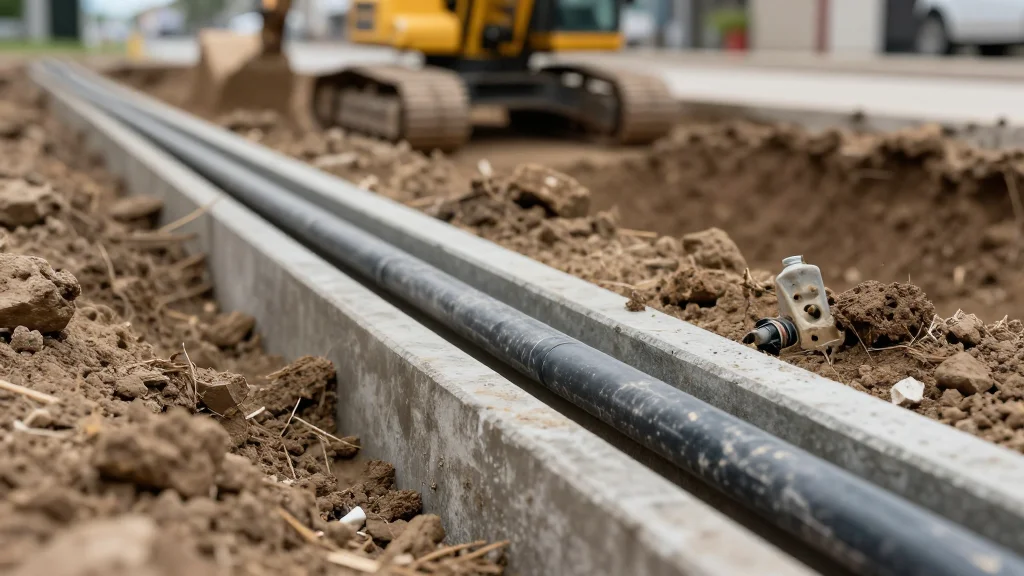
Exploring the Potential for a Buried Grid
Companies Mentioned
Why It Matters
Undergrounding promises lower long‑term operating expenses and greater grid reliability, crucial for utilities navigating climate risk and urban growth. The shift also creates new markets for advanced materials and engineering services.
Key Takeaways
- •Undergrounding can double asset lifespan to 100‑150 years
- •Up‑front cost up to 4.5× overhead line installation
- •Corrosion‑resistant coatings essential for coastal subsurface cables
- •Thermal grouts mitigate heat buildup in dense urban soils
- •Material passports enable modular repair and supply‑chain transparency
Pulse Analysis
As extreme weather events become more frequent, utilities are rethinking traditional overhead designs that are vulnerable to wind, fire and flooding. Burying power lines and data conduits not only shields them from these hazards but also liberates valuable surface real estate for green spaces and affordable housing. The extended lifespan—often twice that of overhead assets—translates into reduced replacement cycles and lower lifecycle costs, making underground grids an attractive proposition for municipalities seeking resilient, future‑proof infrastructure.
The primary obstacle remains cost. Installing underground utilities can require 4.5 times the capital outlay of conventional overhead lines, with high‑voltage direct‑current projects reaching eleven times the expense. This financial hurdle is compounded by complex permitting, soil‑surveying and the need for specialized drilling equipment. To mitigate these challenges, manufacturers are developing corrosion‑resistant alloys and polymer‑based coatings that withstand moisture, salt and geomagnetic storms. Thermal management solutions, such as heat‑dissipating grouts and real‑time sensor networks, address the risk of subsurface heat islands, preserving both equipment performance and neighborhood energy bills.
Policy and supply‑chain innovations are essential to scale undergrounding efforts. Governments can incentivize projects through grants, tax credits and streamlined permitting, while utilities adopt material passports that document product provenance and design for disassembly. Such transparency supports modular repairs and reduces waste, aligning with broader sustainability goals. As the market for resilient infrastructure expands, engineering firms, material suppliers and technology providers stand to benefit from the growing demand for underground utility solutions, positioning the sector for robust growth in a climate‑impacted world.
Exploring the Potential for a Buried Grid
Comments
Want to join the conversation?
Loading comments...