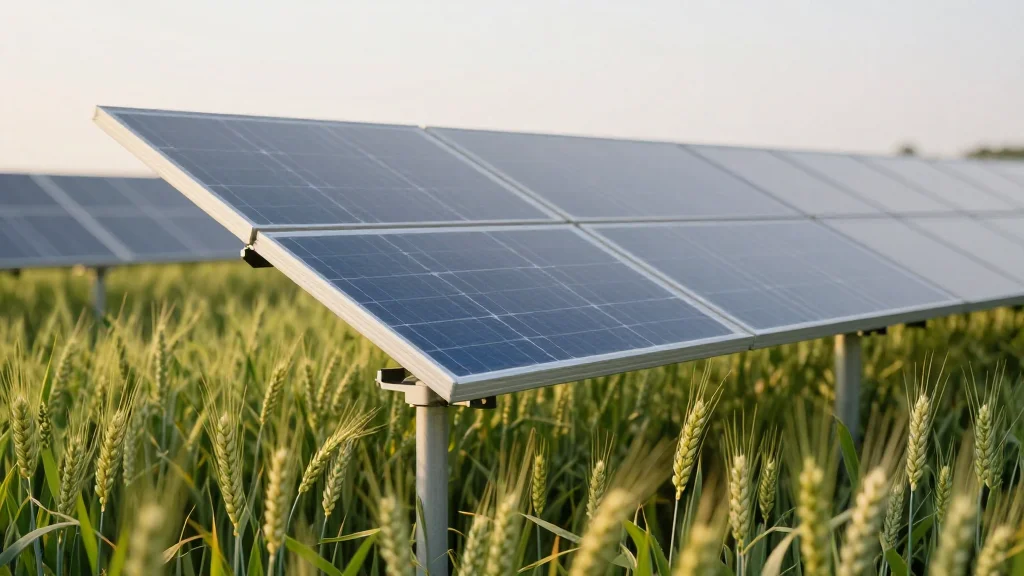
Farming Under Solar: How Agriphotovoltaics Can Transform Rural Livelihoods in India
Why It Matters
Agri‑PV offers a pathway to meet India’s clean‑energy targets without sacrificing farmland, diversifying income for the 46 % of the workforce employed in agriculture.
Key Takeaways
- •India's solar capacity reached ~150 GW, most on agricultural land
- •Rajasthan Agri‑PV pilot lifted farmer income to ~$5,500/acre, 9‑10× higher
- •Three models: R&D demos, developer‑leased, farmer‑owned via PM‑KUSUM
- •Financing, tariff and land‑use policy gaps block Agri‑PV scaling
- •Collective FPO ownership can aggregate fragmented lands for 1 MW pilots
Pulse Analysis
India’s renewable push has been spectacular, with installed renewable capacity climbing from about 36 GW in 2013‑14 to roughly 274 GW in 2025‑26, and solar alone accounting for near‑150 GW. Yet the dominant strategy of large, ground‑mounted solar farms has commandeered prime agricultural acreage, creating a structural rift between the country’s energy ambitions and the livelihoods of nearly half its workforce. This land‑use conflict has intensified calls for solutions that can deliver electricity while preserving, or even enhancing, farm productivity.
Agriphotovoltaics—co‑locating solar arrays with crops—emerges as a promising answer. In Rajasthan, a pilot that raised panels to 3.5 metres and integrated a 15 % capital subsidy lifted a farmer’s net return from about $494 per acre under conventional farming to roughly $5,500 per acre, a nine‑to‑ten‑fold increase driven by combined energy sales and crop yields. The sector now features three distinct pathways: research‑led demonstrations that generate agronomic data, developer‑leased arrangements that pay farmers a fixed rent, and farmer‑owned projects under the PM‑KUSUM scheme that let growers capture both electricity and agricultural revenues. Each model reflects a different balance of ownership, risk, and value capture.
Scaling Agri‑PV, however, faces systemic hurdles. Payment delays from distribution utilities strain cash flow, while the elevated cost of elevated structures—15‑20 % higher than conventional ground‑mounts—tightens financing needs. Ambiguous land‑use regulations risk stripping farmers of subsidy eligibility, and fragmented approvals across energy, agriculture, and land‑record agencies inflate transaction costs. Policymakers can accelerate adoption by instituting differentiated feed‑in tariffs for dual‑use projects, expanding low‑interest capital subsidies, and codifying clear dual‑use land policies. Encouraging collective ownership through farmer producer organisations can also pool fragmented holdings, lower financing barriers, and ensure that the renewable transition bolsters both India’s climate goals and its rural economies.
Farming Under Solar: How Agriphotovoltaics Can Transform Rural Livelihoods in India
Comments
Want to join the conversation?
Loading comments...