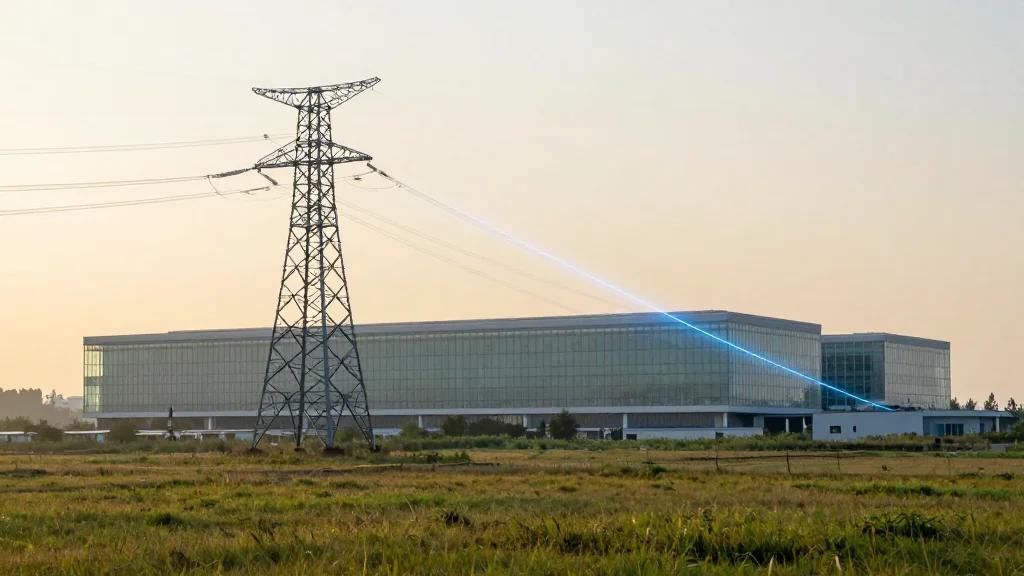
FERC OKs Transmission Deal to Power 1 GW Data‑Center Campus in Greater Chicago

Companies Mentioned
Why It Matters
The FERC‑approved TSA creates a replicable financial structure that aligns massive data‑center demand with grid reliability, a key hurdle in expanding climate‑friendly digital infrastructure. By ensuring that new high‑load customers shoulder the cost of transmission upgrades, the agreement protects residential and small‑business customers from hidden rate increases, a frequent political flashpoint in utility regulation. Beyond consumer protection, the deal unlocks a 1 GW data‑center hub that can host energy‑intensive AI and cloud workloads while leveraging Illinois’ growing renewable portfolio. The project’s phased ramp to full capacity by 2032 dovetails with state clean‑energy targets, offering a pathway for high‑performance computing to run on increasingly low‑carbon power.
Key Takeaways
- •FERC approves a Transmission Security Agreement between ComEd and Tract, enabling 1 GW of data‑center load in Greater Chicago.
- •The agreement ties transmission upgrade costs to the new load via committed revenue contributions, minimum usage commitments, and shortfall payments.
- •Morris Technology Park, a 343‑acre site, will host 2.9 M sq ft of data‑center space, with initial power delivery targeted for June 2028.
- •Full‑load ramp to 1 GW is scheduled by 2032, supporting hyperscale and AI workloads.
- •The TSA model could become a template for other utilities seeking to protect ratepayers while accommodating large‑scale digital growth.
Pulse Analysis
The approval of this TSA marks a strategic inflection point for the intersection of utility regulation and data‑center expansion. Historically, utilities have struggled to recoup the capital costs of reinforcing transmission corridors when serving a handful of megawatt‑scale customers, often leading to contentious rate cases. By embedding cost recovery directly into the developer’s obligations, the Tract‑ComEd deal sidesteps that friction and creates a predictable revenue stream for grid investments. This predictability is likely to lower the cost of capital for future data‑center projects, as lenders see a clearer path to amortizing infrastructure spend.
From a climate‑tech perspective, the agreement dovetails with Illinois’ aggressive renewable energy goals. The 1 GW campus can be powered increasingly by wind and solar as the state’s clean‑energy mix deepens, reducing the carbon intensity of AI and cloud workloads that traditionally rely on fossil‑fuel‑heavy grids. Moreover, the TSA’s short‑term shortfall payment clause incentivizes the developer to meet usage commitments, which could drive more efficient server utilization and demand‑response participation, further aligning the facility with grid decarbonization efforts.
Looking forward, the real test will be whether other regions adopt similar frameworks without diluting the protective elements for ratepayers. If successful, the model could become a cornerstone of policy that enables the United States to host the next generation of high‑performance computing while keeping electricity affordable and clean. The next milestone—energization in June 2028—will be closely watched as a proof point for this regulatory‑financial hybrid approach.
FERC OKs Transmission Deal to Power 1 GW Data‑Center Campus in Greater Chicago
Comments
Want to join the conversation?
Loading comments...