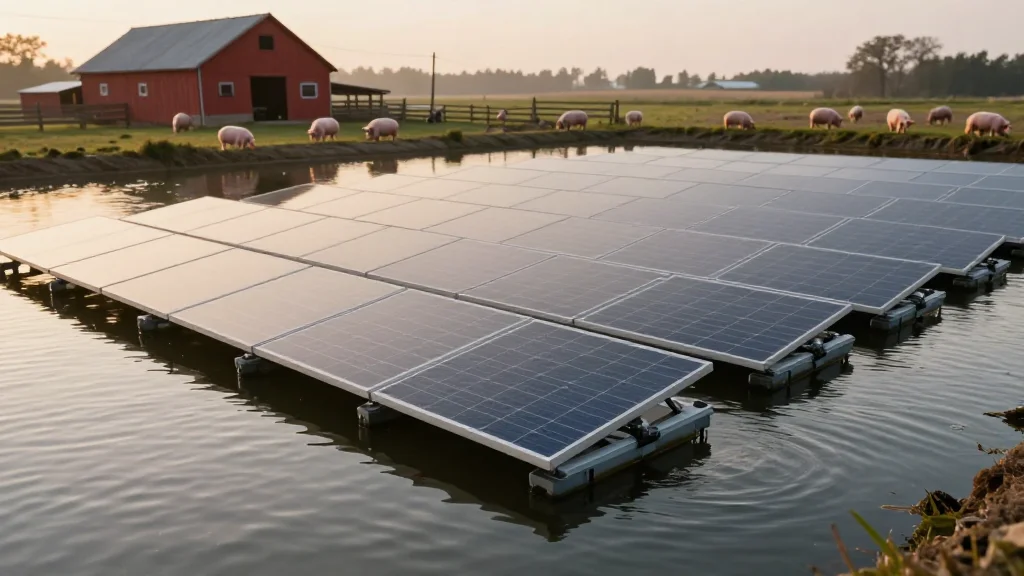
Floating PV Tested at Manure Lagoon in Spain
Why It Matters
By turning waste‑water surfaces into clean‑energy assets, the project tackles regulatory pressure on ammonia emissions and offers farms a path to lower energy costs, accelerating sustainability in intensive livestock operations.
Key Takeaways
- •Intergia testing floating PV on pig manure lagoons in Spain.
- •Prototype 1: 33 kW system covers 20% lagoon, 50 MWh/year, 22% bill cut.
- •Prototype 2: 9.4 kW system covers 10% lagoon, 15 MWh/year, 53% self‑consumption.
- •EU NextGenerationEU funds project through 2027, targeting ammonia reduction.
- •Monitoring uses floating chambers for ammonia and real‑time methane sensors.
Pulse Analysis
Intensive pig farming generates large manure lagoons that release ammonia, a pollutant linked to air‑quality concerns and nitrogen‑runoff into water bodies. Covering these lagoons has long been a mitigation strategy, but traditional tarps add cost and require frequent maintenance. Floating photovoltaic technology offers a dual benefit: it creates a physical barrier that limits gas exchange while simultaneously harvesting solar energy, turning a liability into a revenue‑generating asset. The concept aligns with EU climate goals and the agricultural sector’s push toward circular solutions.
Intergia’s two prototypes illustrate divergent engineering approaches. The Zamora installation repurposes a commercial float, deploying 56 panels for a 33 kW capacity that currently shades 20% of the lagoon, with plans to expand to 90% coverage using weighted hexagonal modules. Expected to generate roughly 50 MWh per year, it could shave up to 22% off the farm’s electricity bill. In contrast, the Zaragoza site uses a bespoke modular pontoon from Bulgaria’s Buldock, featuring corrosion‑resistant aluminum and stainless steel, 16 panels, and a 9.4 kW output that may supply 53% of the farm’s power demand. Both designs incorporate tilt mechanisms, safety railings, and automated level‑adjustment to cope with fluctuating slurry depths.
Beyond the pilot phase, the initiative’s significance lies in its scalability and policy relevance. Funded by the EU’s NextGenerationEU program, the project runs to 2027 and includes rigorous emissions monitoring—floating dynamic chambers for ammonia and real‑time methane sensors—to quantify environmental gains. If the economic analysis confirms favorable payback periods, the model could be replicated across Europe’s 2.5 million livestock farms, creating a new market niche for agrivoltaic solutions that address both energy costs and regulatory pressure on emissions. Stakeholders from agribusiness, renewable‑energy investors, and environmental regulators will be watching closely as data emerge.
Floating PV tested at manure lagoon in Spain
Comments
Want to join the conversation?
Loading comments...