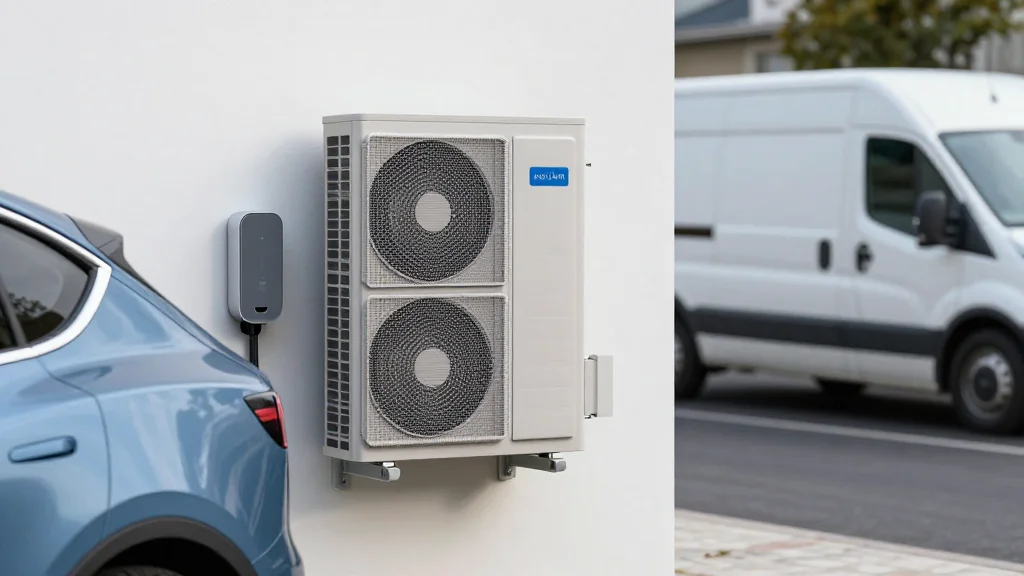
France Boosts Electrification Funding to $10.8 Billion Through 2030

Why It Matters
France’s €10 billion electrification package represents the most ambitious state‑backed push for clean‑energy transition in Europe, directly targeting the two largest sources of carbon emissions—heating and transport. By coupling financial incentives with regulatory bans, the plan creates a dual lever of market demand and compliance, accelerating the deployment of heat pumps, electric vehicles and trucks. If successful, it could reduce France’s reliance on imported gas, improve energy security, and serve as a scalable model for other nations grappling with similar fossil‑fuel dependencies. The initiative also signals a shift in climate‑tech financing, where public funds are deployed not merely as subsidies but as strategic investments that unlock private capital and stimulate domestic manufacturing. This could catalyze a virtuous cycle of job creation, technology innovation and emissions reductions, reinforcing Europe’s position in the global clean‑tech race.
Key Takeaways
- •France raises annual electrification support to €10 bn ($10.8 bn) through 2030, up from €5.5 bn.
- •Ban on gas heating in new buildings starts late 2026; phase‑out of gas in 2 million social‑housing units by 2050.
- •Target of 1 million French‑made heat pumps per year by 2030.
- •Subsidies for 50,000 high‑mileage electric vehicles and up to €100,000 per electric truck/van for businesses.
- •Program aims to cut fossil‑fuel use in heating and transport, boosting energy security amid global supply shocks.
Pulse Analysis
France’s electrification package is more than a budget line—it is a strategic bet that clean electricity can replace both the heat and mobility sectors that have traditionally anchored Europe’s carbon footprint. By doubling its annual funding, Paris is effectively crowding out gas‑based solutions with a mix of regulatory bans and market incentives, a play that mirrors the successful decarbonization of Japan’s rail system highlighted in unrelated industry analyses. The heat‑pump target alone could generate a domestic supply chain worth billions, creating jobs in manufacturing, installation and grid services, while also reducing peak‑load stress on the power system through higher efficiency.
Comparatively, Germany and the UK have relied largely on market‑driven adoption, with EV registrations and heat‑pump orders rising sharply but without a coordinated fiscal backbone. France’s top‑down approach may accelerate adoption curves, but it also introduces fiscal risk—maintaining a €10 bn annual outlay will require disciplined budgeting and perhaps new revenue streams, such as carbon pricing or green bonds. The policy’s success will hinge on execution: grid upgrades, skilled labor pipelines, and clear certification standards must keep pace with the influx of equipment.
If France meets its 2030 milestones, the ripple effect could reshape EU climate policy, prompting a harmonized electrification framework that leverages economies of scale across borders. Conversely, any shortfall—whether due to supply constraints, regulatory delays, or insufficient consumer uptake—could dampen investor confidence in large‑scale public climate‑tech interventions. The coming years will test whether France’s bold financial commitment can translate into measurable emissions cuts and a resilient, electrified economy.
France Boosts Electrification Funding to $10.8 Billion Through 2030
Comments
Want to join the conversation?
Loading comments...