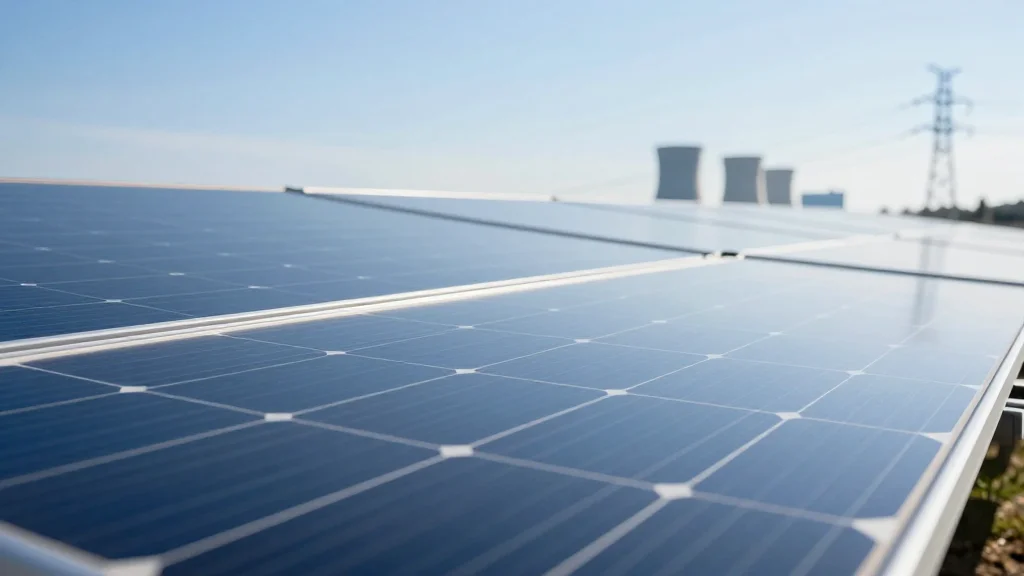
France’s Solar Surge Sends Electricity Prices Negative Across Europe

Why It Matters
The negative‑price episode in France illustrates a pivotal challenge for the ClimateTech sector: integrating massive, variable renewable generation without destabilizing electricity markets. As solar and wind capacities expand, similar surplus events could become more frequent, pressuring grid operators to adopt advanced forecasting, demand‑response, and storage solutions. The incident also raises questions about the economic sustainability of baseload nuclear and fossil‑fuel plants, potentially accelerating the transition toward a fully decarbonized grid. For investors and policymakers, the event signals that market designs must evolve to reward flexibility and penalize inflexibility. Without mechanisms to absorb excess power, renewable growth could be hampered by revenue volatility, slowing the deployment of new ClimateTech projects that rely on predictable market signals.
Key Takeaways
- •Solar generation in France exceeded 20 GW on Thursday, a record high for the country.
- •Combined with about 40 GW of nuclear output, the grid ran a large surplus.
- •France exported over 15 GW of electricity to Germany, Italy and the UK.
- •Wholesale electricity prices turned negative across the French market.
- •The event highlights the need for enhanced storage and demand‑response solutions in Europe.
Pulse Analysis
France’s negative‑price episode is a textbook case of the "duck curve" effect amplified by cross‑border interconnections. Historically, Europe’s electricity markets have managed surplus through inter‑regional trade, but the scale of this solar surge—over 20 GW in a single country—exceeds typical buffers. The market’s reaction—pushing prices below zero—acts as a blunt instrument to balance supply, but it also exposes the fragility of revenue models for both renewable and conventional generators.
In the short term, the incident will likely accelerate investment in battery storage and flexible industrial loads that can absorb cheap power. Companies like Tesla and Fluence, which provide large‑scale storage, may see heightened demand as grid operators seek to smooth out such spikes. In the medium term, regulators may consider redesigning capacity markets to reward flexibility, perhaps introducing negative‑price caps or ancillary service payments that compensate generators for providing grid stability.
Strategically, the event could reshape the competitive landscape between nuclear and renewable assets. While nuclear offers reliable baseload, its profitability is threatened when market prices dip below zero for extended periods. This could hasten the retirement of older reactors and open space for next‑generation small modular reactors (SMRs) that can ramp output more responsively. Ultimately, France’s experience serves as a warning and an opportunity: without adaptive market rules and robust flexibility solutions, the climate‑tech transition could encounter costly bottlenecks, but with the right policies, it can demonstrate how abundant clean energy can be harnessed profitably.
France’s Solar Surge Sends Electricity Prices Negative Across Europe
Comments
Want to join the conversation?
Loading comments...