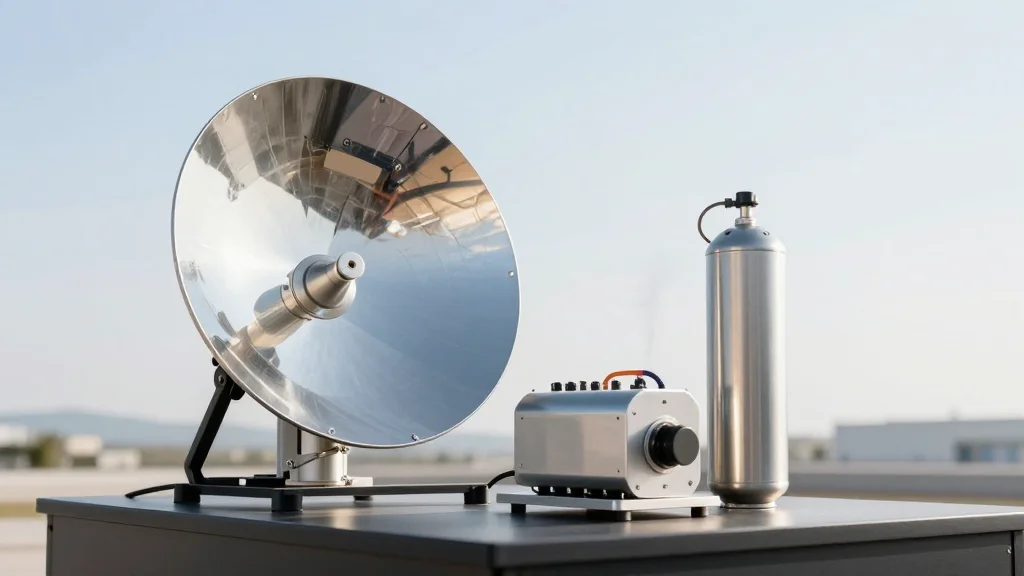
Fraunhofer ISE Achieves 31.3% Record Solar-to-Hydrogen Efficiency in CPV Electrolysis
Why It Matters
Achieving over 30% solar‑to‑hydrogen efficiency narrows the cost gap for green hydrogen, a cornerstone of industrial decarbonization. Validating concentrator PV‑electrolysis outdoors builds investor confidence in scaling renewable‑hydrogen production.
Key Takeaways
- •Record 31.3% solar‑to‑hydrogen efficiency achieved outdoors
- •Four‑junction CPV cells reached 34.7% solar‑to‑electricity conversion
- •System operated 107 hours with no performance degradation
- •TRL 3 prototype suggests early‑stage but promising commercial potential
- •Projected LCOH could fall below $3 per kilogram with 35% capacity factor
Pulse Analysis
The Fraunhofer Institute for Solar Energy Systems has pushed the boundaries of renewable hydrogen generation by integrating micro‑concentrator photovoltaics with proton exchange membrane (PEM) electrolysis. Their four‑junction CPV cells, built from GaInP/GaAs and GaInAsP/GaInAs stacks, concentrate sunlight onto a compact area, delivering a world‑record 34.7% solar‑to‑electricity conversion. Coupled directly to two PEM cells, the system converts that electricity into hydrogen at a peak solar‑to‑hydrogen (STH) efficiency of 31.3% under real‑world outdoor conditions, a 5% improvement over previous best‑in‑class setups. This breakthrough demonstrates that high‑concentration PV can be reliably paired with electrolyzers without performance loss over extended operation.
From a market perspective, the efficiency leap translates directly into lower energy input per kilogram of hydrogen, a critical metric for the emerging green‑hydrogen economy. The researchers estimate that, with a 35% capacity factor, the levelized cost of hydrogen (LCOH) could dip below $3/kg, positioning the technology to compete with fossil‑based hydrogen and meet the cost targets set by the European Union and other policy frameworks. Such cost reductions could accelerate adoption in hard‑to‑decarbonize sectors like steel, chemicals, and heavy transport, where large‑scale, low‑carbon fuel supplies are essential.
Despite the promise, the system remains at technology readiness level 3, indicating a proof‑of‑concept stage. Key challenges include improving thermal coupling to eliminate auxiliary heating, scaling the Fresnel‑lens array for larger power outputs, and securing financing for pilot‑scale demonstrations. The collaboration with Clearsun Energy aims to form a startup that will commercialize the concentrating PV‑hydrogen module, bridging the gap between laboratory success and market‑ready products. Continued advances in catalyst durability, module manufacturing, and system integration will be pivotal for turning this record‑setting efficiency into a viable commercial pathway for green hydrogen.
Fraunhofer ISE achieves 31.3% record solar-to-hydrogen efficiency in CPV electrolysis
Comments
Want to join the conversation?
Loading comments...