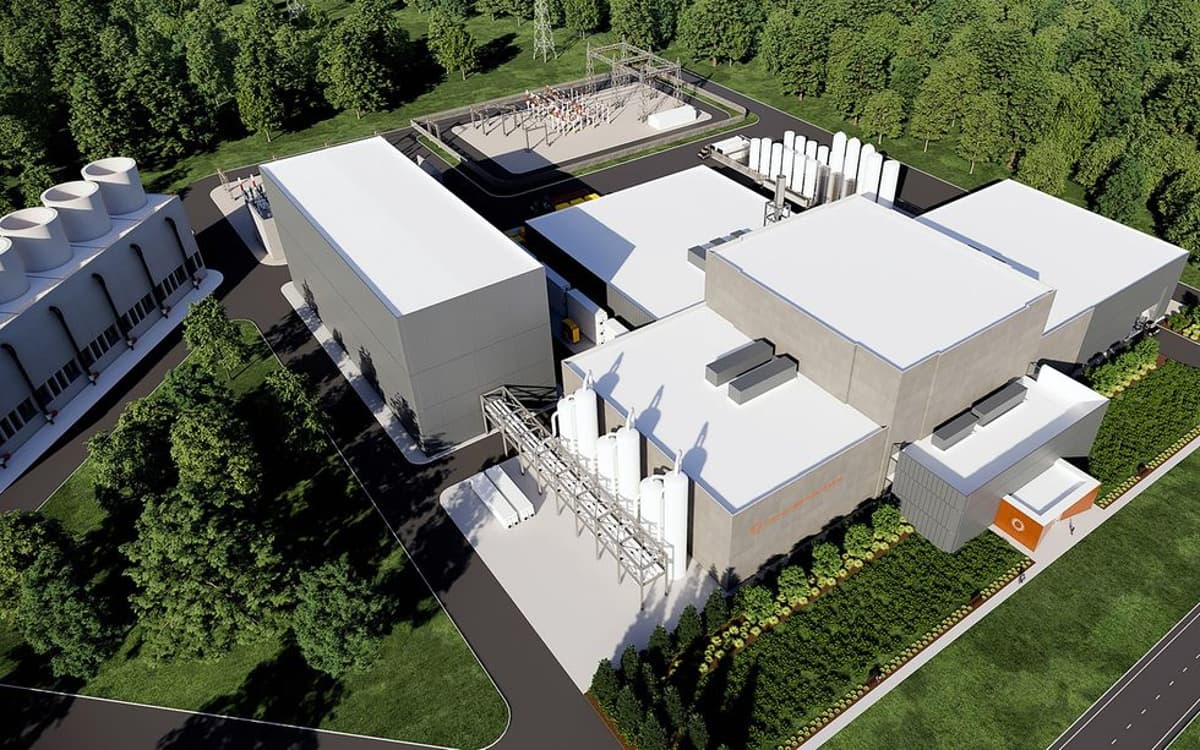
Fusion Startup’s Commercial Reactor Design Gets a Big Boost
Companies Mentioned
Why It Matters
If ARC reaches its performance targets, it would provide large‑scale, carbon‑free electricity at a scale comparable to hundreds of thousands of homes, accelerating the commercial viability of fusion energy and reshaping the power generation landscape.
Key Takeaways
- •ARC aims for 1.1 GW fusion output, 400 MW net electricity.
- •HTS magnets cut cooling needs, shrinking reactor size dramatically.
- •Design tolerates one plasma disruption daily, restarts within a minute.
- •Vacuum vessel swaps yearly, enabling upgrades and minimal downtime.
- •Prototype Sparc 75% complete; first plasma targeted for 2027.
Pulse Analysis
The ARC reactor represents a paradigm shift in fusion engineering by leveraging high‑temperature superconductor magnets. Unlike traditional low‑temperature superconductors that demand near‑absolute‑zero cooling, HTS coils operate at 20‑77 K, slashing cryogenic infrastructure and allowing a more compact, affordable tokamak design. This reduction in size not only lowers capital costs but also simplifies integration with existing power‑grid infrastructure, a critical hurdle that has stalled many fusion projects.
Beyond hardware, CFS’s recent peer‑reviewed studies tackle the perennial challenge of plasma stability. By engineering rapid gas‑injection mitigation and designing components to survive daily disruptions, ARC can maintain continuous power output, a capability essential for utility‑scale adoption. The strategy of swapping the vacuum vessel every one to two years further ensures that wear‑and‑tear does not translate into prolonged outages, aligning the plant’s availability with conventional baseload generators.
Commercialization prospects are bolstered by the progress of the Sparc prototype, now over three‑quarters complete and on track for a 2027 plasma demonstration. Successful operation will validate ARC’s design assumptions, de‑risking the larger plant slated for the early 2030s in Virginia. As governments and investors intensify focus on clean‑energy transitions, a functional, grid‑ready fusion plant could become a cornerstone of decarbonization, offering near‑limitless power with minimal fuel and zero carbon emissions.
Fusion Startup’s Commercial Reactor Design Gets a Big Boost
Comments
Want to join the conversation?
Loading comments...