Future Industries Take Center Stage
•March 9, 2026
0
Why It Matters
The push redefines global technology leadership and opens sizable market and cooperation prospects for European firms in emerging high‑value sectors.
Key Takeaways
- •China targets AI, robotics, 6G, quantum, energy, biomanufacturing.
- •Six pillars aim to drive low‑carbon and digital economies.
- •European firms eye joint R&D and supply‑chain partnerships.
- •Standards cooperation could shape global AI and 6G rules.
- •Accelerated tech rollout may reshape global competitive landscape.
Pulse Analysis
China’s latest industrial policy marks a decisive pivot from traditional manufacturing toward high‑tech ecosystems that promise both economic growth and strategic autonomy. By bundling AI, advanced robotics, quantum computing, next‑generation energy and biomanufacturing under a single national agenda, Beijing aims to capture value chains that were previously dominated by the West. The initiative is backed by substantial state funding, talent pipelines and a regulatory framework that encourages rapid prototyping, signaling to investors that these sectors will receive sustained support.
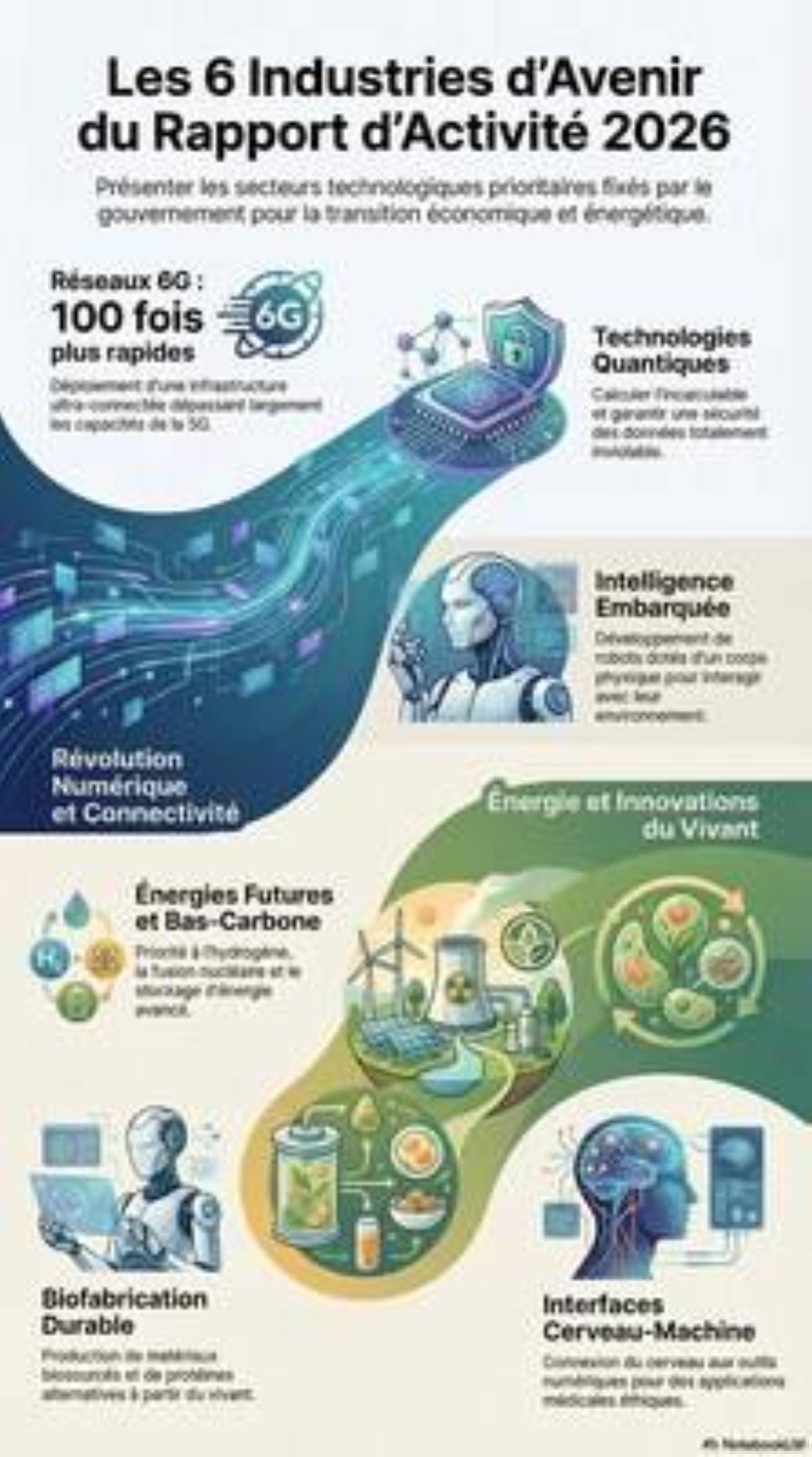
The six pillars—future energy, quantum technologies, embedded intelligence, brain‑machine interfaces, 6G networks and biomanufacturing—represent interlocking technologies that reinforce each other. Low‑carbon solutions such as hydrogen and fusion complement AI‑driven grid optimization, while quantum cryptography underpins the security of ultra‑fast 6G links. Meanwhile, biomanufacturing leverages synthetic biology to produce sustainable materials, creating a feedback loop that reduces environmental footprints across the entire industrial stack. This convergence accelerates the timeline for commercial viability, pushing breakthrough concepts into market pilots within the next few years.
For Europe, the Chinese thrust offers both a competitive challenge and a collaborative opening. Joint research programs can tap into China’s manufacturing scale and funding, while European expertise in standards development and ethical AI governance can shape global norms. Coordinated supply‑chain strategies—particularly in rare‑earths, semiconductor components and bio‑materials—could mitigate geopolitical risks and ensure resilience. Ultimately, the success of these future industries will hinge on cross‑border cooperation, making early engagement a strategic imperative for European policymakers and corporate leaders alike.
Future Industries Take Center Stage
0
Comments
Want to join the conversation?
Loading comments...