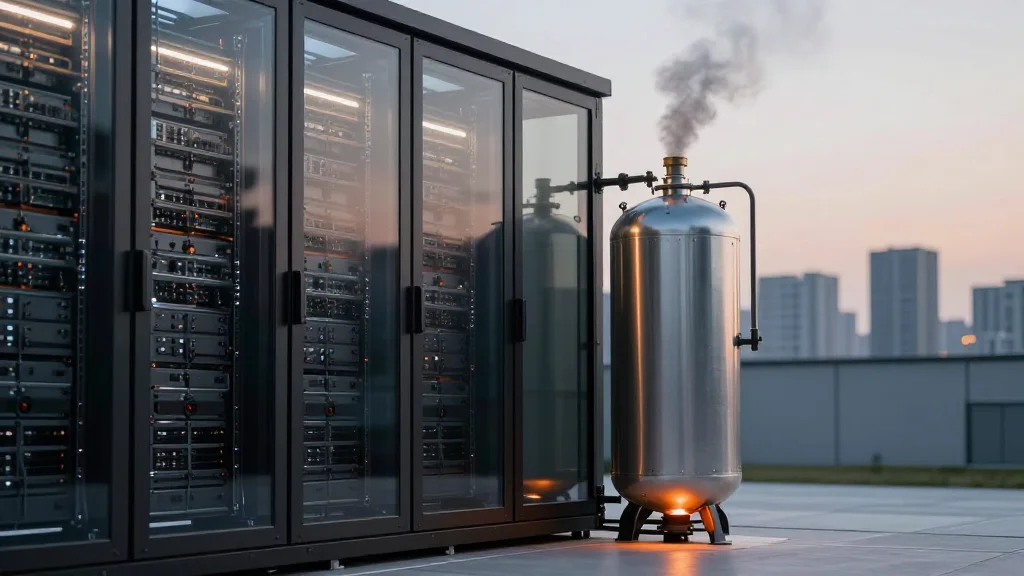
Gas‑Powered Data Centers Could Emit More CO₂ Than Nations, WIRED Finds

Companies Mentioned
Why It Matters
The emergence of gas‑powered, behind‑the‑meter data centers threatens to undermine recent progress in decarbonizing the U.S. power sector. By creating isolated fossil‑fuel hubs, these projects could lock in high‑emission infrastructure for the lifespan of AI hardware, making it harder for tech firms to meet net‑zero commitments. Moreover, the concentration of such plants near vulnerable communities raises environmental justice issues, potentially sparking legal challenges and public backlash that could delay or reshape AI deployment strategies. If unchecked, the trend could also distort market signals for renewable investment. Large, privately financed gas plants may attract capital away from grid‑scale wind and solar projects, slowing the broader transition to clean energy. Conversely, heightened scrutiny could accelerate the development of low‑carbon microgrids, battery storage, and green hydrogen solutions tailored to data‑center needs, fostering a new wave of climate‑tech innovation.
Key Takeaways
- •WIRED analysis identifies dozens of behind‑the‑meter natural‑gas data‑center projects across the U.S.
- •xAI’s two campuses could emit >6.4 million tons CO₂e each year, enough for 1.5 million homes.
- •Microsoft‑linked Chevron project in West Texas projects >11.5 million tons CO₂e annually, surpassing Jamaica’s emissions.
- •Community opposition in Memphis and a NAACP lawsuit highlight environmental‑justice concerns.
- •Permits assume full‑capacity operation; actual emissions may be lower but still substantial.
Pulse Analysis
The push for on‑site natural‑gas power reflects a classic clash between rapid technological scaling and climate ambition. Historically, the U.S. energy transition has moved from coal to gas, then toward renewables; these data‑center projects risk inserting a new, entrenched fossil‑fuel layer just as the country strives to decarbonize. The AI boom creates a unique demand shock—massive, low‑latency compute that traditional grids struggle to meet, especially in regions with limited transmission capacity. Companies like xAI and Microsoft are opting for certainty over sustainability, betting that short‑term reliability outweighs long‑term climate costs.
From a market perspective, the financial calculus is clear: dedicated gas plants can be built faster and at predictable cost, delivering the megawatt‑hour reliability AI workloads require. However, this short‑term advantage may erode brand equity for firms touting green credentials, especially as investors increasingly scrutinize Scope 2 and Scope 3 emissions. The emerging legal challenges—exemplified by the NAACP suit—signal that community pushback can translate into costly delays and reputational damage.
Looking ahead, policy will be the decisive lever. Carbon‑pricing mechanisms, stricter permitting assumptions, or mandates for renewable‑energy‑as‑a‑service could tilt the economics back toward clean power. Simultaneously, advances in battery storage, on‑site solar, and green hydrogen could provide the reliability AI firms need without the emissions penalty. The next wave of climate‑tech innovation may therefore focus on integrating these clean‑energy solutions into data‑center design, turning today’s emissions dilemma into a catalyst for a greener AI infrastructure.
Gas‑Powered Data Centers Could Emit More CO₂ Than Nations, WIRED Finds
Comments
Want to join the conversation?
Loading comments...