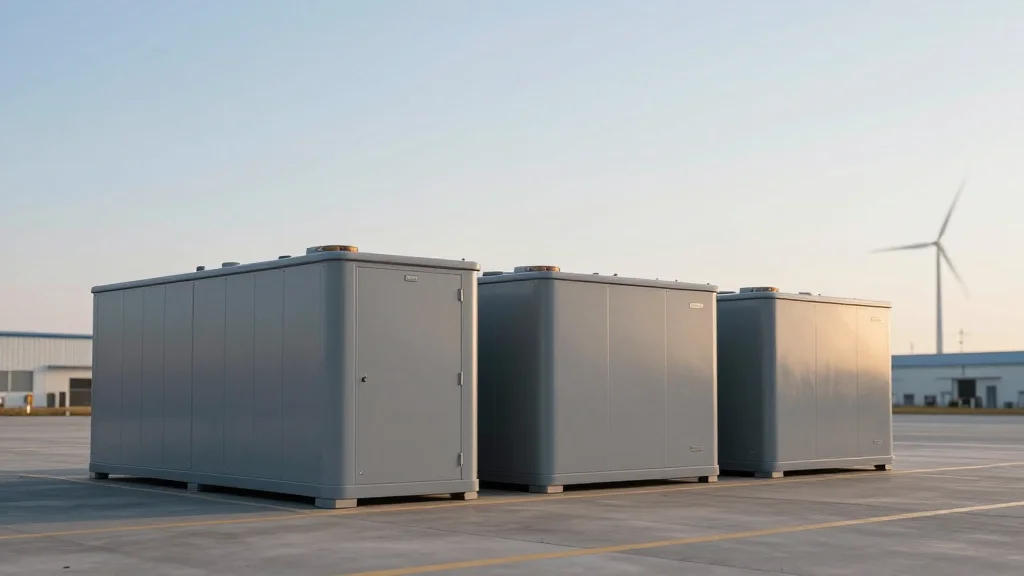
Germany Moves Toward 4-Hour Battery Storage – First Flower Projects Mark New Trend in Hamburg and Saxony-Anhalt
Why It Matters
Four‑hour batteries let grid operators smooth renewable fluctuations and provide firm capacity, accelerating Germany’s decarbonisation goals. The scale of Flower’s projects signals an industry‑wide pivot to longer‑duration storage, reshaping investment economics.
Key Takeaways
- •Flower builds 100 MW/400 MWh 4‑hour storage in Hamburg.
- •63 MW/257 MWh 4‑hour battery planned in Saxony‑Anhalt.
- •Combined projects add 163 MW power, 657 MWh capacity.
- •German storage installations rose 18% YoY in early 2026.
- •IRENA forecasts >20 GW battery capacity in Germany by year‑end.
Pulse Analysis
Germany’s battery‑storage landscape is undergoing a rapid transformation driven by plummeting lithium‑ion costs and an urgent need to balance a grid that is now more than 50% renewable. While early utility‑scale batteries focused on sub‑hour frequency regulation, market participants are increasingly targeting multi‑hour discharge to enable energy arbitrage, peak‑shaving, and firm capacity. This shift aligns with Europe’s broader decarbonisation agenda, where longer‑duration storage is essential for maintaining reliability as wind and solar output become more variable.
Flower Infrastructure Technologies’ two flagship projects illustrate the new direction. The 100 MW/400 MWh installation in Hamburg’s Bergedorf district sits beside an emerging innovation hub, positioning it as a test‑bed for grid‑flexibility services beyond traditional ancillary markets. In Saxony‑Anhalt, the 63 MW/257 MWh plant adds regional depth, together delivering 163 MW of power that can discharge for four hours—double the prevailing two‑hour norm. These assets not only bolster local renewable integration but also provide a template for developers seeking to monetize longer‑duration capabilities through market mechanisms such as capacity auctions and renewable‑energy‑certificate trading.
The broader market signal is clear: Germany commissioned 1,470 MW of storage capacity in the first third of 2026, an 18% increase over the same period last year, and the International Renewable Energy Agency projects total battery capacity to surpass 20 GW by year‑end. Concurrently, competitors like Switzerland’s redox‑flow projects are pushing duration limits beyond 20 hours, intensifying the technology race. Policymakers are responding with revised grid codes and incentive structures that reward multi‑hour flexibility, suggesting that developers who prioritize longer discharge times will capture a growing share of future investment.
Germany Moves Toward 4-Hour Battery Storage – First Flower Projects Mark New Trend in Hamburg and Saxony-Anhalt
Comments
Want to join the conversation?
Loading comments...