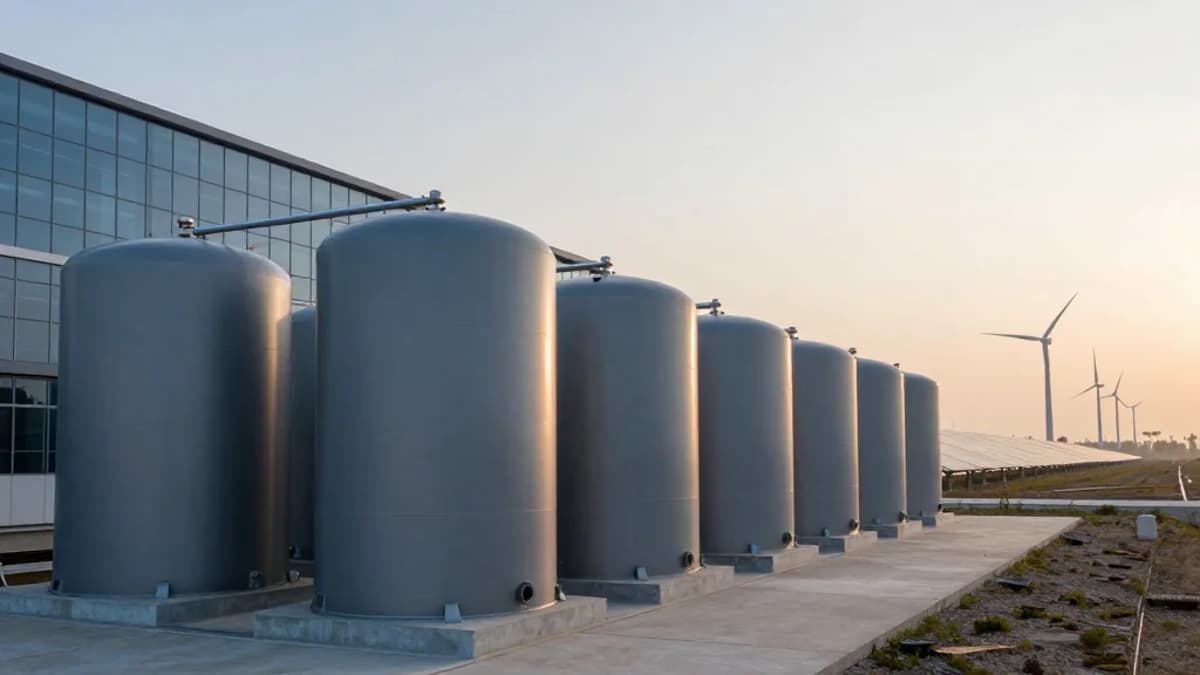
Gigantic Form Energy Battery to Power Google Data Center in Minnesota
•February 24, 2026
0
Why It Matters
The partnership proves long‑duration storage can reliably back renewable‑heavy data centers, reducing reliance on fossil generators and setting a template for cost‑neutral clean‑energy procurement.
Key Takeaways
- •300 MW iron‑air battery can discharge 100 hours.
- •Project stores 30 GWh, enough for four‑day operation.
- •Google funds 1.4 GW wind and 200 MW solar for site.
- •Xcel’s customers avoid price hikes; Google covers infrastructure.
- •First large‑scale commercial deployment for Form Energy.
Pulse Analysis
Long‑duration energy storage has long been the missing link between intermittent renewables and the continuous power demand of modern data centers. Form Energy’s iron‑air chemistry promises multi‑day discharge capability at a fraction of the cost of traditional lithium solutions, positioning it as a viable alternative for utilities seeking to balance grid reliability with carbon goals. By targeting a 100‑hour discharge window, the Pine Island project demonstrates that storage can move beyond peak‑shaving to become a core supply asset, smoothing wind and solar output across weather cycles.
For Google, the arrangement offers a strategic pathway to meet its sustainability commitments without passing additional costs onto its massive user base. By coupling 300 MW of battery capacity with 1.4 GW of wind and 200 MW of solar, the data center can draw clean power on demand, even during multi‑day lulls in renewable generation. Google’s willingness to underwrite grid‑infrastructure upgrades removes a common barrier for utilities, allowing Xcel Energy to expand clean‑energy resources while keeping electricity rates stable for its 4 million customers. This financial model could become a playbook for other tech giants seeking to decarbonise compute workloads.
The broader market implications are significant. Successful operation of Form’s first commercial-scale plant could accelerate investor confidence in long‑duration storage, prompting further utility contracts and scaling of manufacturing capacity at the Weirton facility. However, the technology still faces hurdles, including performance validation at scale and competitive pressure from emerging chemistries. If Form delivers on its 2028 timeline, the project may catalyse policy incentives and spur additional partnerships, cementing long‑duration storage as a cornerstone of the clean‑energy transition.
Gigantic Form Energy battery to power Google data center in Minnesota
0
Comments
Want to join the conversation?
Loading comments...