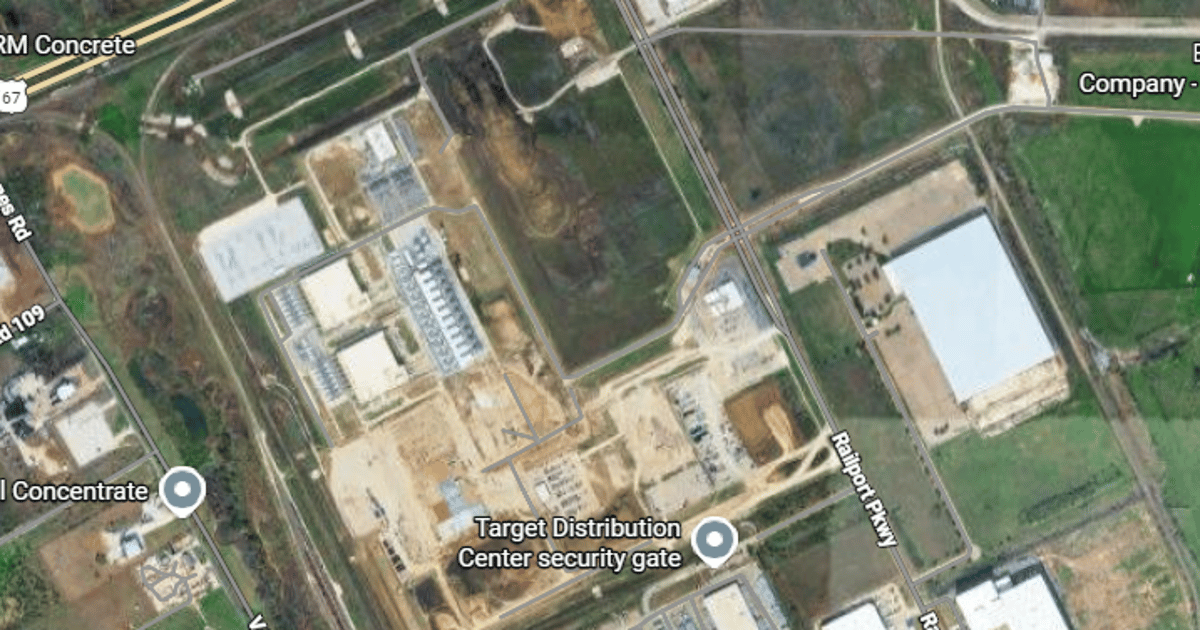
Google Files for Fifth Data Center at Midlothian Campus in Texas
•March 3, 2026
0
Why It Matters
The new facility boosts Google’s cloud capacity in a fast‑growing market, reinforcing its competitive edge in AI services and regional economic development.
Key Takeaways
- •Fifth Midlothian data center costs $880 million
- •288,000 sq ft, one‑story building
- •Completion targeted for February 2027
- •Part of $40 bn Texas cloud expansion
- •Adds capacity for AI and cloud services
Pulse Analysis
Texas has become a hotbed for hyperscale data center investment, driven by abundant land, favorable tax regimes, and a growing renewable energy supply. Google’s Midlothian campus, now entering its fifth phase, exemplifies this trend. By allocating $880 million to a 288,000‑square‑foot facility, Google not only expands its physical footprint but also positions itself to meet surging demand for low‑latency cloud and AI workloads across the Dallas‑Fort Worth corridor. The project’s timeline—completion in early 2027—coincides with the company’s broader $40 billion Texas commitment, underscoring a strategic focus on regional resilience and capacity.
The Midlothian expansion dovetails with Google’s recent launch of a dedicated Texas cloud region in Dallas, offering customers localized services that reduce latency and improve data sovereignty. As enterprises accelerate AI adoption, the need for high‑performance compute and storage intensifies, prompting hyperscalers to secure additional power and cooling infrastructure. Google’s use of shell entities like Sharka LLC streamlines permitting and land acquisition, while its partnership with clean‑energy providers such as AES signals a push toward sustainable operations, a growing expectation among corporate clients.
Beyond technical advantages, the new data center promises significant economic ripple effects. Construction and ongoing operations will generate thousands of jobs and stimulate ancillary industries, from construction to fiber‑optic networking. Moreover, the investment reinforces Texas’s reputation as a competitive alternative to traditional cloud hubs like Northern Virginia and Oregon. For rivals such as Amazon, Microsoft, and Meta, Google’s aggressive Texas rollout raises the stakes, potentially accelerating a broader industry shift toward decentralized, region‑focused cloud architectures.
Google files for fifth data center at Midlothian campus in Texas
0
Comments
Want to join the conversation?
Loading comments...