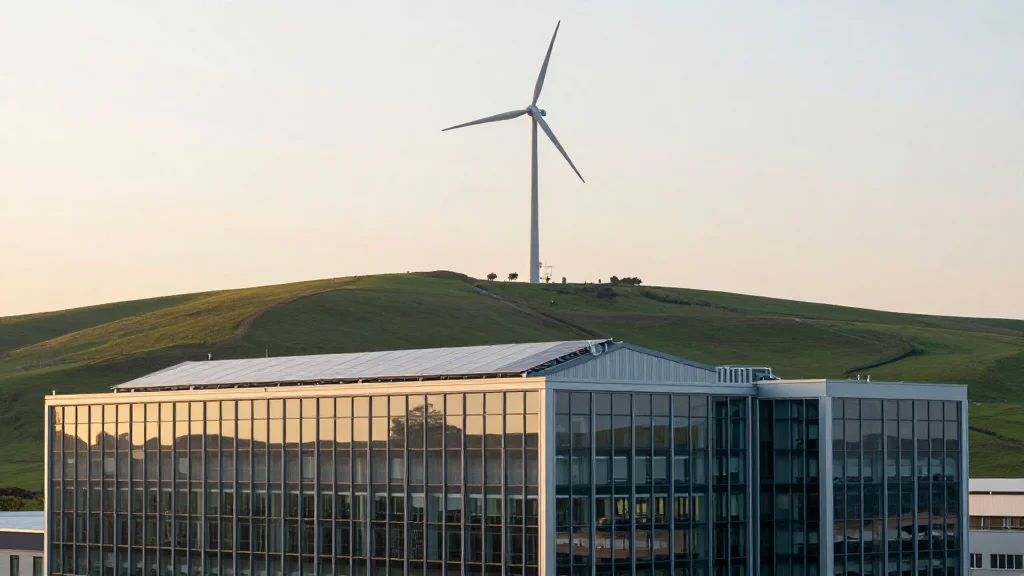
Google Launches Renewable‑powered Data Centre in Upper Austria for European AI

Companies Mentioned
Why It Matters
Google’s renewable‑powered data centre signals that climate considerations are moving from peripheral CSR statements to core business strategy in the cloud sector. By tying AI compute to clean energy, Google not only reduces its own carbon footprint but also offers enterprises a tangible way to meet ESG targets, potentially reshaping procurement decisions across Europe. The project also illustrates how tech giants can catalyze regional renewable investments, reinforcing the EU’s broader climate objectives. If the Upper Austria centre meets its carbon‑free promises, it could set a benchmark for future data centre projects, pressuring competitors to accelerate their own green initiatives. Conversely, any shortfall in renewable supply or reliance on offsets could invite criticism and regulatory scrutiny, highlighting the delicate balance between rapid AI expansion and genuine sustainability.
Key Takeaways
- •Google announces a new data centre in Upper Austria powered by 100% renewable electricity.
- •Facility will support European AI workloads and aims for operational launch in late 2027.
- •Renewable mix includes regional hydro and Alpine wind farms, with on‑site waste‑heat recycling.
- •Project expected to create ~500 construction jobs and 200 permanent technical roles.
- •Capital investment likely in the €1‑1.5 billion ($1.1‑$1.6 billion) range, with 15‑year renewable contracts.
Pulse Analysis
Google’s Austrian data centre is more than a geographic expansion; it is a strategic bet that sustainability will become a decisive factor in cloud procurement. Historically, cloud providers have competed on scale, price, and latency. The emergence of AI workloads—particularly large language models—has dramatically increased energy intensity, prompting regulators and customers to demand carbon‑aware solutions. By locking in long‑term renewable contracts and showcasing advanced cooling, Google is positioning itself as the low‑carbon choice for AI, potentially capturing market share from rivals still reliant on fossil‑fuel‑heavy grids.
The move also reflects a maturation of the European clean‑energy market. Austria’s hydro capacity offers a stable, dispatchable source that can meet the constant power draw of data centres, while wind adds diversification. If Google’s waste‑heat recycling proves effective, it could lower the industry’s average PUE by several points, setting a new efficiency baseline. Competitors will likely respond with similar green‑focused builds, accelerating a virtuous cycle of renewable investment and technology innovation.
However, the initiative carries risk. The true carbon impact hinges on the integrity of renewable contracts and the avoidance of reliance on carbon offsets that may not deliver real emissions reductions. Moreover, the rapid scaling of AI compute could outpace renewable supply, forcing providers to consider hybrid solutions that blend clean and conventional power. Stakeholders will be watching the Upper Austria centre’s performance data closely; its success or failure could shape the next wave of climate‑tech policy and investment across the cloud industry.
Google launches renewable‑powered data centre in Upper Austria for European AI
Comments
Want to join the conversation?
Loading comments...