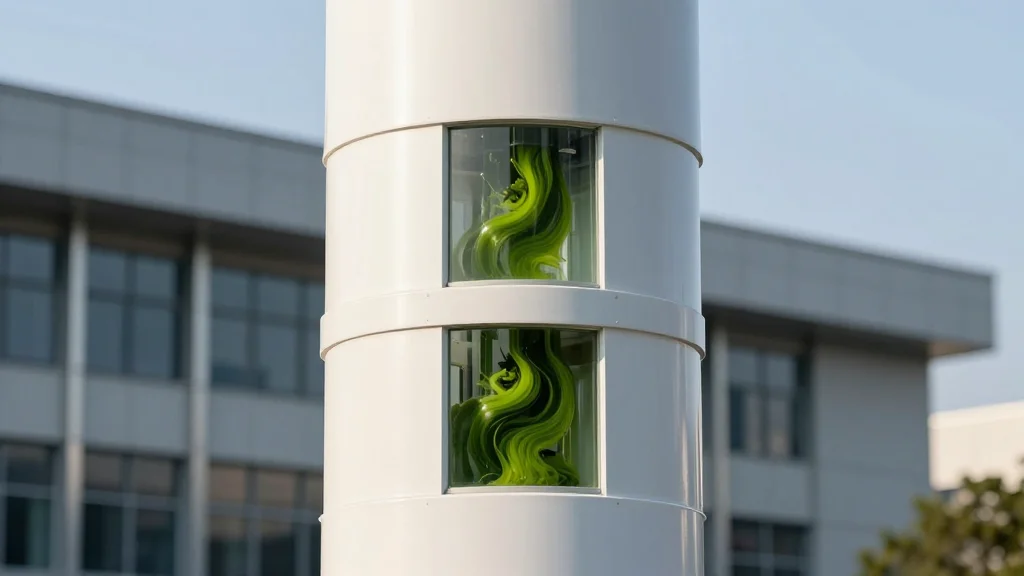
Greengine Deploys World’s First Vertical Algal Biofilm Carbon Capture & Utilization Unit
Why It Matters
The unit proves that engineered carbon capture can deliver measurable climate benefits in space‑constrained urban settings, complementing natural tree planting and supporting India’s net‑zero and CCUS objectives. It also illustrates a scalable collaboration framework that could accelerate adoption of frontier climate technologies across both corporate and heavy‑industry sectors.
Key Takeaways
- •G-Urban Tree 100x captures ~2.25 t CO₂ per year, mimicking 100 trees
- •Solar‑powered, modular design fits corporate campuses, airports, metro stations
- •Algal biomass is harvested for sustainable material applications, closing carbon loop
- •Technology can be retrofitted to industrial exhaust, aiding hard‑to‑abate sectors
- •EIL‑Greengine partnership signals rising public‑private climate‑tech collaborations in India
Pulse Analysis
The G‑Urban Tree 100x represents a new class of engineered carbon sinks that sidestep the land‑scarcity dilemma facing Indian megacities. By embedding Greengine’s patented Vertical Algal Biofilm Technology (VABT™) in a compact, solar‑powered chassis, the unit draws ambient CO₂ and converts it into oxygen and algal biomass. Each module delivers the climate benefit of roughly 100 mature trees while occupying a footprint comparable to a small billboard. This approach aligns with the broader shift toward nature‑inspired, low‑energy solutions that can be deployed on rooftops, parking decks, and transit hubs.
The deployment at Engineers India Limited’s Gurugram campus underscores a growing appetite among established enterprises for deep‑tech climate partners. As a Navratna public‑sector undertaking, EIL’s endorsement provides credibility that could accelerate adoption across corporate campuses and government facilities. Moreover, the VABT platform is not limited to ambient air; its modular reactors can be coupled to flue gases from refineries, cement plants, and steel mills, offering a pathway to meet India’s aggressive CCUS targets. The dual‑use model—urban carbon capture plus industrial decarbonisation—creates a diversified revenue stream for Greengine. Commercial viability hinges on the value extracted from the harvested algal biomass.
Greengine plans to upcycle the feedstock into bioplastics, fertilizers, and carbon‑rich building materials, turning a waste product into a marketable commodity. The unit’s 600‑800 sq ft exterior also doubles as a branding canvas, allowing companies to showcase sustainability commitments to stakeholders. While scaling will require capital for manufacturing and remote‑monitoring infrastructure, the convergence of policy incentives for carbon removal and growing ESG pressure makes the business case compelling. If replicated nationwide, the technology could add several million tonnes of CO₂ removal annually.
Greengine Deploys World’s First Vertical Algal Biofilm Carbon Capture & Utilization Unit
Comments
Want to join the conversation?
Loading comments...