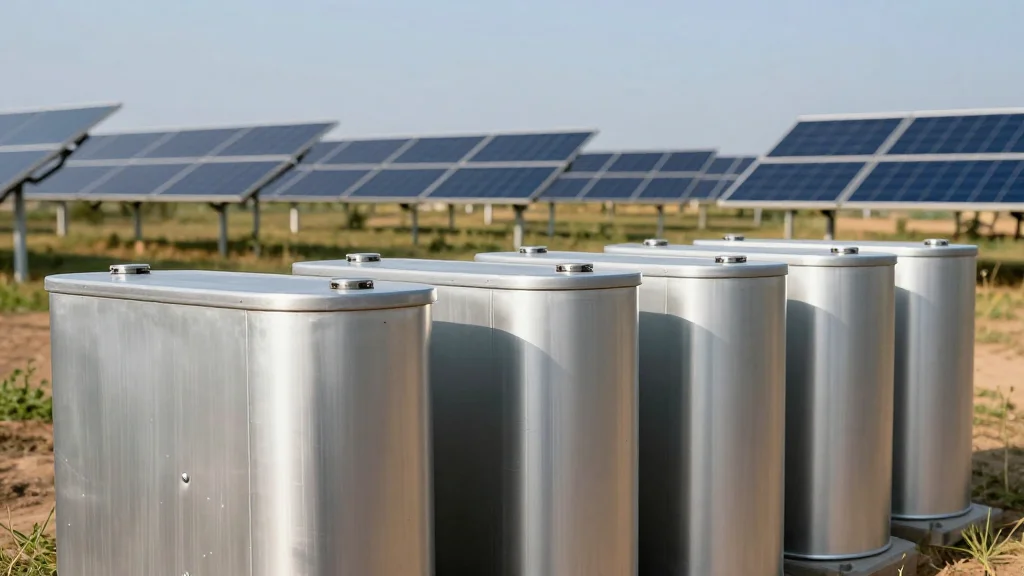
Gujarat Deploys 870 MW Battery Network to Bolster Renewable Grid

Why It Matters
Large‑scale battery storage is a linchpin for India’s climate goals, enabling higher renewable penetration without compromising grid reliability. Gujarat’s 870 MW deployment demonstrates that state‑level policy, combined with targeted incentives, can overcome the intermittency challenges that have historically limited solar growth. Successful operation of these systems could catalyse a cascade of storage investments across the country, reducing dependence on coal‑based peaker plants, cutting emissions, and lowering electricity costs for end users. Moreover, the integration of storage with commercial and industrial demand response could unlock new revenue streams, fostering a more resilient and flexible power market.
Key Takeaways
- •Gujarat commissioned a 870 MW battery energy storage network across five sites.
- •The rollout is part of the Gujarat Integrated Renewable Energy Policy, 2025.
- •13 additional battery storage projects have been registered in the state.
- •Storage will capture surplus solar power for evening demand, reducing curtailment.
- •Standard Operating Procedure to be approved soon, opening bids to private developers.
Pulse Analysis
Gujarat’s battery rollout signals a decisive shift from ad‑hoc storage pilots to a coordinated, policy‑driven strategy. By embedding BESS into its renewable roadmap, the state is addressing two critical bottlenecks: grid inertia and peak‑load balancing. Historically, India’s storage market has been fragmented, with projects limited to utility‑scale pilots or corporate micro‑grids. Gujarat’s approach—combining state‑backed financing, clear regulatory SOPs, and an open‑bidding framework—creates a replicable model that could accelerate national storage capacity toward the 10‑15 GW target set for 2030.
From a market perspective, the announcement is likely to attract both domestic manufacturers and international players seeking to tap India’s burgeoning demand for lithium‑ion and flow‑battery technologies. The competitive bidding process will pressure vendors to lower costs, potentially driving down the levelized cost of storage (LCOS) and making hybrid solar‑storage projects financially viable without heavy subsidies. This price pressure could also spur innovation in longer‑duration storage solutions, which are essential for deep‑renewable integration.
Looking forward, the real test will be operational performance. If Gujarat can demonstrate high round‑trip efficiency, minimal degradation, and reliable dispatch during peak periods, it will provide the empirical evidence needed to convince skeptical utilities in other states. Conversely, any shortfalls—whether technical or regulatory—could dampen enthusiasm and slow the rollout of similar schemes. The state’s ability to swiftly approve the SOP and streamline permitting will be as crucial as the technology itself, shaping the trajectory of India’s climate‑tech infrastructure for years to come.
Gujarat Deploys 870 MW Battery Network to Bolster Renewable Grid
Comments
Want to join the conversation?
Loading comments...