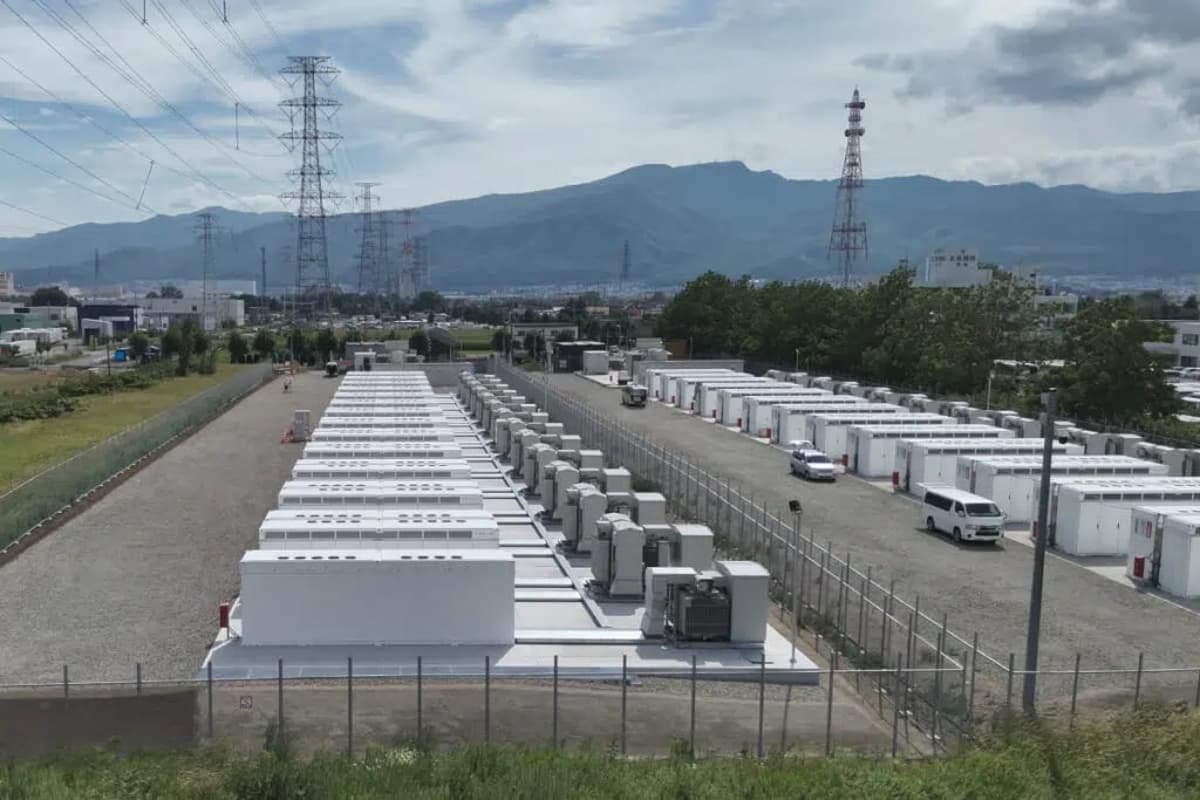
HDRE, Tokyo Gas Sign 150MW BESS Deal in Japan as Trading, Curtailment and Disaster Relief Drive Use Cases in Growing Market
Why It Matters
The partnership accelerates Japan’s battery‑storage rollout, a critical enabler for meeting decarbonisation targets and enhancing grid reliability amid increasing renewable penetration and natural‑disaster risk.
Key Takeaways
- •HDRE and Tokyo Gas add 149 MW BESS, total contracts reach 340 MW
- •Tokyo Gas aims for 1 GW BESS by FY2030, 2 GW early 2030s
- •Projects receive 20‑year LTDA capacity payments, 90% market revenue to OCCTA
- •Small 2 MW/8 MWh units dominate, driven by curtailment, disaster relief
Pulse Analysis
Japan’s battery‑energy‑storage market is entering a decisive growth phase, propelled by policy tools such as the Long‑Term Decarbonization Auction (LTDA). The recent 99 MW and 50 MW BESS agreements between HD Renewable Energy and Tokyo Gas illustrate how utilities are locking in long‑term capacity payments while also tapping wholesale market arbitrage and ancillary‑service revenues. By committing to 20‑year contracts that channel most earnings back to the national grid operator OCCTA, these projects align commercial incentives with the country’s broader decarbonisation agenda, positioning storage as a cornerstone of the 2030 carbon‑neutral goal.
While megawatt‑scale, multi‑hour assets capture headlines, the bulk of Japan’s operational storage consists of 2 MW/8 MWh units. Developers such as Hulic, Tokyu Power Supply and RE100 are deploying these compact systems to address solar curtailment, provide disaster‑relief power, and enable renewable‑plus‑storage optimisation services. The modest size fits Japan’s limited land availability and grid‑connection constraints, yet the aggregated capacity delivers meaningful grid‑balancing benefits. Recent contracts—like Hulic’s ¥100 billion (≈US$624 million) 10‑year investment plan—signal strong private‑sector confidence in these niche applications.
The strategic implications are profound. For utilities, BESS offers a versatile tool to smooth intermittent generation, monetize excess solar output, and maintain power supply during earthquakes or typhoons. For investors, the clear policy framework, long‑term revenue streams and expanding corporate demand for renewable‑linked storage create a compelling risk‑adjusted return profile. As Tokyo Gas targets up to 2 GW of storage in the early 2030s, and foreign developers such as HDRE pursue overseas expansion, Japan is poised to become a benchmark market for integrated battery solutions in a high‑density, disaster‑prone environment.
HDRE, Tokyo Gas sign 150MW BESS deal in Japan as trading, curtailment and disaster relief drive use cases in growing market
Comments
Want to join the conversation?
Loading comments...