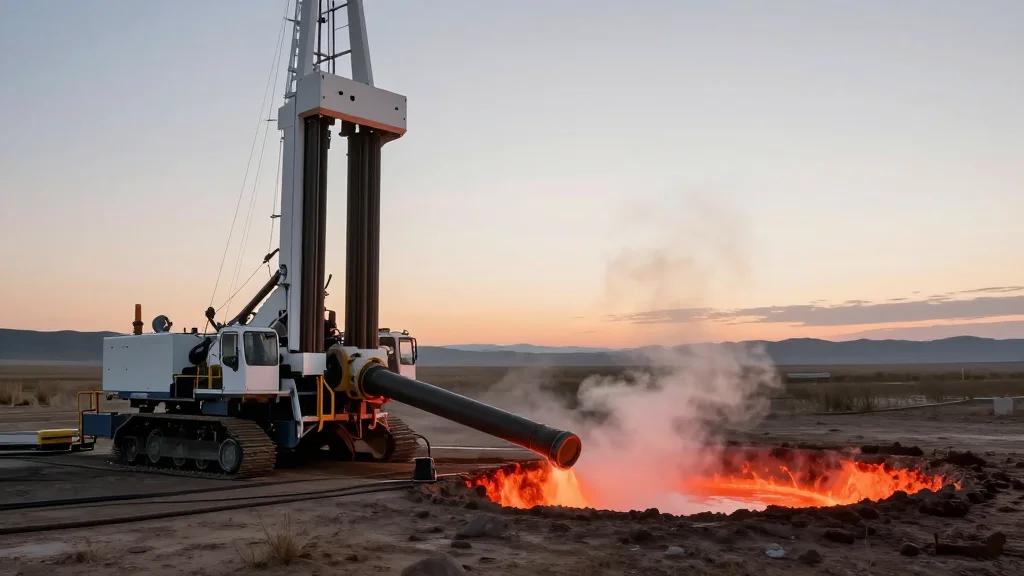
🎥 Heat Beneath Our Feet: Unlocking Superhot Geothermal with Carlos Araque, Quaise Energy
Companies Mentioned
Why It Matters
If successful, microwave‑driven geothermal could supply the high‑density, carbon‑free baseload needed for a projected 100‑terawatt world, while giving oil‑and‑gas firms a clear pathway into renewable energy. It also diversifies the clean‑energy portfolio beyond wind, solar and batteries, addressing their power‑density limits.
Key Takeaways
- •Microwave ablation replaces mechanical drilling for 10‑20 km geothermal wells.
- •Super‑hot rocks (≈400 °C) produce supercritical water, matching fossil plant output.
- •Quaise funds initial $50‑100 M risk, then majors scale the project.
- •First super‑hot EGS flow test slated in Oregon within nine months.
- •Data centers and utilities showing early interest in off‑take agreements.
Pulse Analysis
Global electricity demand is on a trajectory to double by mid‑century, pushing the world toward a 100‑terawatt energy system. While wind, solar and battery storage have made strides, their low power density makes them ill‑suited to provide the continuous baseload that industrial processes and data centers require. Deep geothermal, especially at super‑hot temperatures, offers a compelling alternative because it can tap the Earth’s intrinsic heat without the geographic constraints of surface renewables.
Quaise Energy’s breakthrough lies in swapping traditional drill bits for high‑powered millimeter‑wave microwaves that literally vaporize rock. By heating formations to about 400 °C at depths of 10‑20 km, water turns supercritical, carrying far more thermal energy than conventional steam. This enables the use of existing turbine infrastructure while delivering output levels on par with fossil‑fuel plants. The company’s “junior‑mining” model—front‑loading a $50‑100 million risk to de‑risk the resource—allows established utilities and oil‑and‑gas majors to step in once the heat source is proven, reducing capital exposure and accelerating deployment.
The imminent Oregon flow test, slated within nine months, signals a shift from laboratory concept to commercial viability. Early interest from hyperscale data centers, which need reliable, low‑carbon power, suggests a ready market for off‑take agreements. Moreover, the technology provides a pragmatic transition route for oil‑and‑gas firms seeking to repurpose drilling expertise toward clean energy. If the test validates the approach, microwave‑driven geothermal could become a cornerstone of the next‑generation energy mix, delivering dense, dispatchable power while helping meet aggressive decarbonization targets.
🎥 Heat Beneath Our Feet: Unlocking Superhot Geothermal with Carlos Araque, Quaise Energy
Comments
Want to join the conversation?
Loading comments...