How BIPV Façades Behave Under Enclosure Fire Conditions
Why It Matters
The findings give regulators and architects concrete data to tighten fire‑safety standards for BIPV façades, reducing the risk of rapid fire propagation in high‑rise buildings.
Key Takeaways
- •Tempered-glass PV panels resist breakage better than annealed glass
- •Combustible encapsulants can ignite surrounding materials, increasing fire spread
- •Panel fallout creates new openings, accelerating heat release and flame ejection
- •Double‑glazed CdTe modules perform differently based on glass type
- •Study provides data for fire safety codes on BIPV façade design
Pulse Analysis
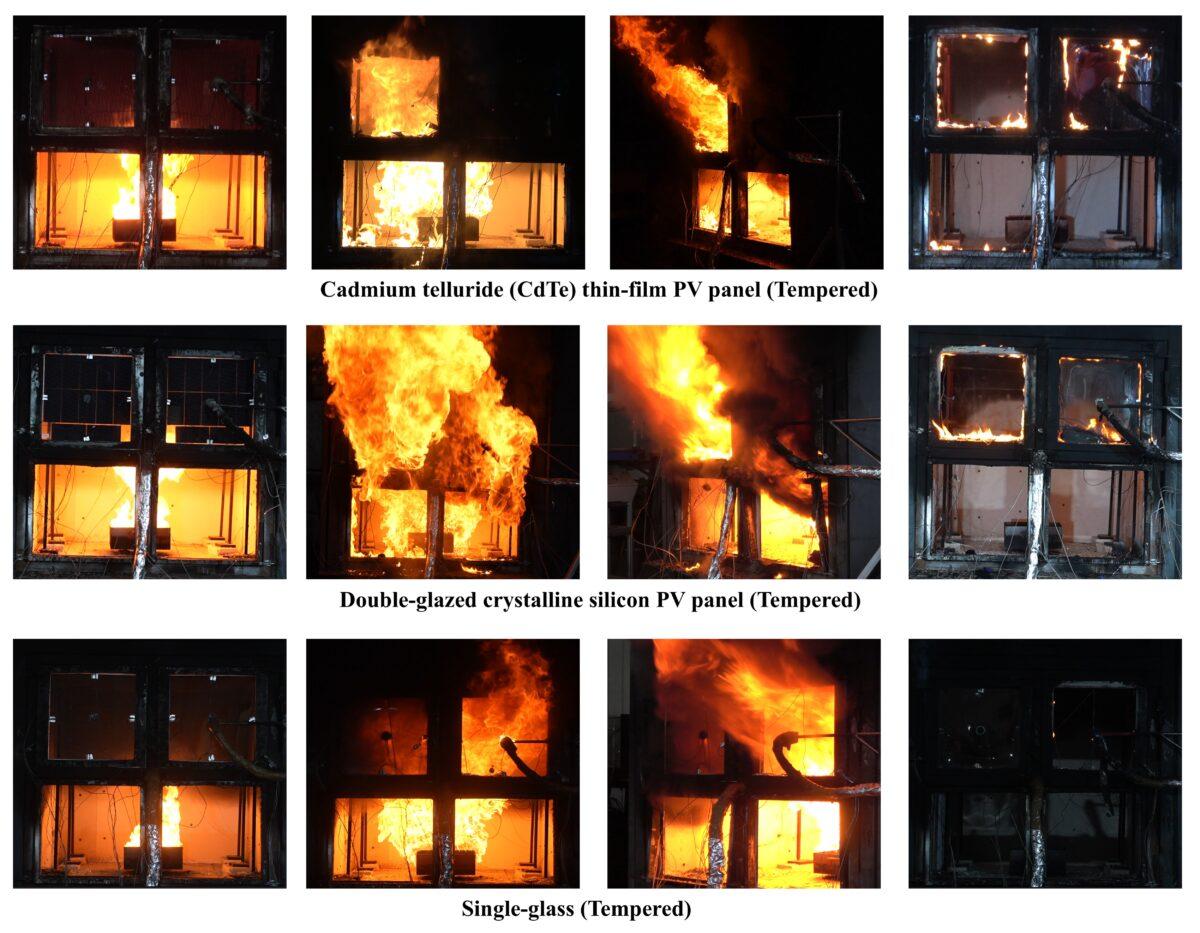
Building‑integrated photovoltaics promise sleek aesthetics and on‑site power generation, yet their fire performance has remained a gray area. Enclosure fires—where a blaze is confined within a room—create intense heat, limited airflow, and rapid temperature spikes that can challenge conventional glazing. By constructing a 1.4 × 1.4 × 1.8 m insulated steel compartment, the Chinese‑Italian team recreated these extreme conditions, allowing a side‑by‑side comparison of CdTe thin‑film, double‑glazed silicon and single‑glass silicon modules against standard annealed and tempered glass. This large‑scale setup mirrors real‑world façade installations more closely than small burner tests, delivering actionable insights for architects and engineers.
The experimental data revealed a clear hierarchy in fire resilience. Tempered‑glass PV panels maintained structural integrity longer than their annealed counterparts, delaying fragmentation and limiting the release of hot debris. In contrast, panels with combustible encapsulants—such as EVA/TPT backsheets—generated secondary ignition sources when they fell, feeding adjacent combustible materials and amplifying flame spread. Moreover, the fallout created new ventilation pathways, disrupting the compartment’s stable airflow and causing a surge in heat release rate and flame ejection. These coupled effects underscore that both glass type and encapsulant chemistry critically influence fire dynamics, not merely the photovoltaic cells themselves.
For the industry, the study provides a quantitative foundation for updating fire‑safety codes and design guidelines. Regulators can now reference specific breakage temperature thresholds and heat flux impacts when evaluating BIPV façade proposals. Designers are encouraged to prioritize tempered glass and low‑combustibility encapsulants, especially in high‑rise or densely populated structures where enclosure fires pose heightened risk. The research also opens avenues for further work, such as testing newer perovskite modules or integrating fire‑retardant barriers, ensuring that the aesthetic and sustainability benefits of BIPV do not come at the expense of occupant safety.
How BIPV façades behave under enclosure fire conditions
Comments
Want to join the conversation?
Loading comments...