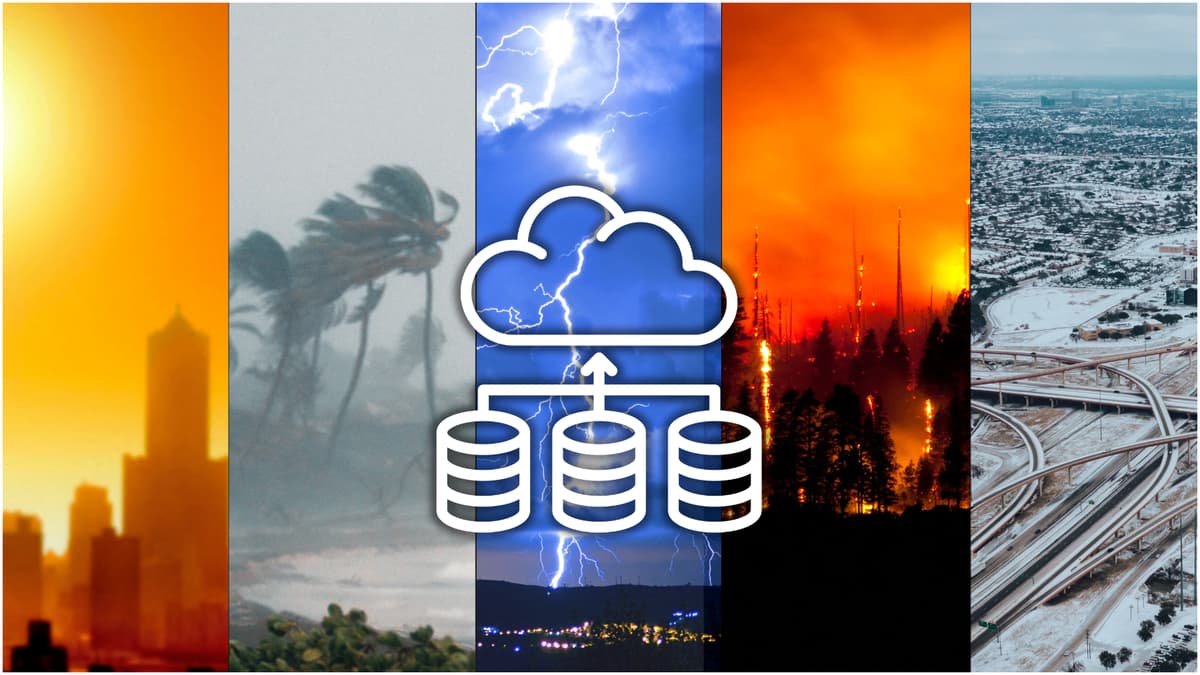
How Data Centers Are Adapting to Extreme Weather
•February 25, 2026
0
Why It Matters
These adaptations are critical to maintaining uptime as data centers become the backbone of AI workloads and global commerce, and rising climate costs threaten profitability and grid stability. Failure to address weather resilience could trigger load‑shedding and costly outages across the energy and communications sectors.
Key Takeaways
- •Climate costs may hit 9.5% of asset value by 2055
- •Extreme heat drives two‑thirds of projected climate impact
- •Operators add elevated pads, hardened structures, hybrid cooling
- •Site selection now weighs flood, wildfire, tornado, seismic risks
- •Digital twins simulate power, airflow, weather scenarios for resilience
Pulse Analysis
The financial stakes of climate exposure are reshaping data‑center investment strategies. Analysts from S&P Global and the World Economic Forum warn that by mid‑century, weather‑related expenses could erode nearly a tenth of infrastructure value, with heat alone responsible for the majority of losses. This risk premium is prompting investors to demand robust resilience metrics, tighter insurance terms, and transparent reporting on energy‑mix and cooling efficiency, especially as AI‑driven workloads push power consumption higher.
Operationally, operators are hardening facilities against the full spectrum of weather threats. Elevated concrete pads and reinforced walls now dominate new builds in flood‑prone Texas and tornado‑laden Oklahoma, while hybrid air‑and‑liquid cooling systems reduce reliance on scarce water resources. Grid operators increasingly treat data centers as flexible loads, issuing emergency curtailment orders during events like Winter Storm Fern and requiring on‑site generation to support grid stability. Companies such as ValorC3 and Tecto illustrate how site‑specific risk modeling—covering wildfire corridors, seismic zones, and drought‑induced water stress—guides both design and day‑to‑day operations.
Globally, the surge in data‑center capacity amplifies these challenges. Brazil’s market, projected to grow at 14.5% CAGR, faces compounded heat, flood, and humidity risks, prompting hyperscalers to adopt underground fiber, digital‑twin simulations, and closed‑loop cooling to safeguard uptime. Latin American operators are also integrating seismic safeguards and corrosion‑resistant materials to address regional geophysical hazards. As climate volatility intensifies, the industry’s ability to blend predictive analytics with resilient engineering will determine whether data centers can sustain the digital economy without compromising reliability or profitability.
How Data Centers Are Adapting to Extreme Weather
0
Comments
Want to join the conversation?
Loading comments...