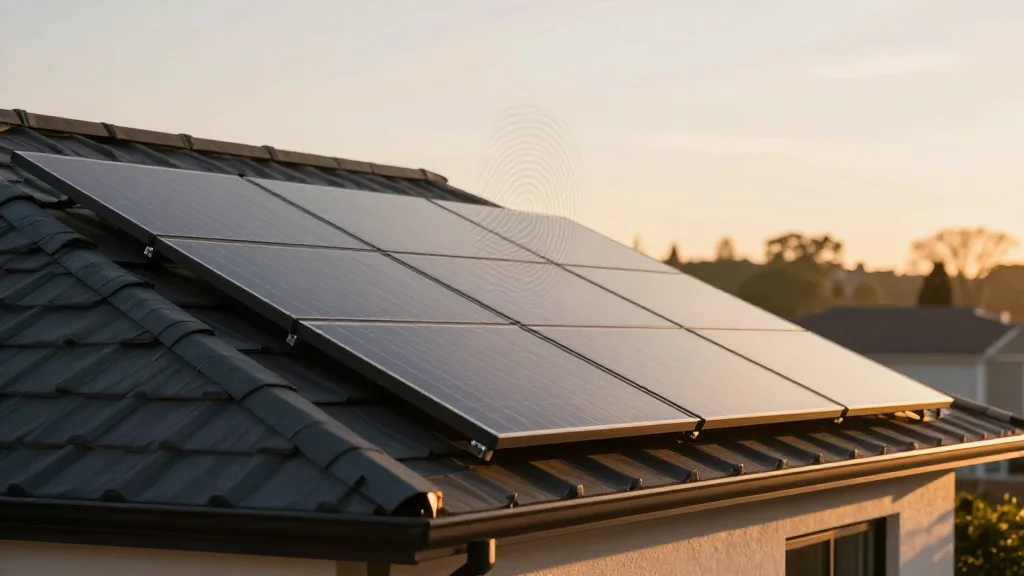
How Mapping of PV “Fingerprints” Can Indicate What the Rooftop Solar Juggernaut Will Do Next
Why It Matters
Accurate, real‑time solar forecasts reduce grid volatility, unlock revenue for batteries and VPPs, and protect homeowners’ investments in a market where rooftop PV now outpaces traditional generators.
Key Takeaways
- •Solstice AI turns each home into a solar sensor for real‑time data.
- •NSW rooftop solar at 8.2 GW, soon to outpace coal generation.
- •Precise forecasts let batteries and peaker plants capture market opportunities.
- •VPPs can spot underperforming panels and improve customer savings reports.
- •Household data privacy concerns could limit participation and scaling.
Pulse Analysis
Rooftop solar has exploded across Australia, now accounting for roughly 24 GW of capacity in the National Electricity Market—more than the nation’s coal fleet. This rapid uptake brings volatility: sudden cloud cover can wipe out gigawatts of generation in minutes, forcing grid operators to scramble for replacements. Traditional forecasting relies on weather models and aggregate data, which often miss localized dips, leading to price spikes, negative pricing events, and strained transmission assets. As regulators and market participants seek tighter control, the need for granular, real‑time insight has become a strategic priority.
Solstice AI tackles the problem by creating a digital fingerprint for every participating household. Satellite imagery first maps the exact location and orientation of rooftop panels, then, with explicit homeowner permission, the system ingests inverter telemetry directly from the device. This ground‑truth data replaces probabilistic weather assumptions with actual power output, allowing the platform to infer cloud movement and shading effects instantly. Because each panel’s performance baseline accounts for tilt, shading and seasonal variations, the model can predict output minutes ahead with far lower error margins than AEMO’s current approach.
The implications ripple through the energy ecosystem. Virtual power plants can use the hyper‑local forecasts to identify underperforming assets, schedule battery dispatch, or justify curtailment decisions, thereby improving customer savings and operational efficiency. Battery operators and gas peakers gain clearer signals on when to enter the market, capturing higher remuneration during sudden solar shortfalls. For regulators, more accurate data supports better market pricing and grid reliability planning. However, the model’s success hinges on homeowner participation; privacy concerns and scepticism about data use could curb adoption, making transparent consent mechanisms and clear value propositions essential for scaling the technology.
How mapping of PV “fingerprints” can indicate what the rooftop solar juggernaut will do next
Comments
Want to join the conversation?
Loading comments...