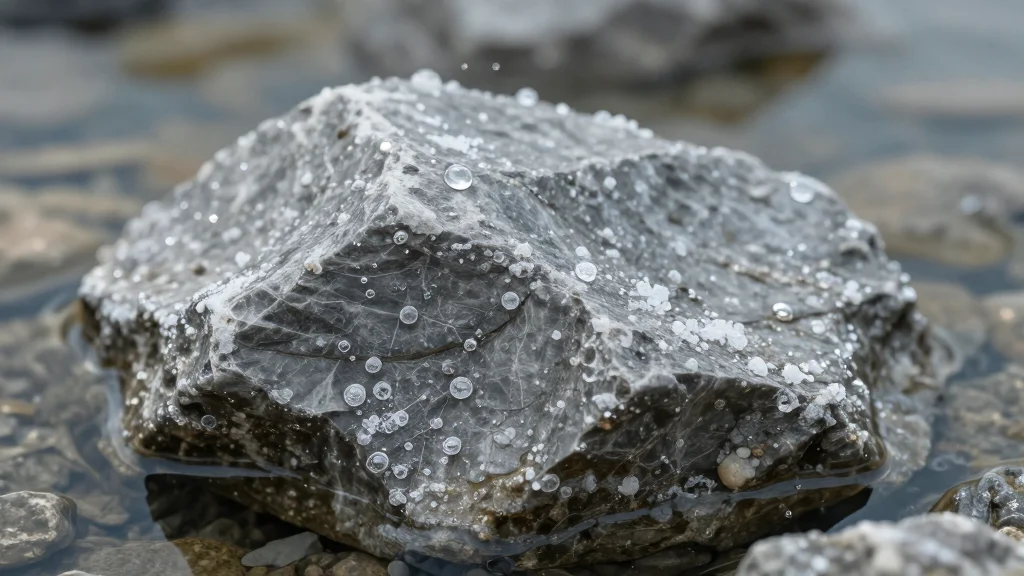
How Rocks Trap CO₂ Faster: Water-Driven Pathway Could Speed Long-Term Carbon Storage
Why It Matters
Accelerating mineral carbonation reduces the time and cost of geological CO₂ sequestration, making large‑scale carbon‑removal projects more viable. The water‑mediated mechanism offers a practical lever for industry to achieve faster, permanent storage of emissions.
Key Takeaways
- •Water on mineral surfaces bends CO₂, enabling direct carbonate formation
- •Wollastonite captures up to 60% CO₂ in two years
- •Atomic force microscopy visualized the water‑driven reaction at atomic scale
- •Fast mineral carbonation could cut geological sequestration timelines dramatically
Pulse Analysis
Traditional mineral carbonation has been viewed as a bottleneck for carbon‑capture projects because the process relies on slow dissolution of silicate rocks and subsequent precipitation of carbonates, often taking centuries. This sluggishness has forced many developers to pair geological storage with short‑term monitoring or to seek alternative pathways, limiting the economic appeal of large‑scale sequestration. Understanding the chemistry of CO₂‑rock interactions is therefore critical for policymakers and investors assessing the long‑term viability of carbon‑removal portfolios.
The TU Wien team’s breakthrough hinges on a subtle but powerful role of water at the mineral interface. By coating wollastonite with just a molecular layer of water, CO₂ molecules become bent rather than linear, creating a reactive geometry that bonds directly to the mineral surface. High‑resolution atomic force microscopy captured this transformation in real time, confirming that the water‑mediated route bypasses the ion‑dissolution step entirely. This mechanism explains why field trials have reported rapid mineralization rates, with up to 60% of injected CO₂ locked into solid form within two years—a timeline previously thought impossible.
If the water‑driven pathway can be replicated across a broader suite of silicate minerals, the carbon‑capture industry could dramatically shorten project timelines and lower capital expenditures. Engineers may design injection protocols that maintain optimal moisture conditions, while regulators could revise monitoring requirements based on faster mineralization forecasts. Future research will likely focus on scaling the technique, assessing long‑term stability of the newly formed carbonates, and integrating the approach with existing CCS infrastructure, positioning mineral carbonation as a cornerstone of net‑zero strategies.
How rocks trap CO₂ faster: Water-driven pathway could speed long-term carbon storage
Comments
Want to join the conversation?
Loading comments...