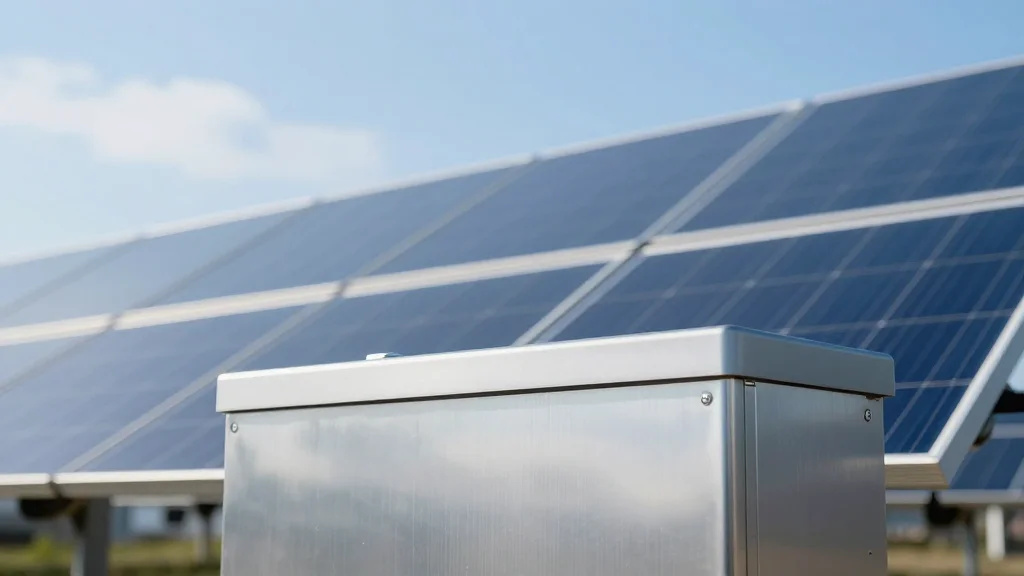
IEA Declares ‘Age of Electricity’ as Solar and Batteries Drive Record Growth

Why It Matters
The IEA’s declaration of an “Age of Electricity” validates the strategic bets made by climate‑tech startups on solar, storage, and electrified solutions. By quantifying the scale of renewable‑driven growth, the report reduces perceived risk for investors and accelerates capital inflows into technologies that enable grid flexibility, demand‑side management, and carbon‑free industrial processes. For data‑centre operators, manufacturers, and utilities, the findings provide a data‑backed roadmap for transitioning away from coal and reducing reliance on fossil‑fuel peakers. Moreover, the report’s emphasis on battery storage as the fastest‑growing power‑sector technology spotlights a critical bottleneck: the need for cost‑effective, long‑duration storage to fully integrate variable renewables. Climate‑tech firms that can deliver scalable, low‑cost storage solutions stand to benefit from policy incentives and corporate procurement strategies that aim to meet the electrification targets outlined by the IEA.
Key Takeaways
- •Solar PV supplied >25 % of global energy‑supply growth in 2025, the first time a renewable led the increase.
- •Battery storage added a record 110 GW of capacity in 2025, a 40 % rise over 2024.
- •Natural gas contributed 17 % of growth, highlighting its transitional role.
- •Renewables and nuclear together met nearly 60 % of total energy‑demand growth.
- •Advances displaced ~7 % of fossil‑fuel use and cut emissions by 8 % in 2025.
Pulse Analysis
The IEA’s 2025 review marks a watershed for the climate‑tech sector, translating years of policy ambition into measurable market outcomes. Solar’s surge to a 25 % share of energy‑supply growth reflects not only falling module costs but also the scaling of supply chains that can now deliver gigawatt‑scale projects on tight timelines. This momentum reduces the cost of capital for new solar ventures and strengthens the case for aggressive corporate PPAs.
Battery storage’s 110 GW addition reshapes the economics of renewable integration. Historically, storage has been a niche add‑on; the IEA data shows it has become a core grid asset, outpacing even natural‑gas capacity expansions. Climate‑tech firms that can improve battery cycle life, reduce material intensity, or enable modular deployment will capture a rapidly expanding market, especially as regulators tighten curtailment rules and incentivise firm capacity.
Finally, the persistence of natural gas at 17 % underscores a pragmatic transition path rather than a binary clean‑energy switch. Technologies that bridge gas and renewables—such as hybrid gas‑solar plants, methane‑capture solutions, and low‑carbon hydrogen—will likely see heightened interest. The IEA’s narrative suggests that the next policy wave will reward integrated, flexible solutions that can deliver reliability while accelerating the displacement of coal and other high‑carbon fuels.
IEA Declares ‘Age of Electricity’ as Solar and Batteries Drive Record Growth
Comments
Want to join the conversation?
Loading comments...