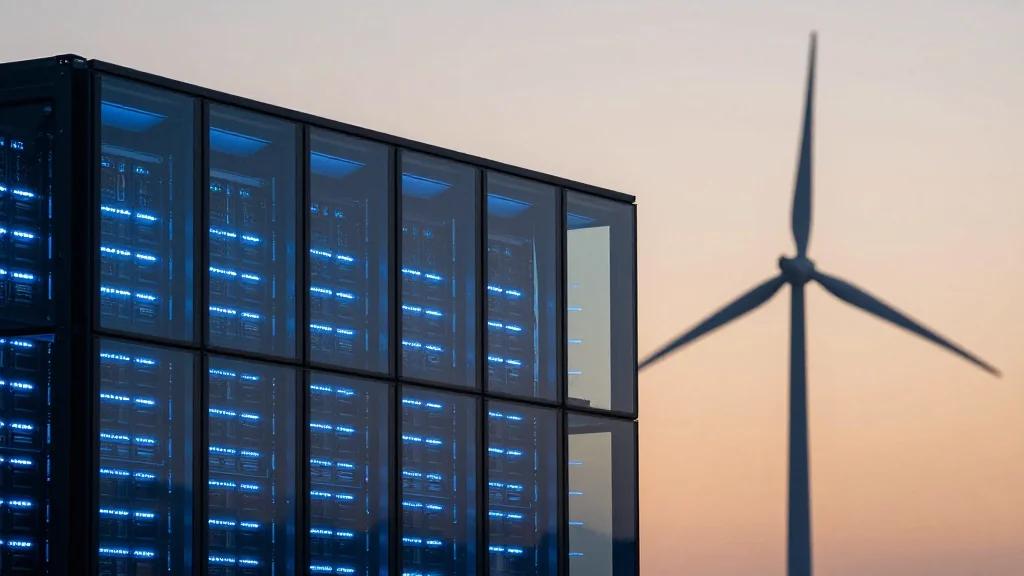
IEA Warns Data‑Center Power Use Jumped 17% in 2025, Could Double by 2030

Why It Matters
Data‑centres are the fastest‑growing electricity consumer in the world, and their expansion is now tightly coupled with AI development. A 17% year‑over‑year rise signals that without decisive grid upgrades and clean‑energy procurement, the sector could become a major source of carbon emissions and price pressure on consumers. The IEA’s warning pushes climate‑tech investors and regulators to prioritize low‑carbon power solutions, potentially accelerating the market for renewable PPAs, battery storage, and AI‑optimised demand‑response technologies. Moreover, the projected doubling of data‑centre power demand by 2030 could reshape energy markets, influencing capacity auctions, transmission planning, and carbon‑pricing mechanisms. If the sector adopts the IEA’s recommendations, it could become a catalyst for broader decarbonisation, demonstrating how high‑intensity digital workloads can be powered sustainably.
Key Takeaways
- •IEA reports a 17% rise in global data‑centre electricity use in 2025.
- •Projected demand could double by 2030, driven by AI infrastructure investment.
- •Grid constraints and supply‑chain bottlenecks identified as major risks.
- •Renewable PPAs currently cover only a small share of data‑centre power needs.
- •IEA proposes three policy principles to align AI growth with energy security.
Pulse Analysis
The IEA’s alarm is more than a statistical footnote; it signals a structural inflection point for the climate‑tech ecosystem. Historically, data‑centre growth has been paced by incremental improvements in server efficiency. The AI boom, however, is a demand shock that outpaces those efficiency gains, forcing the sector to look beyond incremental upgrades to wholesale grid reinforcement and new business models for power procurement. Companies that can bundle AI workloads with renewable PPAs or on‑site generation will likely secure a competitive edge, as utilities increasingly price reliability and carbon intensity into contracts.
From a market perspective, the report could accelerate financing for green‑energy projects tied to digital infrastructure. Venture capitalists and sovereign wealth funds have already begun earmarking capital for “green data‑centres,” and the IEA’s data provides a quantitative justification for scaling those funds. Conversely, the suggestion that coal remains the cheapest baseload option is a red flag for climate‑tech advocates; it underscores the need for policy frameworks that internalise carbon costs and prevent a backslide into fossil‑fuel dependence.
Looking ahead, the IEA’s 2027 update will serve as a barometer for whether the sector’s electricity demand curve can be flattened through smarter AI algorithms, demand‑response, and renewable integration. Stakeholders that act now—by securing long‑term renewable contracts, investing in grid‑scale storage, and lobbying for supportive policy—will shape the next decade of both AI innovation and climate‑tech progress.
IEA Warns Data‑Center Power Use Jumped 17% in 2025, Could Double by 2030
Comments
Want to join the conversation?
Loading comments...