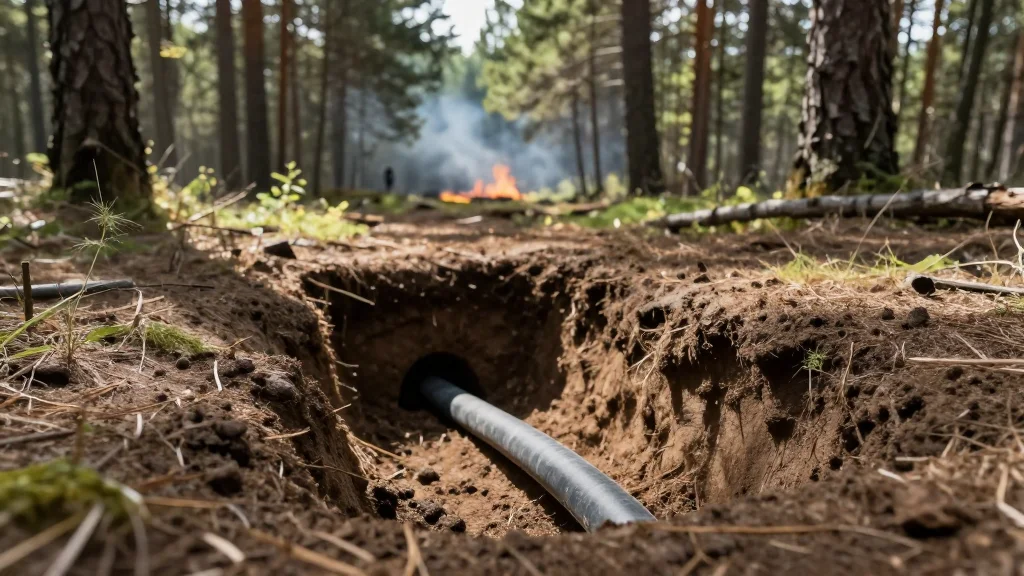
In Wildfire Country, Every Home Should Be a Microgrid
Companies Mentioned
Why It Matters
Microgrids can deliver immediate, cost‑effective protection against wildfire‑related outages, reducing ratepayer burdens and enhancing grid flexibility. Their rapid deployment challenges the utility‑driven undergrounding paradigm and reshapes resilience policy nationwide.
Key Takeaways
- •Undergrounding costs ~ $4 million per mile, burdening ratepayers
- •Batteries can power 7,500‑15,000 homes for 24‑48 hrs
- •DOE targets 30‑50% electricity from edge resources by 2035
- •Oregon leads with first comprehensive microgrid regulatory framework
- •Texas rules enable backup power for critical facilities
Pulse Analysis
The 2026 wildfire outlook underscores a pressing need for power‑system resilience. Traditional mitigation—burying transmission lines—offers fire‑proofing but comes with a price tag of roughly $4 million per mile and multi‑year timelines, shifting the financial load onto consumers through rate hikes. This approach also benefits regulated utilities more than ratepayers, creating a misaligned incentive structure that hampers broader adoption of smarter solutions.
Microgrids present a compelling alternative by leveraging declining costs of batteries, solar panels, and intelligent controllers. Deploying distributed storage could equip 7,500‑15,000 homes with 24‑48 hour backup, effectively islanding them during public‑safety shutoffs while also providing grid‑level services as virtual power plants. The Department of Energy’s 2035 vision, which forecasts 30‑50% of electricity originating from the grid’s edge, reinforces the strategic value of these edge resources. Compared to undergrounding, microgrid investments deliver faster ROI, lower capital outlays, and direct consumer benefits such as reduced outage costs and participation in time‑of‑use pricing savings.
Regulatory momentum is building across the United States. Oregon is poised to become the first state with a comprehensive framework that compensates microgrid resilience value, while Michigan, Maine and Texas are exploring or finalizing rules to support distributed backup power for critical infrastructure. Colorado’s extended grant program further illustrates how public policy can catalyze community‑scale microgrid projects. As utilities continue to propose expensive, slow‑to‑implement upgrades, policymakers and stakeholders must prioritize microgrid pathways that protect communities today and lay the groundwork for a more flexible, decentralized grid.
In wildfire country, every home should be a microgrid
Comments
Want to join the conversation?
Loading comments...