Inherent Compositional Heterogeneity in Alloyed Perovskite Photovoltaics
Why It Matters
Addressing intrinsic compositional disorder is critical for scaling perovskite photovoltaics to commercial efficiencies and long‑term reliability, directly influencing market adoption and investment.
Key Takeaways
- •Nanoscale clusters form during nucleation, creating deep trap states.
- •Microscale phase domains persist, perturbing band edges and stability.
- •Ion migration exacerbates compositional disorder under illumination and bias.
- •Nucleation engineering can seed uniform alloy composition from the start.
- •Controlled gel-state mass transfer balances component distribution before crystallization.
Pulse Analysis
Alloying perovskite absorbers has become a cornerstone of next‑generation solar research, enabling precise band‑gap engineering and enhanced moisture resistance. Yet, the very chemistry that offers these advantages also introduces a hidden challenge: during solution processing, multiple cations and anions can segregate, producing compositional gradients that are invisible to the naked eye but detrimental to device physics. Understanding how these gradients form across nanometer to micrometer scales is essential for researchers aiming to push efficiencies beyond the 25% threshold while maintaining stability under real‑world conditions.
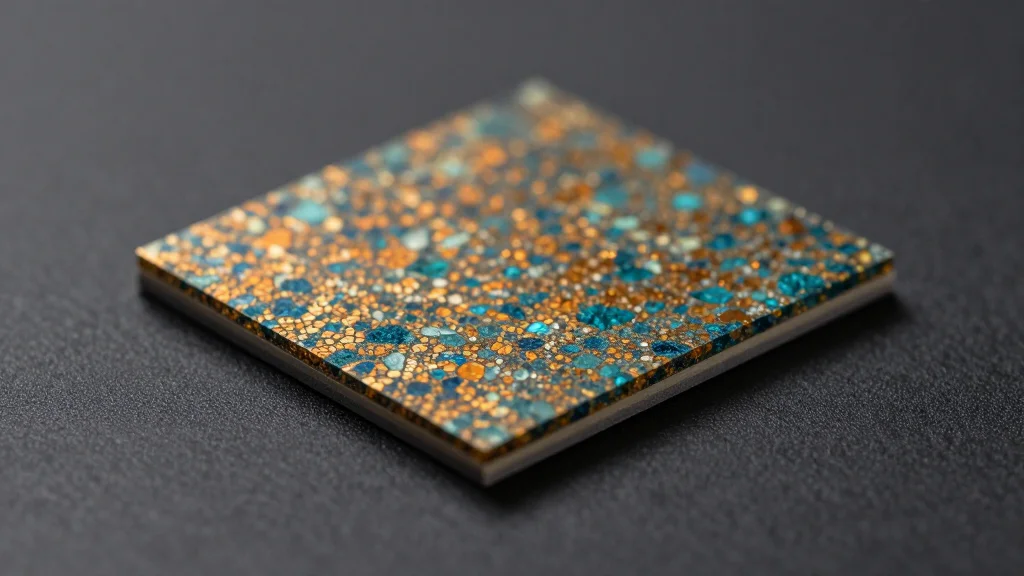
The heterogeneity manifests as nanoscale clusters that act as deep‑level traps, shortening carrier lifetimes, and as larger phase‑separated domains that warp the crystal lattice, shifting band edges and promoting ion migration. These defects accelerate non‑radiative recombination and catalyze moisture‑induced degradation, eroding both power conversion efficiency and operational lifespan. Recent spectroscopic and microscopy studies reveal that such disorder is not merely a post‑fabrication artifact but is baked into the film during the early nucleation stage, making early‑stage interventions crucial.
Emerging homogenization strategies focus on three pivotal stages: nucleation engineering to promote uniform seed formation, modulation of mass transfer in the gel‑state intermediate to equalize component distribution, and precise crystallization control that synchronizes the growth rates of all alloy constituents. By tailoring solvent systems, additive chemistry, and thermal ramps, researchers can suppress phase separation and achieve smoother compositional landscapes. Continued advances in in‑situ monitoring and machine‑learning‑guided processing promise to translate these laboratory insights into scalable manufacturing, paving the way for perovskite modules that combine high efficiency with the durability required for commercial deployment.
Inherent Compositional Heterogeneity in Alloyed Perovskite Photovoltaics
Comments
Want to join the conversation?
Loading comments...