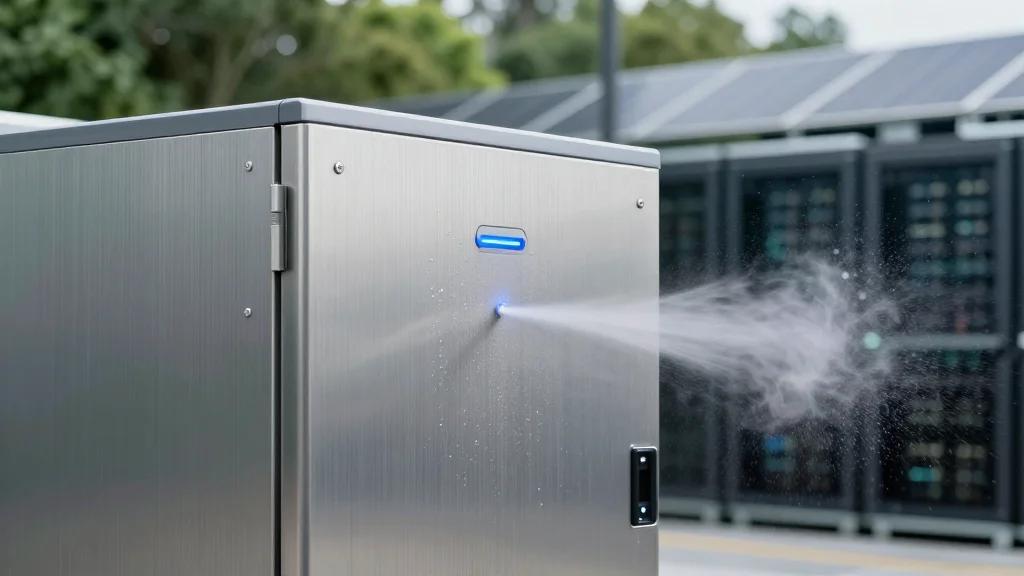
Johnson Controls Unveils Air‑Cooled Chiller Guide for 1‑GW AI Factories

Companies Mentioned
Why It Matters
The guide tackles two of the most pressing sustainability challenges in AI data centers: energy intensity and water scarcity. By offering a repeatable, zero‑water cooling architecture, Johnson Controls gives operators a pathway to expand AI capacity while staying within tightening ESG mandates. The blueprint also sets a benchmark for other equipment manufacturers, potentially driving broader industry adoption of high‑efficiency, air‑cooled technologies. Beyond immediate operational savings, the guide could influence policy discussions around data‑center siting and resource allocation. Regulators increasingly scrutinize water use in arid regions, and a proven air‑cooled alternative may ease permitting hurdles, unlocking new locations for AI infrastructure that were previously off‑limits due to water constraints.
Key Takeaways
- •Johnson Controls released its second AI Factory Reference Design Guide, focusing on air‑cooled chillers for up to 1 GW data centers.
- •The guide provides sizing references for 220 MW compute clusters and integrates YORK YDAM and YVAM centrifugal chillers.
- •Air‑cooled design aims to eliminate water use while achieving industry‑leading energy efficiency.
- •Upcoming guides will cover absorption chillers and direct‑to‑chip liquid cooling, completing a full thermal‑chain suite.
- •Adoption could reduce cooling‑related electricity consumption by up to 40% in gigawatt‑scale AI facilities.
Pulse Analysis
Johnson Controls’ decision to publish a dedicated air‑cooled reference design signals a strategic pivot toward water‑independent cooling at a time when climate‑driven water restrictions are tightening across key data‑center markets. Historically, chilled‑water systems have dominated high‑density facilities because of their superior heat‑removal capacity. However, the rapid expansion of AI workloads—often concentrated in regions with limited freshwater supplies—has exposed the vulnerability of that model. By codifying an air‑cooled architecture that can handle 1 GW of AI compute, Johnson Controls is effectively redefining the performance envelope for dry‑cooling technologies.
The guide’s impact will hinge on how quickly hyperscale operators can integrate the recommended components into existing or planned campuses. Early adopters stand to gain not only operational cost savings but also a competitive ESG edge, which is increasingly tied to customer acquisition and financing terms. Moreover, the modular nature of the design—combining centrifugal chillers, fan coil walls, and coolant distribution units—offers a level of flexibility that aligns with the fast‑changing hardware landscape of AI accelerators. If the promised efficiency gains materialize at scale, the industry could see a measurable dip in the carbon intensity of AI services, a metric that regulators and investors are beginning to track closely.
Looking forward, the forthcoming absorption‑chiller and direct‑to‑chip liquid‑cooling guides will complete Johnson Controls’ end‑to‑end portfolio, positioning the company as a one‑stop supplier for climate‑conscious data‑center design. Competitors will likely respond with their own reference architectures, potentially sparking a standards race that could accelerate innovation across the cooling sector. For investors, the rollout underscores the growing monetization of climate‑tech solutions within the AI infrastructure space, suggesting that firms that can deliver verifiable energy and water savings will command premium valuations in the years ahead.
Johnson Controls Unveils Air‑Cooled Chiller Guide for 1‑GW AI Factories
Comments
Want to join the conversation?
Loading comments...