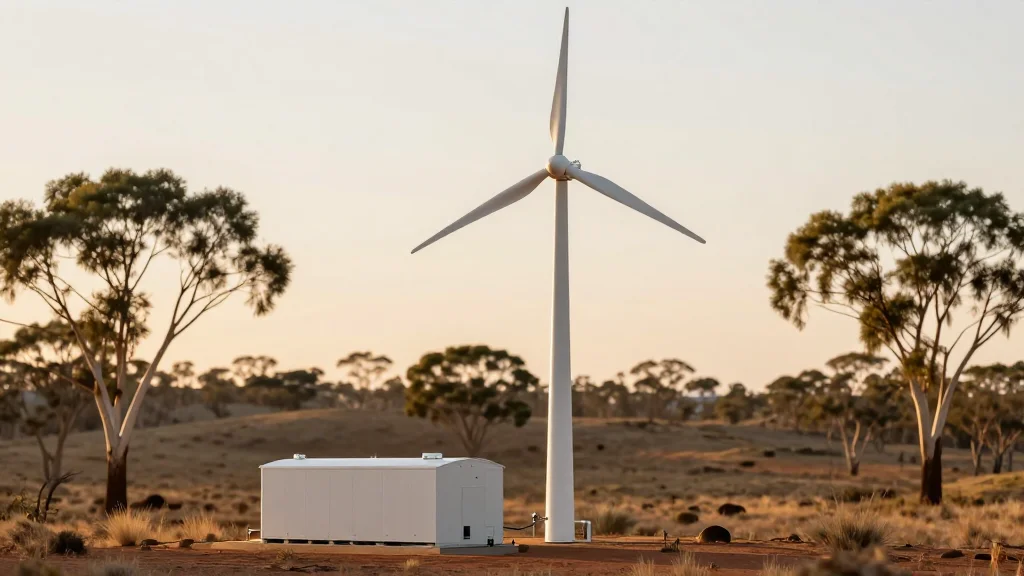
“Just as Common as Solar-Hybrids:” Most Developers Now Including Batteries in Plans for Wind
Why It Matters
Hybridizing wind with storage lifts revenue capture by shifting low‑value output to higher‑price periods, strengthening wind’s competitiveness in the NEM and accelerating Australia’s decarbonisation pathway.
Key Takeaways
- •Wind developers now plan batteries from project inception.
- •Low dispatch prices push wind farms toward hybrid storage solutions.
- •19 winners of Capacity Investment Scheme include wind‑battery projects Baldon, Bungaban.
- •Battery manufacturers extend warranties toward 30 years for large‑scale hybrids.
- •AC‑ and DC‑coupled setups affect revenue cannibalisation and turbine limits.
Pulse Analysis
The wind‑battery hybrid is emerging as a pragmatic response to the National Energy Market’s price squeeze. As wind farms earn dispatch‑weighted averages well below spot prices, developers are seeking ways to time‑shift generation, a strategy that solar farms have mastered with storage. By pairing batteries with turbines, operators can store excess output during low‑price periods and discharge during evening peaks, effectively raising the average price captured per megawatt hour. This revenue‑enhancing model is gaining traction, as evidenced by the inclusion of Baldon and Bungaban in the latest Capacity Investment Scheme tender, which also favoured solar‑battery projects.
Technical choices now dominate financial modelling. AC‑coupled configurations centralise the battery, simplifying grid connection but concentrating revenue cannibalisation at the point of export. In contrast, DC‑coupled designs distribute storage across turbines, altering where power limits and cannibalisation occur. Both approaches require careful sizing; an oversized battery can sit idle during night‑time peaks when wind output is already high, eroding returns. Battery manufacturers are responding with longer warranties—moving toward 30‑year terms—to align with wind farm lifespans, yet warranty conditions still vary, adding another layer of complexity to project economics.
Industry implications are profound. Hybrid projects reduce the need for additional land and separate grid connections, lowering capital outlays while unlocking value from curtailed energy. As manufacturers like Goldwind and Envision validate large‑scale, AC‑ and DC‑coupled systems, confidence in the technology’s reliability grows, encouraging further policy support and investment. Ultimately, widespread adoption of wind‑battery hybrids could reshape Australia’s renewable mix, delivering more flexible, dispatchable clean power and accelerating the phase‑out of coal‑based generation.
“Just as common as solar-hybrids:” Most developers now including batteries in plans for wind
Comments
Want to join the conversation?
Loading comments...