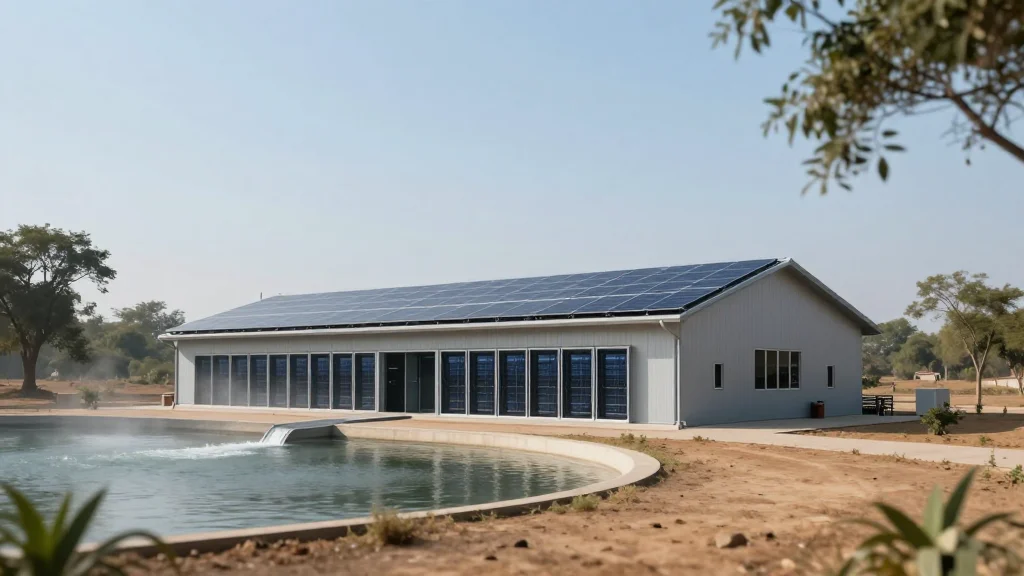
Karnataka Unveils Sustainable Data Centre Policy to Cut Heat Islands and Water Use

Why It Matters
The policy marks one of the first state‑level regulatory attempts in India to tie data‑centre growth directly to climate‑friendly infrastructure. By mandating renewable power and tertiary‑treated water, Karnataka aims to decouple digital expansion from the country's already stressed water and electricity grids, a model that could be replicated in other high‑growth tech hubs. If successful, the initiative could reshape investment decisions for global cloud providers, who are increasingly scrutinising the carbon and water footprints of their facilities. It also offers a template for integrating climate‑tech solutions—such as advanced cooling and water‑recycling systems—into large‑scale industrial planning, potentially accelerating the market for those technologies.
Key Takeaways
- •Karnataka announces Sustainable Data Centre Policy mandating renewable energy and tertiary‑treated water
- •Policy targets heat‑island mitigation and water‑use reduction for data centres
- •500 MW Hoskote data‑centre park to receive 60 MLD of treated water and solar power from 2,000 MW Pavagada Solar Park
- •350 acres in Baikampady, Mangaluru identified for future data‑centre parks
- •Steering committee under Deputy CM D K Shivakumar to review implementation, aiming for operational start by late 2027
Pulse Analysis
Karnataka's policy arrives at a moment when India is courting multinational cloud providers while wrestling with water scarcity and grid reliability. By embedding climate‑tech requirements into the licensing process, the state is effectively creating a market pull for low‑carbon cooling technologies, advanced water‑recycling, and on‑site renewable generation. This could give early‑stage climate‑tech firms a foothold in a market traditionally dominated by large engineering players.
Historically, Indian data‑centre growth has been driven by ad‑hoc land allocations and cheap coal‑based power, leading to localized environmental backlash. Karnataka's approach flips that script, using policy to pre‑qualify sites based on green‑energy corridors and existing water‑treatment capacity. If the Hoskote park demonstrates cost‑effective operation, other states may adopt similar frameworks, potentially standardising sustainability criteria across the country's burgeoning data‑centre ecosystem.
Looking ahead, the policy's success hinges on execution—securing reliable solar feed‑in, scaling tertiary water treatment, and ensuring that the incentives outweigh the capital costs for operators. Should these hurdles be cleared, Karnataka could position itself as India's premier green‑data‑centre hub, attracting firms eager to meet ESG commitments and giving the state a competitive edge in the global cloud market.
Karnataka Unveils Sustainable Data Centre Policy to Cut Heat Islands and Water Use
Comments
Want to join the conversation?
Loading comments...