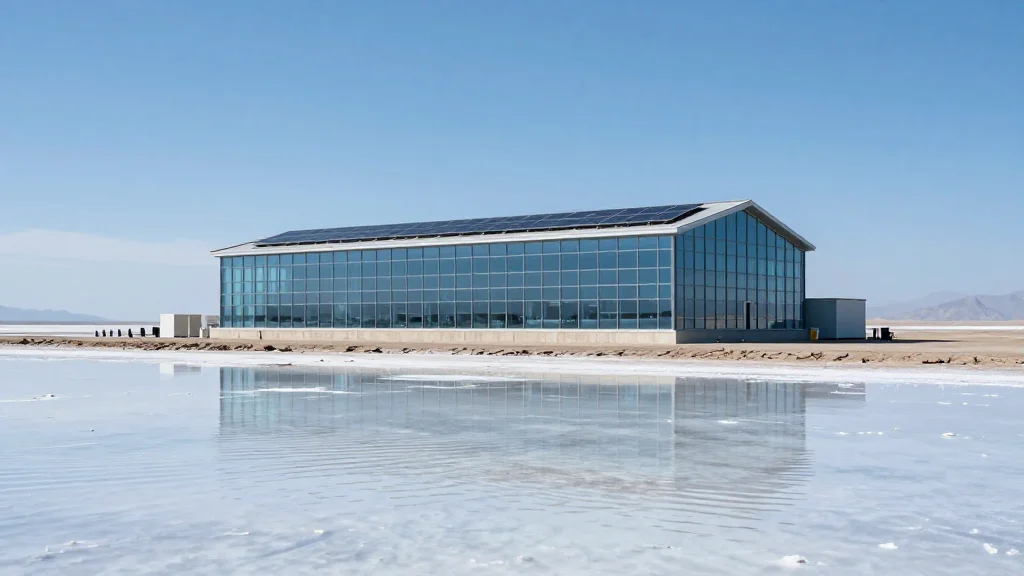
Kevin O’Leary Halves Utah Hyperscale Data‑center Plan After Great Salt Lake Backlash

Why It Matters
The Stratos episode underscores a shifting calculus for ClimateTech investors: water availability is becoming a decisive factor in the siting of data‑center infrastructure that powers AI workloads. As climate change intensifies drought conditions across the western United States, projects that ignore hydrological constraints risk regulatory shutdowns, community opposition, and stranded‑asset losses. Beyond the Great Salt Lake, the case highlights the emerging need for transparent, auditable environmental metrics in the hyperscale sector. If Stratos’ independent thermal analysis gains acceptance, it could catalyze a new standard for climate‑risk disclosure, prompting developers worldwide to embed water‑use accounting into early project design.
Key Takeaways
- •Original Stratos footprint >40,000 acres; 50% cut removes ~19,430 acres
- •Utah Senate President J. Stuart Adams demanded a 75% reduction
- •Project still targets Salt Lake City’s interconnection hub for data‑gravity
- •Financing expected to involve multi‑billion‑dollar, REIT‑style structures
- •Independent thermal analysis may become a benchmark for future data‑center disclosures
Pulse Analysis
The Stratos scaling‑back illustrates how climate risk is moving from a peripheral concern to a core determinant of project viability in the digital infrastructure arena. Historically, data‑center developers prioritized power availability and network latency; today, water scarcity and heat‑emission limits are reshaping site selection criteria. This transition is accelerating because AI workloads are becoming orders of magnitude more compute‑dense, driving up cooling demands at a time when many western basins are experiencing record low lake levels.
From a market perspective, the episode could tighten capital flows to hyperscale projects that lack robust climate‑risk mitigation plans. Institutional investors, especially pension funds, are increasingly screening for environmental resilience, and a high‑profile setback like Stratos may prompt stricter due‑diligence protocols. Developers that can demonstrate verifiable water‑use reductions and transparent thermal modeling are likely to secure financing at more favorable terms, while those that cannot may face higher cost of capital or outright denial.
Looking ahead, the Stratos draft agreement may evolve into a de‑facto regulatory template for other water‑stressed regions—from the Colorado River basin to the arid plains of Texas. If the independent thermal analysis proves credible, it could be codified into state permitting processes, effectively raising the bar for climate‑aware engineering in the hyperscale sector. The broader implication for ClimateTech is clear: technologies that improve water‑efficient cooling, such as liquid immersion or AI‑optimized climate control, will become strategic assets, and firms that master these solutions could capture a decisive competitive edge in the next wave of AI infrastructure development.
Kevin O’Leary halves Utah hyperscale data‑center plan after Great Salt Lake backlash
Comments
Want to join the conversation?
Loading comments...