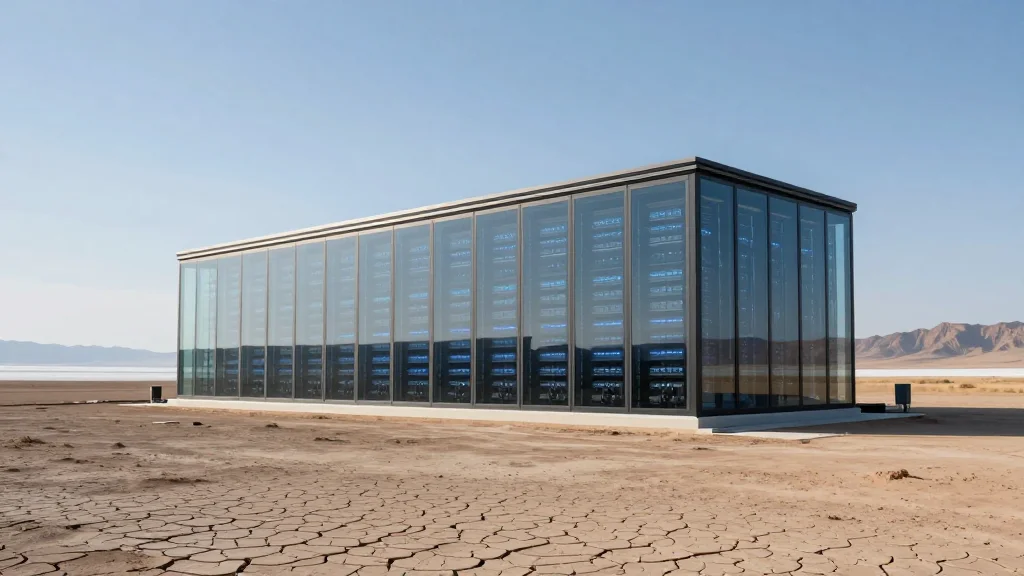
Kevin O’Leary’s Utah Megadata Center Faces Backlash Over Great Salt Lake Water and Power Impacts

Why It Matters
The Stratos Project illustrates the tension between the rapid growth of data‑intensive climate‑tech services and the finite water and energy resources of arid regions. As AI and cloud computing become integral to emissions‑tracking, renewable‑grid management, and climate modeling, the infrastructure that powers them must be reconciled with local environmental limits. A failure to address these trade‑offs could set a precedent for unchecked megaprojects that exacerbate climate risks rather than mitigate them. Moreover, the public’s mobilization against the Utah megadata center signals a rising demand for transparent, accountable development of climate‑tech infrastructure. Policymakers and investors will likely face heightened scrutiny on water‑use permits, carbon‑intensity disclosures, and community impact assessments, shaping the future investment landscape for data centers worldwide.
Key Takeaways
- •Kevin O’Leary’s Stratos Project seeks to build a 40,000‑acre data center demanding 9 GW of power.
- •Projected carbon emissions increase of 64% for Utah, according to project estimates.
- •Physicist Robert Davies warns the site could raise nighttime temperatures by up to 28 °F.
- •Governor Spencer Cox acknowledged public concerns about water, air quality, and land use.
- •Developers plan to purchase roughly 3,000 acre‑feet of on‑site water, a fraction of likely needs.
Pulse Analysis
The Stratos controversy is a textbook case of climate‑tech scaling colliding with regional resource scarcity. Data centers are the digital arteries of modern climate solutions, yet their energy appetite can dwarf the grids they rely on. In Utah, a 9 GW demand would outstrip the state’s current consumption, forcing utilities to either import additional fossil‑fuel generation or accelerate costly renewable upgrades. Both pathways carry financial and emissions implications that could erode the climate benefits of the services the center will host.
Historically, megaprojects in the West have proceeded with limited water‑use accounting, leading to long‑term ecological damage—think of the Colorado River over‑allocation. The current pushback reflects a maturing public awareness that digital infrastructure is not a neutral utility; it is a physical entity with tangible footprints. Investors are likely to factor these community risks into due‑diligence, potentially demanding stronger ESG covenants or even steering capital toward smaller, modular data solutions that can be sited in water‑rich locales.
Looking ahead, regulators may adopt a more rigorous permitting framework that ties data‑center approvals to renewable‑energy procurement targets and enforceable water‑conservation metrics. If Utah imposes such standards, it could become a model for other drought‑prone states grappling with similar pressures, nudging the climate‑tech sector toward a more sustainable growth trajectory.
Kevin O’Leary’s Utah Megadata Center Faces Backlash Over Great Salt Lake Water and Power Impacts
Comments
Want to join the conversation?
Loading comments...