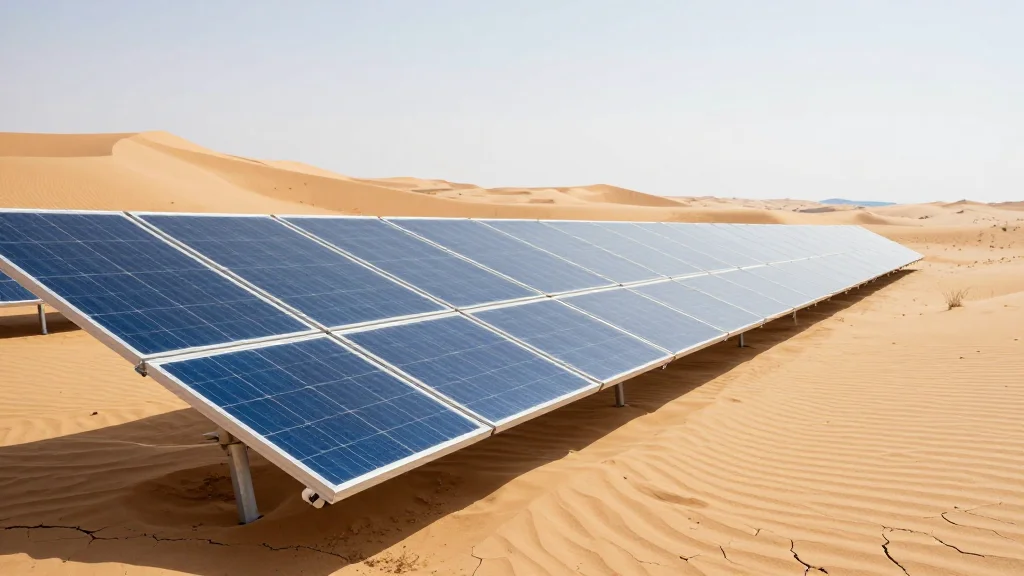
Large-Scale PV Could Intensify Water Stress in China’s Tarim Basin
Why It Matters
The findings reveal that large‑scale solar farms in arid basins can jeopardize water resources that millions depend on, challenging the sustainability of rapid renewable‑energy expansion in water‑scarce regions.
Key Takeaways
- •Full-basin PV could cut runoff and precipitation >30%.
- •Surface cooling up to 1.5 °C reduces moisture transport.
- •Vegetation loss lowers evapotranspiration, worsening aridity.
- •High‑efficiency panels (30%+) increase albedo, amplifying climate effects.
- •Study urges integrating vegetation feedback in solar planning.
Pulse Analysis
The Tarim Basin, fed by glacier melt and seasonal snow, supplies water to a growing population in northwest China. As glaciers retreat, the region’s hydrology is already under pressure, prompting policymakers to consider massive solar farms in the adjacent Taklamakan Desert. By coupling the Weather Research and Forecasting model with the LPJ‑GUESS ecosystem simulator at a 9 km resolution, researchers captured the intricate feedback loops between surface albedo, temperature, and vegetation that traditional studies often overlook.
Results indicate that high‑efficiency PV arrays, which reflect more sunlight, can cool the desert surface by up to 1.5 °C. This cooling stabilizes the lower atmosphere, suppresses convective uplift, and ultimately reduces moisture transport into the basin. The modeled outcomes show a >30% decline in precipitation and runoff, alongside an 8.5% drop in soil moisture. Diminished vegetation cover further weakens evapotranspiration and low‑level cloud formation, creating a self‑reinforcing cycle of aridity that could exacerbate water scarcity for downstream communities.
The study underscores a broader lesson for renewable‑energy planning: large‑scale solar deployment is not climate‑neutral in arid environments. Policymakers must incorporate ecosystem and hydrological feedbacks into feasibility assessments, mirroring recent research on Sahara‑scale solar projects that revealed trans‑regional cloud‑cover impacts. Integrated modeling can guide siting decisions, panel design, and mitigation strategies—such as preserving vegetated buffer zones—to balance clean‑energy goals with the imperative of safeguarding water resources.
Large-scale PV could intensify water stress in China’s Tarim Basin
Comments
Want to join the conversation?
Loading comments...