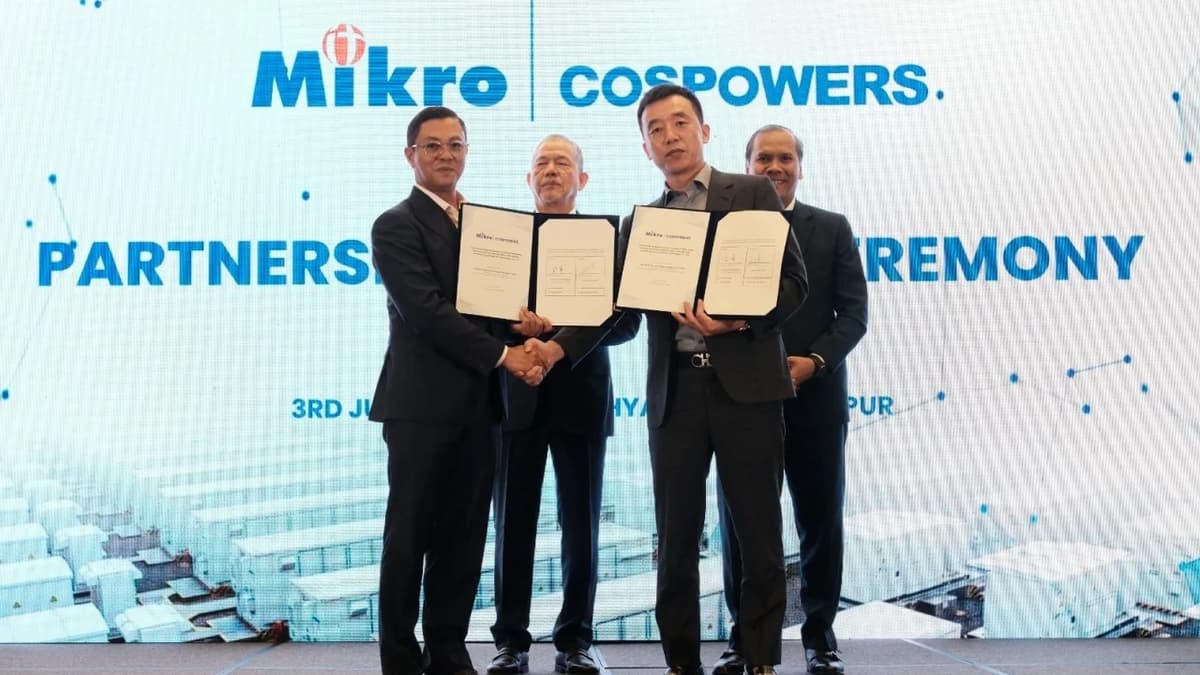
Malaysia Taps Hong Kong Battery Expertise to Power Ambitions for Electricity Grid
Companies Mentioned
Why It Matters
The deal accelerates Malaysia’s transition to a renewable‑heavy grid, addressing solar intermittency and reducing reliance on gas and coal. It also signals Southeast Asia’s shift toward diversified, locally‑sourced battery supply chains amid geopolitical tensions.
Key Takeaways
- •Mikro MSC and HKCT sign two‑year exclusive BESS partnership in Malaysia
- •MyBeST program targets 400 MW and 1,600 MWh storage by 2027
- •Tenaga Nasional’s 100 MW battery project valued at US$375 million
- •HKCT boasts 30‑year lithium expertise and 23 GWh shipments worldwide
- •Deal emphasizes local assembly first, manufacturing later for Malaysian supply chain
Pulse Analysis
Malaysia’s renewable‑energy roadmap aims for 70% clean capacity by 2050, but its grid remains dominated by gas and coal. Solar generation, while expanding, is intermittent, creating a pressing need for large‑scale battery storage to smooth supply and meet peak demand. The MyBeST initiative, overseen by the Energy Commission, is the country’s strategic response, earmarking 400 MW of battery power and 1,600 MWh of storage to be operational by 2027, positioning the nation among Southeast Asia’s most ambitious storage programs.
The two‑year exclusive pact between Mikro MSC and Hong Kong’s Cospower Technology (HKCT) gives the latter a direct channel into Malaysia’s utility‑scale BESS market. HKCT brings three decades of lithium‑battery expertise and more than 23 GWh of global shipments, while Mikro contributes deep local knowledge of power protection and grid management. Together they will identify, develop, and execute solar‑plus‑storage projects, with an emphasis on local assembly and eventual manufacturing, echoing the government’s push for domestic supply‑chain development. The partnership also dovetails with Tenaga Nasional’s recent 100 MW battery installation, a US$375 million project that illustrates the financial scale of upcoming storage contracts.
Regionally, the agreement reflects a broader shift as Chinese and Hong Kong battery firms look beyond mainland constraints, spurred by US‑China trade frictions and the race for EV and stationary‑storage markets. By securing a strategic foothold in Malaysia, HKCT joins rivals like Eve Energy, which announced a US$1.2 billion battery plant in Kedah. This influx of foreign expertise, coupled with local content requirements, is set to accelerate technology transfer, create jobs, and cement Southeast Asia as a new hub for grid‑scale energy storage, reshaping the global battery supply chain.
Malaysia taps Hong Kong battery expertise to power ambitions for electricity grid
Comments
Want to join the conversation?
Loading comments...