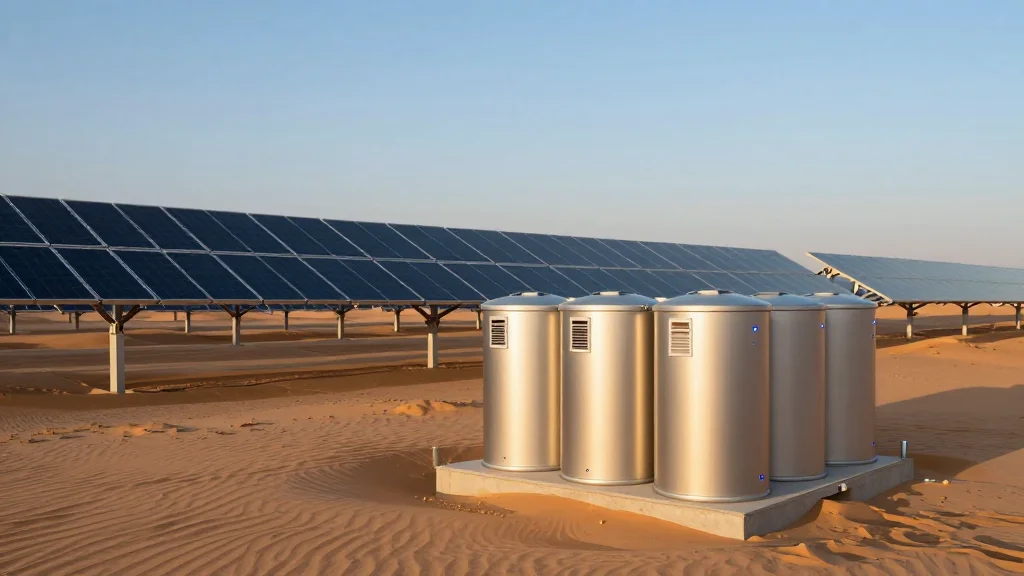
Masdar Taps Sungrow for 7.5 GWh Storage in World’s Largest 24/7 Renewable Project

Companies Mentioned
Why It Matters
The Abu Dhabi RTC project demonstrates that continuous renewable power at gigawatt scale is technically and economically feasible, challenging the long‑standing reliance on fossil‑fuel baseload generators. By integrating high‑efficiency silicon‑carbide converters and climate‑resilient battery modules, the scheme offers a template for regions with extreme temperatures and growing demand for uninterrupted clean electricity. Beyond the technical showcase, the partnership reshapes the competitive landscape of the global energy‑storage market. Sungrow’s win against established players like CATL and Tesla highlights the rising influence of Chinese BESS manufacturers in high‑value utility projects, prompting Western firms to double‑down on innovation and supply‑chain diversification. The project's success could accelerate policy support for 24/7 renewables, unlocking further private capital for similar ventures across Asia, Africa and Europe.
Key Takeaways
- •Masdar selects Sungrow to supply 7.5 GWh of PowerTitan 3.0 BESS and 2.6 GW of PV inverters.
- •The RTC hub will combine 5.2 GW of solar PV with 19 GWh of total battery storage, delivering 1 GW of baseload power.
- •Project cost is AED 232 billion (≈US$5.9 billion) and targets commercial operation in 2027.
- •PowerTitan 3.0 achieves up to 99.3 % conversion efficiency and 90 % round‑trip efficiency, operating up to 55 °C.
- •The deal raises a potential split‑supply scenario with CATL, reflecting shifting dynamics in the global storage market.
Pulse Analysis
The Abu Dhabi RTC initiative marks a watershed moment for utility‑scale renewables, moving the industry from intermittent, peak‑only solar toward a true baseload solution. Historically, large‑scale storage projects have been constrained by cost and efficiency trade‑offs; Sungrow’s silicon‑carbide PCS and liquid‑cooled battery architecture directly address those pain points, delivering near‑perfect conversion efficiency and robust performance in desert heat. This technical edge, combined with Masdar’s deep pockets and strategic alignment with EWEC, creates a compelling value proposition that could tilt future procurement decisions toward high‑efficiency Chinese suppliers.
From a market perspective, the split‑supply narrative—where CATL may still provide a portion of the 19 GWh BESS—introduces a new collaborative model that mitigates single‑vendor risk while leveraging complementary strengths. If the dual‑supplier approach proves seamless, it could become a standard template for megaprojects, encouraging a more modular and resilient supply chain. Conversely, any integration hiccups could reinforce calls for domestic or diversified sourcing, especially in geopolitically sensitive regions.
Looking ahead, the project's success will likely catalyze policy shifts in the Gulf and other high‑demand, climate‑vulnerable markets. Regulators may adopt more aggressive renewable‑dispatch mandates, and financiers will have a concrete case study to justify the capital intensity of gigawatt‑scale storage. Replication of the RTC model could accelerate the global transition to 24/7 clean power, shrinking the remaining niche for fossil‑fuel peaker plants and reshaping the economics of grid reliability worldwide.
Masdar taps Sungrow for 7.5 GWh storage in world’s largest 24/7 renewable project
Comments
Want to join the conversation?
Loading comments...