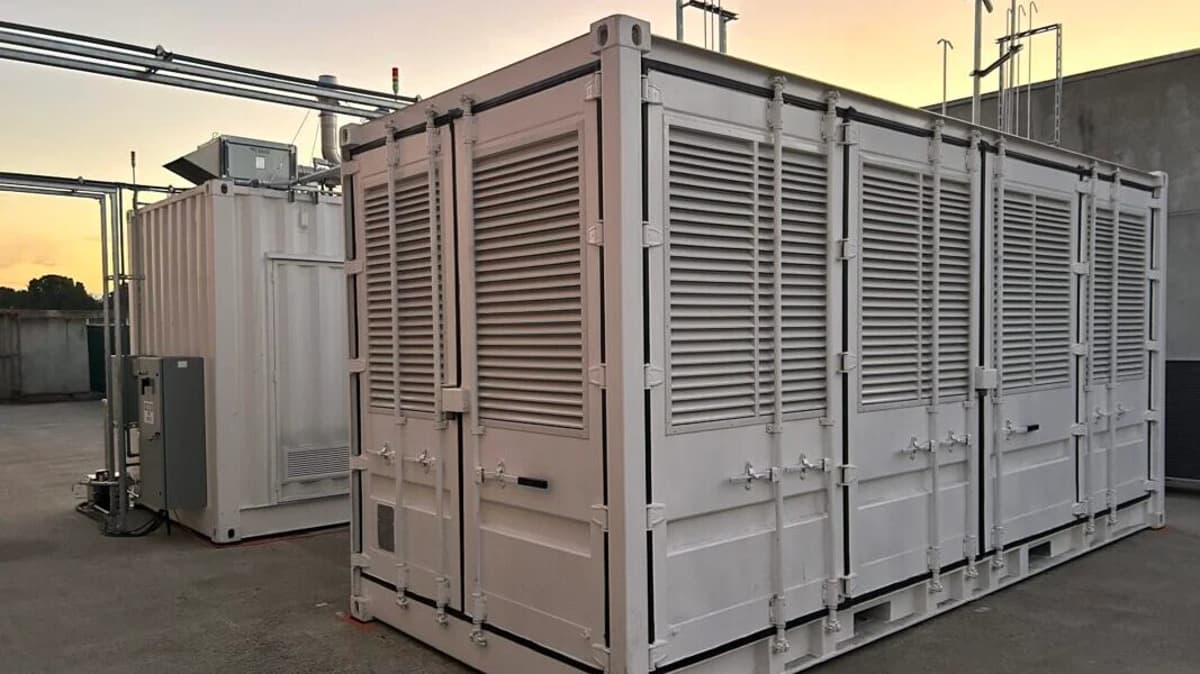
Meta Reserves up to 100GWh of US ‘Multi-Day’ Energy Storage Startup Noon Energy’s Technology
Why It Matters
Securing large‑scale LDES capacity helps Meta ensure reliable, carbon‑free power for its data centres, while validating Noon’s emerging battery architecture and accelerating market adoption of non‑lithium storage solutions.
Key Takeaways
- •Meta reserves up to 1 GW/100 GWh of Noon Energy’s LDES
- •Initial 25 MW/2.5 GWh project slated for completion by 2028
- •Noon’s solid‑oxide fuel‑cell battery offers 200‑hour discharge potential
- •Data centres increasingly adopt multi‑day storage to pair with solar power
- •LDES contracts signal growing market demand for non‑lithium storage
Pulse Analysis
Meta’s reservation of up to 1 GW of long‑duration energy storage marks one of the largest corporate commitments to multi‑day battery technology in the United States. By partnering with Noon Energy, Meta aims to fortify its data‑centre power supply against intermittency, especially as the company pushes for greater reliance on solar generation. The agreement also provides Noon with a high‑profile customer that can accelerate commercialization of its solid‑oxide fuel‑cell (SOFC) based system, a design that separates power conversion from energy storage and promises extended discharge durations.
Noon’s architecture differs from traditional redox‑flow or lithium‑ion solutions. The power block employs reversible SOFCs to convert electricity into a carbon‑based liquid medium stored in a charge tank, while a discharge tank re‑oxidizes the medium to generate power on demand. This decoupling enables theoretically 200 hours of continuous output, far exceeding the 100‑hour benchmarks of peers like Form Energy and Ore. Although the technology’s deep‑discharge limits remain unproven, its ability to operate without the degradation issues that plague lithium‑ion batteries could make it attractive for data‑centre workloads that require both high energy density and long‑term reliability.
The Meta‑Noon deal reflects a broader industry trend: hyperscale operators are increasingly turning to LDES to bridge the gap between intermittent renewables and the constant power draw of compute infrastructure. Recent announcements from Google, Microsoft, and other players illustrate a shift toward “bring‑your‑own‑capacity” models, where companies procure bespoke storage solutions rather than relying on utility‑scale batteries alone. As the LDES market matures, contracts of this scale signal confidence in non‑lithium chemistries and suggest a future where multi‑day storage becomes a standard component of sustainable data‑centre design.
Meta reserves up to 100GWh of US ‘multi-day’ energy storage startup Noon Energy’s technology
Comments
Want to join the conversation?
Loading comments...