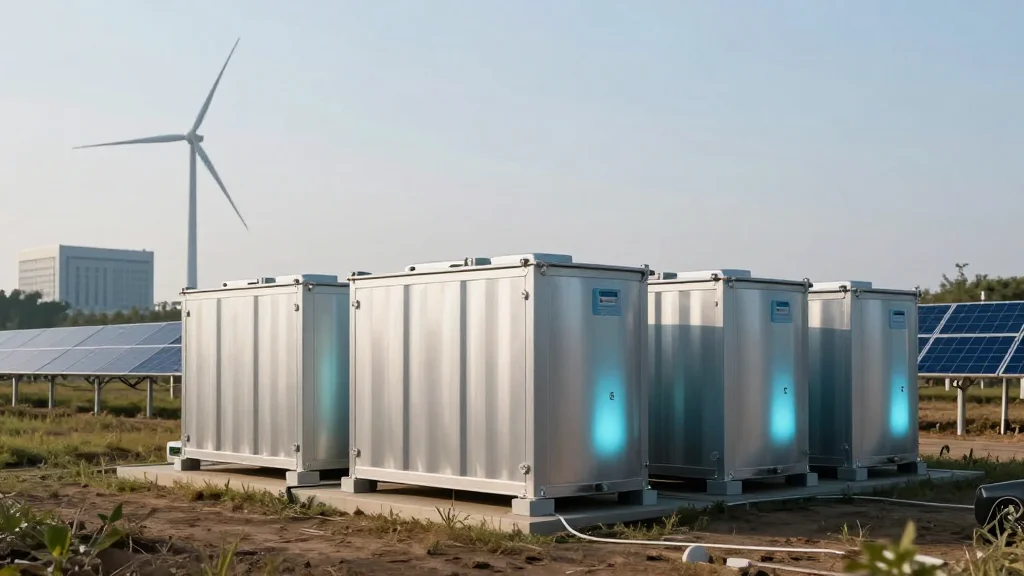
Meta Secures Up to 1 GW/100 GWh Ultra‑Long‑Duration Storage From Noon Energy for AI Data Centers

Companies Mentioned
Why It Matters
The Meta‑Noon Energy agreement demonstrates that ultra‑long‑duration storage is moving from pilot projects to commercial contracts capable of supporting the most power‑intensive digital workloads. By securing multi‑day renewable power, Meta can reduce its reliance on fossil‑fuel peaker plants, directly cutting the carbon intensity of AI training and inference. If the technology delivers on its promise, it could unlock a new business model for renewable developers: pairing solar or wind farms with on‑site UL‑LDES to sell firm capacity to data centers and other load‑critical users. This could accelerate the decarbonization of the broader tech sector, where energy demand is projected to outpace supply growth in the coming decade.
Key Takeaways
- •Meta reserves up to 1 GW (100 GWh) of ultra‑long‑duration storage from Noon Energy.
- •Pilot project: 25 MW/2.5 GWh system slated for completion by 2028.
- •Noon Energy has raised over $45 million to develop its solid‑oxide fuel cell technology.
- •The deal is the largest UL‑LDES contract ever signed by a tech company.
- •Success could spur similar multi‑day storage contracts from other hyperscale cloud providers.
Pulse Analysis
Meta’s commitment marks a decisive shift in how hyperscale operators think about power reliability. Historically, data centers have relied on diesel generators or large lithium‑ion battery banks to bridge short‑term renewable gaps. Ultra‑long‑duration storage, however, offers a cost‑effective way to store energy for days, not just hours, which aligns with the continuous, high‑throughput nature of AI training clusters. By locking in a gigawatt of capacity, Meta is effectively betting that the total cost of ownership for solid‑oxide fuel cells will undercut traditional backup solutions within the next decade.
The broader market is likely to respond with increased capital flows into UL‑LDES startups and a surge in R&D from established battery manufacturers. Investors will watch Noon’s pilot performance metrics closely; a successful demonstration could trigger a wave of similar contracts, especially as regulators tighten emissions standards for data center power. Competitors such as Google and Microsoft have already hinted at interest in multi‑day storage, suggesting that the Meta‑Noon deal could become a template for industry‑wide adoption.
Looking ahead, the key variables will be the achieved round‑trip efficiency, the levelized cost of storage, and the speed at which Noon can scale production. If the technology meets or exceeds Meta’s expectations, it could redefine the economics of renewable‑backed data centers, making carbon‑neutral AI a realistic target rather than a long‑term aspiration.
Meta Secures Up to 1 GW/100 GWh Ultra‑Long‑Duration Storage from Noon Energy for AI Data Centers
Comments
Want to join the conversation?
Loading comments...