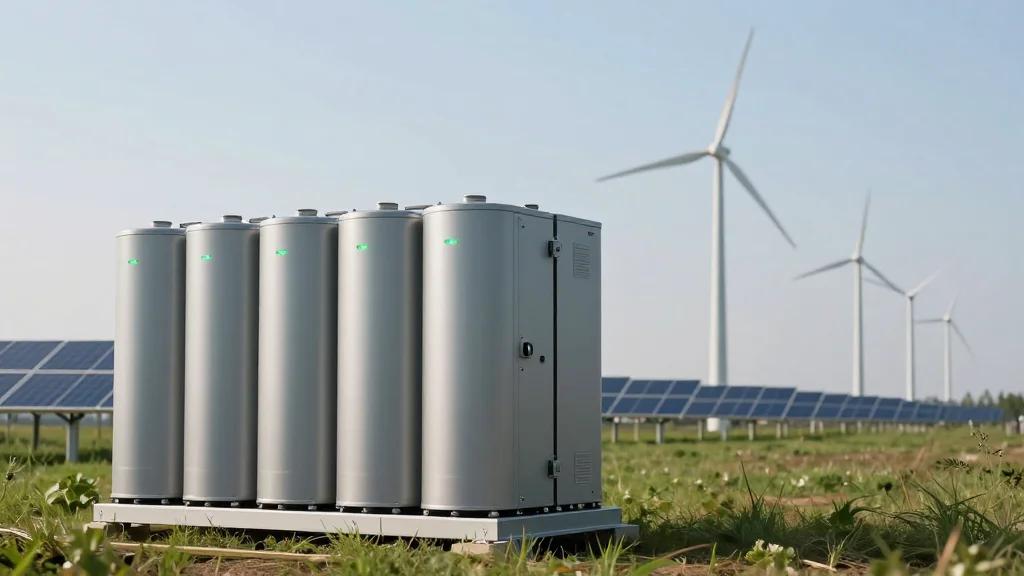
Meta Teams with Noon Energy on 1 GW Ultra‑Long‑Duration Battery Project for AI Data Centers

Companies Mentioned

Why It Matters
The Meta‑Noon Energy partnership tackles two converging pressures: the explosive growth of AI compute and the urgent need to curb carbon emissions from data centers, which now account for roughly 2% of global electricity use. By deploying a 1‑GW ULD system, Meta can shave megawatts of grid‑sourced power during peak AI training cycles, directly reducing its operational carbon intensity. Beyond Meta, the project could catalyze a wave of similar investments as other cloud providers confront the same energy‑intensity challenge. Demonstrated success would validate the economic case for ultra‑long‑duration storage, encouraging utilities and investors to fund more projects that blend renewables with high‑capacity batteries, thereby strengthening grid stability while advancing climate goals.
Key Takeaways
- •Meta and Noon Energy announced a 1‑GW ultra‑long‑duration battery project for AI data centers.
- •The storage system will provide multi‑hour to multi‑day discharge, enabling on‑site renewable integration.
- •Project timeline targets commissioning within 24‑30 months, supporting Meta’s 2030 AI decarbonization goal.
- •Noon Energy gains a high‑profile deployment that could accelerate adoption of ULD technology across the sector.
- •Successful implementation may set a benchmark for other tech firms seeking to offset AI‑driven electricity demand.
Pulse Analysis
Meta’s decision to invest directly in ultra‑long‑duration storage reflects a maturing climate‑tech market where large corporates are no longer content with purchasing renewable certificates alone. The 1‑GW scale signals confidence that ULD batteries have moved beyond pilot status into commercial viability, a shift driven by falling battery costs and improved chemistry that can sustain discharge for days without degradation.
Historically, data center operators have relied on diesel generators or short‑duration lithium‑ion batteries for backup, neither of which address the chronic, high‑load nature of AI training. By contrast, ULD systems can store excess solar or wind generation during low‑demand periods and release it when AI workloads peak, flattening demand curves and reducing the need for peaker plants. This operational flexibility not only cuts emissions but also offers cost savings as utilities increasingly price electricity based on time‑of‑use tariffs.
Looking ahead, the Meta‑Noon collaboration could trigger a cascade of similar deals, especially as AI models become more compute‑hungry and regulatory pressure mounts on tech firms to disclose Scope 2 emissions. If the project meets performance expectations, it will provide a data‑driven case study for investors and policymakers, potentially unlocking new financing mechanisms—such as green bonds tied to storage performance—that could accelerate the rollout of ULD assets worldwide. The partnership thus sits at the intersection of technology, finance, and climate policy, illustrating how strategic energy investments are becoming integral to the future of AI.
Meta Teams with Noon Energy on 1 GW Ultra‑Long‑Duration Battery Project for AI Data Centers
Comments
Want to join the conversation?
Loading comments...