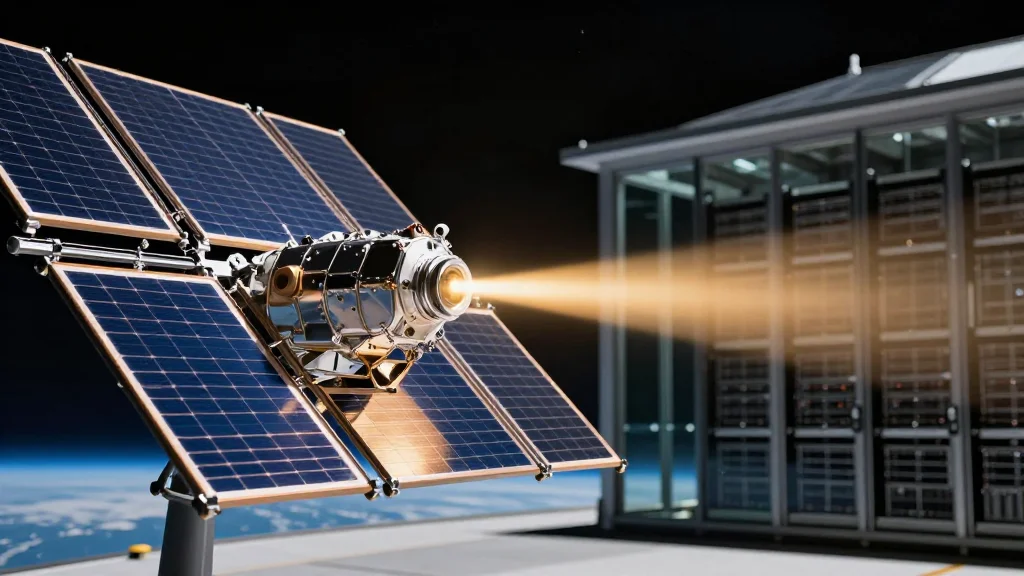
Meta Teams with Overview and Noon Energy on Space‑Based Solar to Power AI Data Centers

Companies Mentioned

Why It Matters
The partnership highlights a pivotal moment where climate‑tech innovation intersects with the exponential growth of AI. By pursuing SBSP, Meta is betting that space‑derived renewable energy can become a viable supplement to terrestrial grids, potentially reshaping how data centers source power worldwide. Success would demonstrate a scalable path to decarbonize compute‑intensive workloads, while failure could reinforce the need for more aggressive grid modernization and energy‑efficiency measures. Beyond Meta, the initiative could catalyze a broader industry shift toward investing in orbital energy platforms, prompting new standards, supply chains, and financing models. The outcome will influence policy discussions on space utilization, spectrum allocation, and the environmental footprint of launch activities, all of which are critical variables in the climate‑tech equation.
Key Takeaways
- •Meta partners with Overview Energy and Noon Energy to develop space‑based solar power.
- •First orbital demonstrations are scheduled for 2028, with ground prototypes to start later this year.
- •SBSP aims to transmit solar energy collected in orbit to data‑center receivers, providing power beyond daylight hours.
- •AI‑driven data‑center electricity demand is outpacing grid expansion, creating a strategic need for continuous renewable supply.
- •Industry analysts estimate combined R&D investment could exceed $500 million over the next decade.
Pulse Analysis
Meta’s foray into space‑based solar reflects a broader strategic calculus: as AI workloads double annually, traditional grid upgrades cannot keep pace with the required megawatt‑scale, low‑carbon power. By anchoring its renewable roadmap to SBSP, Meta is effectively hedging against future grid scarcity while positioning itself as a pioneer in a nascent market. Historically, large‑scale energy transitions have been driven by a mix of policy incentives and corporate risk appetite; here, the risk appetite is evident, but policy support remains uncertain. The company’s willingness to allocate half‑a‑billion dollars to an unproven technology signals that the cost of inaction—potentially throttling AI services—may be perceived as higher than the capital outlay.
From a competitive standpoint, Meta’s move could pressure rivals such as Google, Amazon, and Microsoft to accelerate their own alternative‑energy research, potentially sparking a wave of SBSP pilots. However, the technology’s reliance on orbital assets introduces new supply‑chain dependencies, including launch capacity and satellite manufacturing, which could become bottlenecks if multiple firms chase the same launch windows. Moreover, the regulatory landscape for beaming energy from space is still embryonic; any delays in licensing could erode the projected timeline and increase costs.
Looking ahead, the success of Meta’s SBSP program will hinge on three variables: technical viability of high‑efficiency laser transmission, regulatory clearance for continuous power beaming, and the economics of scaling the system to gigawatt levels. If these hurdles are cleared, the climate‑tech sector could witness a paradigm shift where renewable generation is no longer earth‑bound, dramatically expanding the addressable market for clean power. Conversely, a setback would reinforce the urgency of investing in grid modernization, energy storage, and demand‑side management as the primary pathways to meet AI’s insatiable appetite for electricity.
Meta Teams with Overview and Noon Energy on Space‑Based Solar to Power AI Data Centers
Comments
Want to join the conversation?
Loading comments...