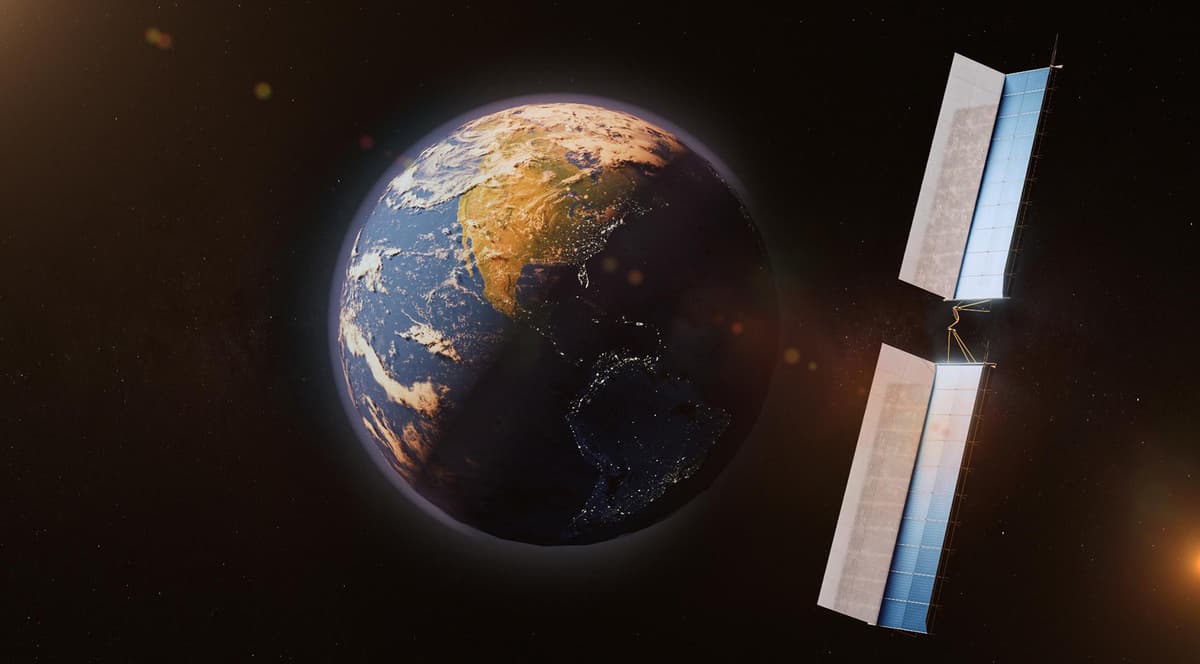
Meta’s Space Solar Bet Highlights AI Data Center Power Gap
Why It Matters
SBSP could eventually decouple data‑center power from grid bottlenecks, but current technical and economic hurdles mean hyperscalers must rely on storage and diversified generation to sustain AI growth today.
Key Takeaways
- •Meta partners with Overview, Noon Energy for SBSP demos by 2028
- •SBSP remains theoretical; transmission losses and costs hinder near‑term viability
- •Data‑center power growth outpaces US grid interconnection, averaging five years
- •Long‑duration battery storage offers practical bridge for AI‑driven demand
- •Hyperscalers secure 30 GW renewables and 7.7 GW nuclear to diversify supply
Pulse Analysis
Meta’s recent partnership with Overview Energy and Noon Energy signals a strategic bet on space‑based solar power (SBSP) as a future source of firm, continuous energy for its AI‑intensive data centers. While the concept promises generation beyond daylight hours by beaming power from orbit, industry experts highlight steep launch costs and inefficient radio‑frequency or laser transmission as major barriers. Demonstrations are not expected until 2028, positioning SBSP as a long‑term capacity play rather than a near‑term solution to today’s power crunch.
In the immediate horizon, data‑center operators confront a different reality: grid interconnection delays and transmission constraints. Research from Lawrence Berkeley National Laboratory shows that U.S. interconnection requests now take roughly five years to reach commercial operation, a timeline that outpaces the rapid deployment of AI workloads. To bridge this gap, firms are turning to long‑duration battery storage, which can shift renewable generation into peak demand periods and replace traditional peaker plants. Meta’s VP of infrastructure, Rachel Peterson, emphasizes that improving delivery efficiency—through storage and local generation—is critical for unlocking usable power from existing grids.
Meta’s energy strategy mirrors a broader shift among hyperscalers toward direct involvement in power development. Beyond SBSP, the company has amassed more than 30 GW of contracted renewable energy and 7.7 GW of nuclear capacity through partnerships with Constellation Energy, TerraPower, and others. This diversified portfolio reduces reliance on utilities and mitigates grid‑related risks, while still requiring collaboration with regulators to manage capacity limits. As AI workloads continue to surge, the industry’s two‑track approach—optimizing current grid assets and investing in breakthrough technologies like SBSP—will determine whether data centers can sustain growth without compromising sustainability goals.
Meta’s Space Solar Bet Highlights AI Data Center Power Gap
Comments
Want to join the conversation?
Loading comments...